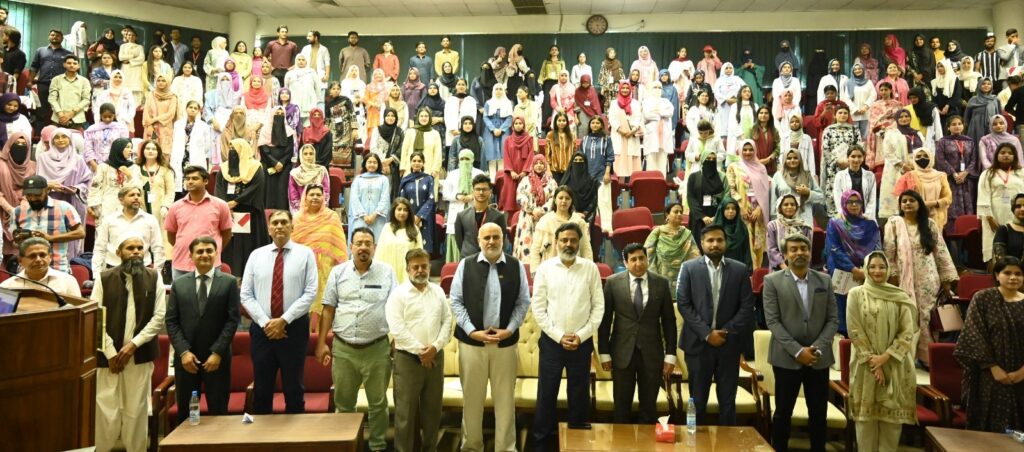
Karachi: The University of Karachi (KU) organized a special seminar to commemorate one year of “Marka-e-Haq (Battle of Truth): Truth, Sovereignty and Strategic Stability” at the university’s Audio Visual Centre on Tuesday.
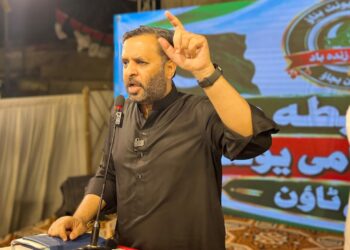
The seminar, arranged by the Office of Students’ Advisor, brought together academics and experts who discussed Pakistan’s strategic position, regional dynamics, and the growing importance of technology in modern defense and governance.
Former ambassador Dr Jameel Ahmed Khan said that the “Battle of Truth” reflects the concept of selfhood envisioned by poet-philosopher Allama Muhammad Iqbal. He stated that Pakistan’s armed forces demonstrated professional capability, courage, and strategic planning during Operation Bunyān al-Marsūs, compelling India to retreat despite limited resources.
He noted that Pakistan achieved its declared objectives with precision and that the country’s response gained international recognition. Dr Jameel Ahmed Khan also stressed that nations pursuing extremist policies cannot achieve lasting success and argued that strong defense capabilities remain essential in the current global environment.
Speaking on future geopolitical challenges, he warned that future conflicts may increasingly revolve around critical resources such as water rather than conventional fuel resources, urging immediate strategic planning in this regard.
KU Vice Chancellor Professor Dr Khalid Mahmood Iraqi emphasized that national development and stability require collective efforts beyond political divisions. He highlighted the importance of rational policymaking, governance reforms, and technological advancement.
He observed that Pakistan gained renewed international recognition after the “Battle of Truth” and stated that modern technology now plays a more decisive role than traditional military strategies, particularly during recent tensions between Pakistan and India.
Professor Dr Khalid Iraqi further stressed the need for Pakistan to reduce dependence on foreign technologies and invest in indigenous capabilities to achieve self-reliance in defense, science, and the economy.
Professor Dr Moiz Khan from KU’s Department of History said India’s current political leadership is pursuing policies based on hostility toward Muslims and Pakistan. He added that Pakistan’s strategic response to recent regional developments, particularly through Operation Bunyān al-Marsūs, received significant international attention.
He concluded that sustainable peace in South Asia can only be achieved through recognition of realities, mutual respect, and abandoning hate-driven narratives.
The seminar was moderated by KU Students’ Advisor Dr Nosheen Raza.