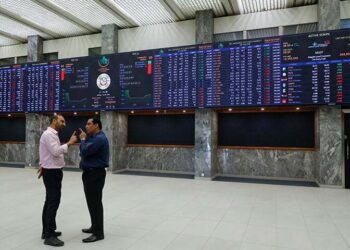
The US dollar edged higher against major currencies at the start of Asian trading on Monday as violent protests in France put pressure on the euro, while investors awaited key economic data and upcoming central bank decisions.
The euro fell 0.1% to $1.1225 in early Asian trading. Its decline helped stabilise the dollar index, which remained unchanged at 101.83 after recently trading near its lowest level of the month.
French President Emmanuel Macron condemned what he called “shocking” scenes of violence on Sunday following protests over the cost of living. France had experienced one of its most serious periods of unrest in years, adding to concerns about the country’s political and financial outlook.
French Unrest Raises Concerns Over Bond Markets
Analysts said the protests could affect the euro through France’s government bond market, particularly if political uncertainty increases pressure on borrowing costs.
Oil Prices Fall as Trump Eases Russia Sanctions
“The weekend unrest matters for the euro mainly through French bonds rather than directly,” said Kieran Williams, head of Asia foreign exchange at InTouch Capital Markets in London.
Investors are also assessing how political developments could influence market sentiment ahead of this week’s economic releases and major monetary policy decisions.
Dollar Steady Against Yen and Yuan
The US dollar was unchanged at 158.00 yen after Bank of Japan Governor Kazuo Ueda said underlying inflation was “quite close” to the central bank’s 2% target.
The dollar also held steady at 6.6842 yuan in offshore trading ahead of China’s third-quarter gross domestic product figures.
China’s economy is expected to have accelerated slightly during the quarter after growth slowed to a more than three-year low, making the data an important focus for currency traders.
Indonesian Rupiah Under Pressure
In emerging-market Asia, investors were watching the Indonesian rupiah after index provider MSCI threatened to downgrade the country’s stock market to “standalone” status.
The warning triggered an 11.6% collapse in Indonesian equities last week. The rupiah also weakened to its lowest level in almost three months on Friday, closing at 18,000 against the dollar.
The potential downgrade has raised concerns about investment flows and the outlook for Indonesia’s financial markets.
Elsewhere, the Australian dollar rose 0.3% to $0.6965, while the New Zealand dollar remained flat at $0.5656. The British pound was also unchanged at $1.3329.
Oil Prices Slip as Russia Restrictions Ease
Oil prices declined as trading resumed in Asia. Brent crude futures fell around 1.7% to $108.02 a barrel after US President Donald Trump waived sanctions and tariffs on Russia, potentially opening the way for increased Russian fuel exports.
The easing of restrictions has added another factor for investors assessing global inflation and energy supply risks.
Markets Await Federal Reserve and ECB Decisions
US interest-rate expectations remained broadly stable. Federal funds futures indicated an 84% probability that the Federal Reserve would leave rates unchanged at its next two-day meeting, scheduled for October 28, according to the CME Group’s FedWatch tool.
The European Central Bank is due to meet on October 29, making the coming week important for currency markets.
“This is a run up week to the Fed on October 28 and the ECB on October 29, so positioning is likely to stay light and headline risk out of France will remain high,” Williams said.
Bitcoin and Ether Advance
Cryptocurrency markets moved higher during early trading on Monday.
Bitcoin gained 1.4% to $82,067.66, while ether rose 3.0% to $2,420.22.
Investors are expected to remain sensitive to political developments, economic data and central bank signals as markets prepare for a busy week.