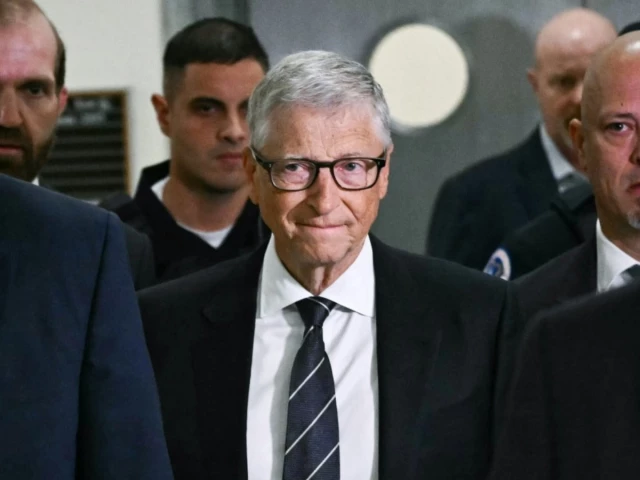
Microsoft co-founder Bill Gates has warned that the misuse of artificial intelligence could trigger a rise in cyberattacks over the next year, urging governments and technology companies to strengthen safeguards against malicious actors.
In an interview with ABC News on Sunday, Gates said the immediate danger came less from AI systems becoming uncontrollable and more from people exploiting powerful models without adequate restrictions.
“The front that we’ll probably see most dramatically in the next year is cyberattacks,” Gates said.
He added that the possibility of AI getting out of control remained a longer-term concern, while the misuse of existing technology required more immediate attention.
“The real danger right now is not the AI’s getting out of control. We need to work on that, but that’s years away in terms of the big impact that might have,” he said.
Gates Calls for Stronger AI Safeguards
Gates said malicious users could exploit advanced AI tools to carry out cyberattacks and potentially support other dangerous activities, including bioterrorism.
He expressed concern that some AI systems could be used after their safety restrictions had been removed.
Manchester City Beat 10-Man Liverpool 3-0 Amid Premier League Financial Case
“It’s really bad people using AI, particularly in AI where you can take out all the safeguards,” he told ABC News.
Gates warned that combining powerful AI models with inadequate safeguards could lead to serious security incidents in the coming year.
“But right now, you’re allowed to take all those safeguards out. So when you have bad people, no safeguards, and then the latest models, that’s where, over the next year, primarily in the cyber area, we are going to have a lot of negative surprises,” he said.
His comments underline concerns that AI could make certain cyber operations easier to carry out, potentially increasing the scale, speed or sophistication of attacks.
Gates Rejects Reliance on Industry Self-Regulation
The technology entrepreneur also challenged the argument that AI companies should be left to regulate themselves without stronger external oversight.
US President Donald Trump has advocated an approach that places significant emphasis on industry-led innovation and self-regulation. Gates argued that voluntary safeguards alone were not sufficient for technology with potentially serious consequences.
“The idea that for the most dangerous technology humans ever invented, that that’s the final word, that just the companies themselves are the only check that society has…it’s clear we’re not doing enough,” Gates said.
His remarks add to a growing debate over the role of governments, technology companies and independent regulators in managing AI-related risks.
AI Risks Extend Beyond Cybersecurity
Gates has previously warned about the broader social and economic effects of artificial intelligence. In an extensive post in August, he said the world was dangerously unprepared for the disruption AI could bring, particularly to employment.
AI developers are continuing to release increasingly capable models, raising questions about how existing cybersecurity systems and safety policies will adapt.
While AI can help organisations detect threats, analyse data and improve digital security, attackers may also use the technology to support malicious activity.
Gates’s warning highlights the need to balance AI innovation with safeguards that reduce the risk of abuse. His central concern is that the technology’s current capabilities, when placed in the hands of malicious users without meaningful restrictions, could create significant problems before longer-term risks emerge.