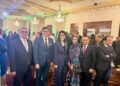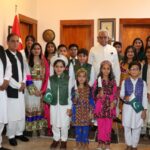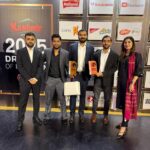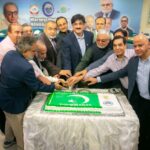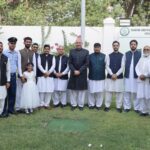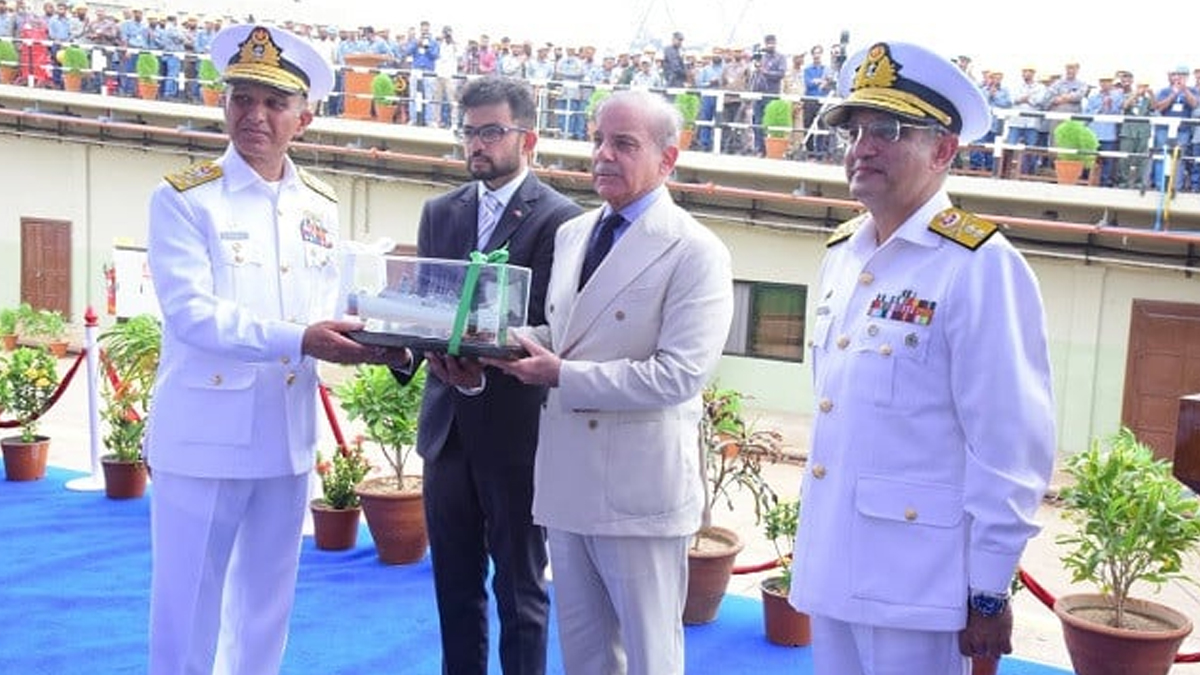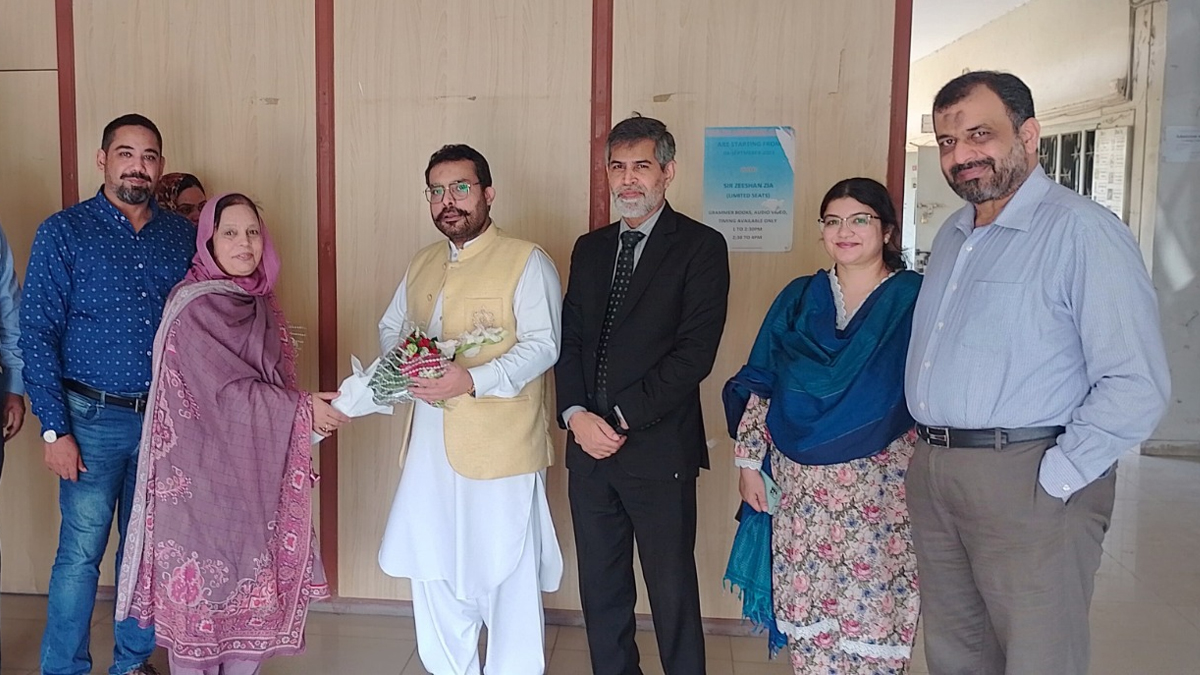
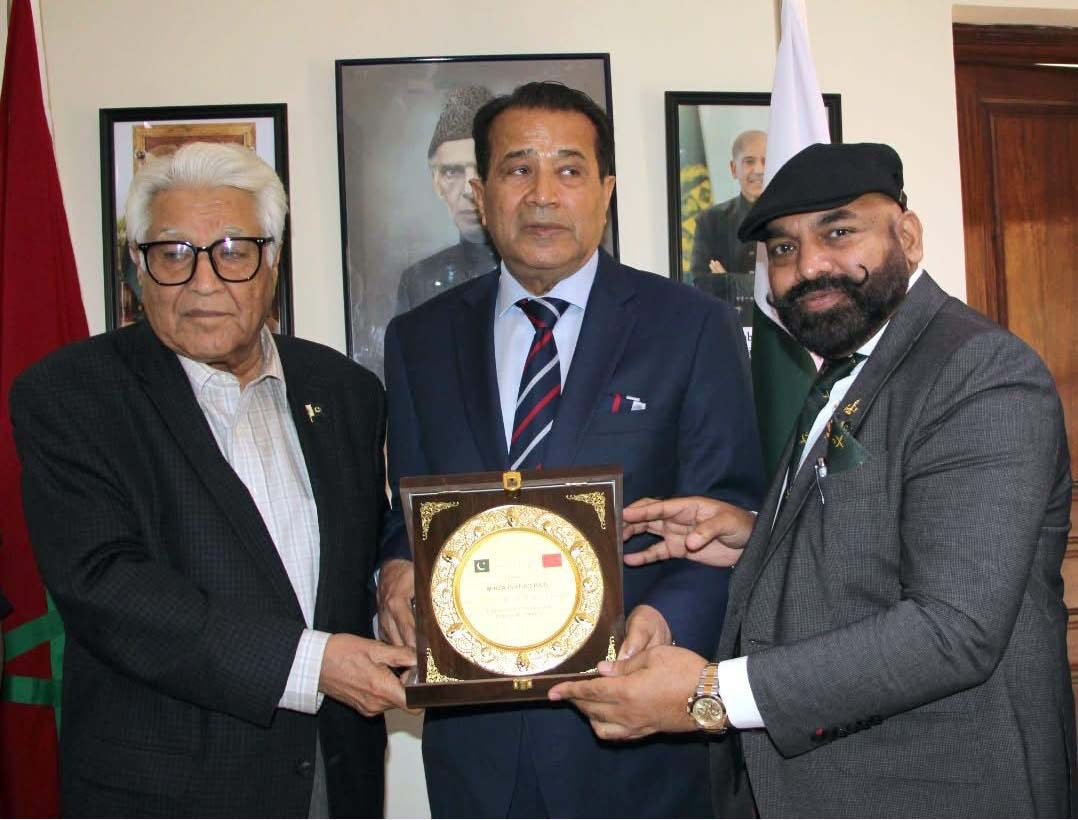
KARACHI: Atif Iqbal, Group CEO of High-Q Pharmaceuticals, has been honored with the “Made in Pakistan Global Impact Award” during a prestigious ceremony held at the Embassy of Pakistan in Rabat, Morocco.
The award was presented by Syed Adil Gilani in recognition of Atif Iqbal’s leadership and contributions to Pakistan’s pharmaceutical industry and healthcare sector.
The ceremony was held in connection with the Made in Pakistan Global Impact Summit Morocco 2026, taking place from May 3 to May 8, 2026, where Atif Iqbal participated as a distinguished delegate alongside Pakistani industrialists and business leaders.
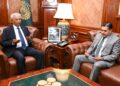
During his visit, Atif Iqbal met with Ambassador Syed Adil Gilani. The meeting was also attended by Mirza Ishtiaq Baig, Rizwan Jaffar, and other representatives of Pakistan’s business community.
The discussions focused on expanding cooperation between Pakistan and Morocco in areas including pharmaceuticals, healthcare, medical equipment, trade, investment, tourism, construction, sports goods, and industrial collaboration.
Ambassador Syed Adil Gilani highlighted Morocco’s strategic importance as a trade gateway connecting Africa, Europe, and the Middle East, stating that the country offers significant opportunities for Pakistani businesses and investors.
He noted that Morocco is offering incentives for foreign investors and identified pharmaceuticals, textiles, sports goods, medical equipment, agricultural products, and food processing as promising sectors for Pakistani companies.
Speaking on the occasion, Atif Iqbal said Pakistan’s pharmaceutical industry is growing rapidly and producing medicines according to international standards. He emphasized that there is strong potential for collaboration between Pakistan and African countries, particularly Morocco, in the pharmaceutical and healthcare sectors.
He further stated that Pakistan has earned a distinguished global reputation in surgical instruments and medical manufacturing, while Sialkot’s sports goods industry is internationally recognized for quality and innovation.
Atif Iqbal also highlighted the potential for promoting medical tourism in Pakistan, noting that the country has modern healthcare infrastructure and highly qualified medical professionals capable of attracting international patients.
Mirza Ishtiaq Baig stressed the importance of strengthening economic relations between Pakistan and Morocco through greater interaction between chambers of commerce, trade organizations, and investors.
Meanwhile, Rizwan Jaffar said Pakistani products and brands are steadily gaining international recognition and emphasized the need to further promote the “Made in Pakistan” identity in global markets.
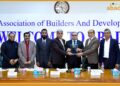
Later, the Pakistani delegation visited the Morocco Chamber of Commerce, where further discussions were held on enhancing bilateral trade relations and exploring new business opportunities. The delegation also proposed direct flights between Pakistan and Morocco to facilitate trade, tourism, and business exchanges.