
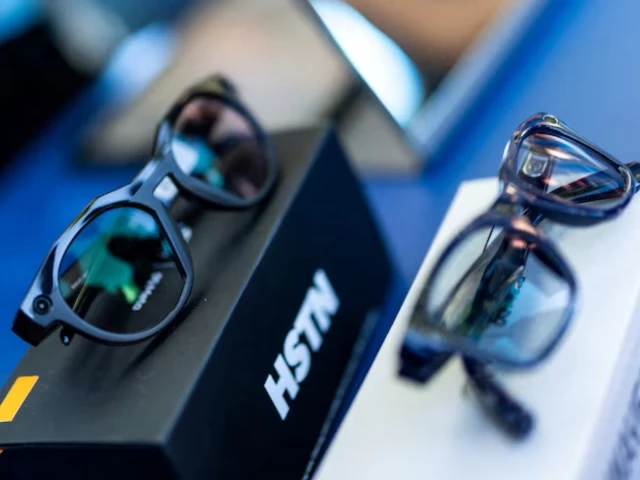
Companies developing AI wearables as potential successors to smartphones are facing growing privacy concerns, as devices capable of seeing, hearing and responding to their surroundings raise questions about recording, data collection and consent.
The strongest backlash so far has focused on Meta’s Ray-Ban smart glasses, which helped bring AI-enabled eyewear into the mainstream by combining EssilorLuxottica’s designs with Meta’s artificial intelligence technology.
The glasses have become a focal point in the wider debate over AI-powered devices. Privacy lawsuits, concerns about covert recording and warnings over the erosion of anonymity have prompted some venues to restrict their use. Several locations in the United Kingdom, including pub chain Wetherspoon, have introduced restrictions.
Meta is also expected to unveil camera-free smart glasses at its Connect conference, according to media reports. The development reflects the challenge facing technology companies seeking to establish new wearable devices in a market dominated by smartphones.
OpenAI Launches GPT-6 Sol and Luna at Lower Prices
Companies are testing various alternatives, including glasses, pins, pendants and wearable voice recorders, as they look for designs that can provide AI assistance while addressing privacy concerns. Some startups are also reporting stronger adoption among businesses than consumers.
The outcome of the privacy debate could influence the future of AI wearables, which technology companies increasingly view as a potential new computing platform. Devices with always-on cameras, microphones and environmental awareness can provide more context to AI systems, but those same capabilities can create concerns among people who may be recorded without their knowledge.
Samsung Plans Partnership Approach
Samsung plans to enter the smart-glasses market later this year through partnerships with Gentle Monster and Warby Parker. However, the company does not currently view smart glasses as replacements for smartphones.
Jay Kim, executive vice president of Samsung’s mobile division, told Reuters that successful wearable devices would need to make interaction more natural while also earning users’ trust.
He said that as AI takes on more tasks, users would expect systems to remain secure and under their control.
For startups focused exclusively on AI wearables, addressing privacy concerns could be particularly important to their long-term prospects.
Altman Pushes Local AI Processing
OpenAI CEO Sam Altman has previously described a vision for an always-on device capable of understanding a user’s surroundings and determining when assistance is appropriate.
Altman has argued that such devices would eventually need to process more information locally rather than continuously sending data to cloud servers. He has said consumers would be reluctant to use devices that constantly transmit recordings of their lives to the cloud.
OpenAI’s approach highlights one of the central challenges facing AI wearables: the more information a device collects about its surroundings, the more useful its AI capabilities can become, but the greater the privacy risks for both users and people around them.
Lawsuit Raises Covert Recording Concerns
Privacy concerns have also moved into the courts.
A lawsuit represented by attorney Ryan Clarkson’s firm alleges that recordings captured by Meta’s smart glasses were viewed and labelled by human annotators, including footage involving people changing clothes, using bathrooms and handling financial information.
Clarkson said some people recorded by the devices appeared unaware they were being filmed and argued that consumers may not fully understand how their privacy could be affected by such products.
Meta has disputed the allegations and said it will contest the lawsuit. The company has also said that its glasses include a recording indicator light that cannot be switched off and that the camera is disabled if the light is covered or tampered with.
Meta has further said that reviewing user data to improve products is common across the technology industry and that it removes identifying information from relevant data.
Startups Develop Camera-Free Alternatives
Privacy concerns have encouraged some companies to develop smart glasses without cameras.
Even Realities, a Shenzhen-based startup founded by former Apple engineer Will Wang, introduced its camera-free G1 glasses in 2024 before launching the G2 in November 2025.
Wang told Reuters that consumers were increasingly associating smart glasses with covert recording and argued that cameras should be introduced only when stronger safeguards are available.
Other companies are taking different approaches to audio recording.
San Francisco-based Pocket has developed a phone-mounted recorder that requires users to press a button before capturing conversations. The company says the approach is intended to make recording more deliberate and visible.
AI recorder maker Plaud has similarly emphasised user-controlled recording. Its devices can be activated manually and use lights or audio announcements to alert people nearby.
IDC analyst Jitesh Ubrani said concerns about AI wearables were not entirely new, noting that smartphones also faced privacy concerns when cameras and microphones became widespread.
The broader challenge, he said, is establishing clear consent and awareness when people are being recorded rather than rejecting recording technology altogether.
As companies continue developing AI glasses and other wearable devices, privacy safeguards could become as important to adoption as battery life, design and AI capabilities.