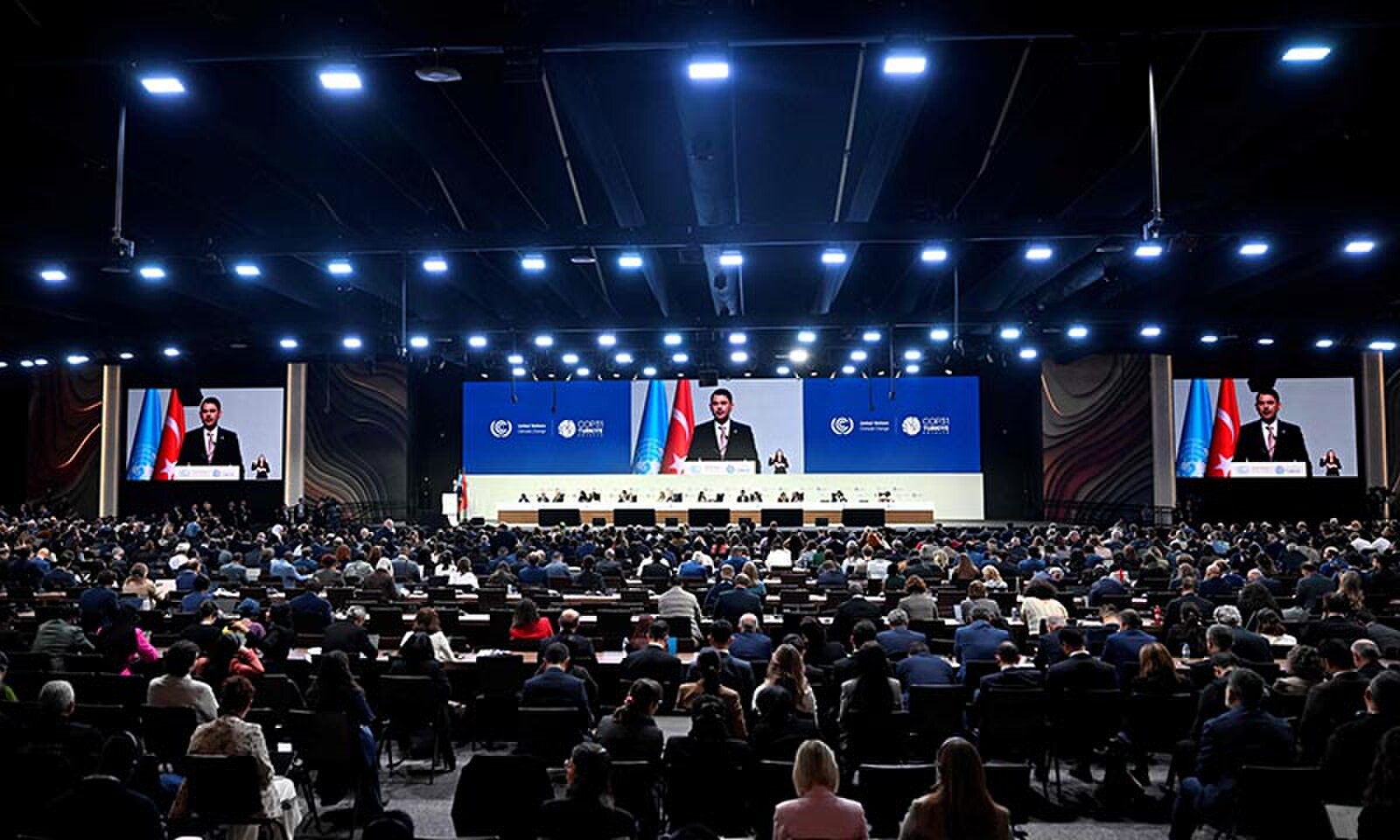
The COP31 climate summit opened on Monday in Türkiye amid an early dispute over climate finance, as United Nations Secretary-General Antonio Guterres urged world leaders to take stronger action against the climate crisis following a year of extreme weather events.
Thousands of delegates gathered at a large exhibition centre in the Mediterranean city of Antalya for the UN’s annual two-week climate conference.
The summit follows a year marked by severe heatwaves in Europe, major wildfires in Indonesia and devastating floods in Nepal. An exceptionally strong El Niño weather phenomenon has also raised concerns about further climate disruption.
“We have entered a new age of climate extremes,” Guterres said in a statement.
He called on world leaders to accelerate emissions reductions, support a fair transition away from fossil fuels and provide vulnerable countries with the finance and protection they need.
Climate finance dispute delays opening
The opening ceremony began an hour and a half behind schedule without an official explanation. Negotiators had spent much of Sunday discussing demands from developing countries to include climate finance issues in the official agenda.
“This has already been a difficult start for COP31,” said Jasper Inventor, head of Greenpeace’s COP31 delegation.
Bangladesh Challenges Sheikh Hasina to Seek Extradition from India if She Wants to Return
Under UN climate agreements, developed countries have provided financial assistance to developing nations to help them adapt to climate change and shift towards cleaner energy. Wealthier nations carry greater historical responsibility for greenhouse gas emissions, but developing countries argue that the available funding remains inadequate.
Inventor said developed countries were taking a firm position on including a platform agreed at COP30 in Brazil last year. The platform aims to discuss how wealthy nations should provide financial support to developing countries.
African nations are also pushing for discussions on tripling adaptation finance. Such funding would help vulnerable countries implement measures including sea walls and drought-resistant crops.
However, negotiators did not include the issue as a separate agenda item.
A senior European Union official warned last week that COP31 was unlikely to produce political support for additional funding commitments.
Observers expect limited major breakthroughs as countries face an oil price shock and geopolitical tensions linked to the US war with Iran and Russia’s conflict in Ukraine.
2026 among hottest years on record
As negotiations continued in Antalya, the World Meteorological Organisation released a report highlighting another year of exceptional global temperatures, melting ice and rising sea levels.
The European Union’s climate monitoring service warned last week that 2026 would most likely become the second-hottest year ever recorded. Scientists have also warned that 2027 could set a new record as El Niño strengthens.
The longer-term outlook remains concerning. In September, the UN warned that global temperatures were on course to exceed 1.5°C above pre-industrial levels, crossing the most ambitious threshold established under the Paris Agreement.
Rachel Cleetus, climate programme director at the Union of Concerned Scientists, urged leaders to accelerate the transition away from fossil fuels and expand renewable energy.
She said the current energy affordability crisis further reinforced the need for a rapid shift towards cleaner energy sources.
Türkiye and Australia lead summit efforts
Türkiye is hosting COP31, while Australia is leading the negotiations under an unusual arrangement that resolved a dispute over hosting responsibilities.
The two countries have presented the summit as an “implementation COP”, with an emphasis on turning previous climate commitments into practical action.
Türkiye is also promoting an action agenda alongside formal negotiations. The initiative encourages countries to make voluntary commitments on issues ranging from artificial intelligence to waste management.
A central proposal aims to increase the share of global energy demand met by electricity from around 20 per cent currently to 35 per cent by 2035.
However, the initiative could trigger disagreements over the role of fossil fuels. The European Union has called for “clean” electrification, a position that could create friction over the scope of Türkiye’s proposal.
At COP28 in Dubai in 2023, countries agreed to transition away from fossil fuels. However, they have struggled to reach consensus on how to implement that commitment.
COP30 ended without an explicit reference to fossil fuels in its final agreement after opposition from oil-producing countries. Brazil instead presented a voluntary roadmap outlining proposals for phasing out fossil fuels, allowing countries to adapt the approach to their national circumstances.
US climate policy remains in focus
The United States remains a significant absence from the climate negotiations, with President Donald Trump, a climate sceptic, not sending official representatives to COP31.
However, a US congressional delegation is expected to attend the Antalya summit. The delegation includes Democrats buoyed by their party’s historic victory in last week’s US midterm elections.