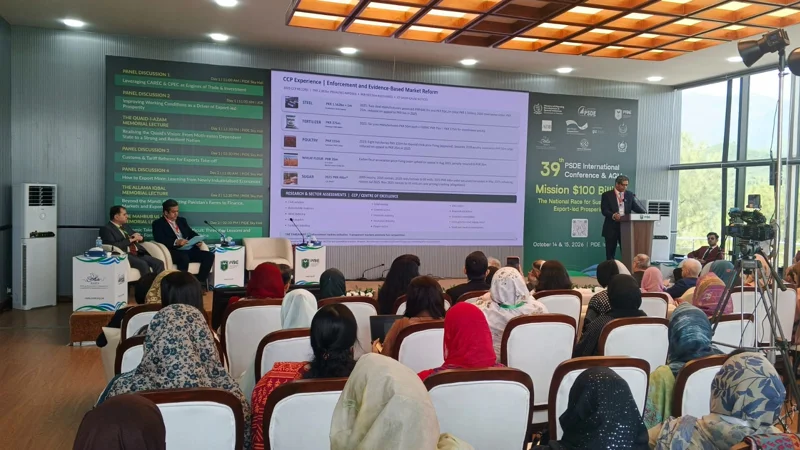
ISLAMABAD, October 15, 2026: Pakistan’s securities regulator has proposed a major overhaul of agricultural markets, including electronic warehouse receipts and a national spot market, to reduce post-harvest losses and improve farmers’ access to financing.
Dr Kabir Ahmed Sidhu, chairman of the Securities and Exchange Commission of Pakistan (SECP), outlined the proposals while addressing the “Mission $100 Billion” international conference hosted by the Pakistan Institute of Development Economics.
“Reforms in agricultural markets are crucial for the growth of the entire economy,” Sidhu said.
Crop Losses Cost Billions of Rupees
Agriculture contributes 23.44% to Pakistan’s gross domestic product, while the country’s crops are worth approximately Rs8,800 billion, Sidhu said.
However, post-harvest losses are estimated at between 20% and 40%. According to his figures, every percentage point of crop losses represents roughly Rs88 billion in lost value.
Pakistan produces around 55.7 million metric tonnes of storable dry agricultural commodities annually, but approved warehouses have a combined capacity of only 326,000 metric tonnes, he said.
Sidhu identified the gap between agricultural production and storage capacity as a major challenge for the sector.
Electronic Receipts to Improve Farmers’ Access to Credit
The SECP is working to promote a modern warehousing system based on electronic warehouse receipts, which would allow farmers to use stored crops as collateral for bank loans.
Under the proposed system, agricultural markets would connect to an online trading platform, while a national spot market would support secure storage, financing and transparent commodity transactions.
Farmers could use the receipts to obtain credit without selling their produce immediately after harvest, when prices may be unfavourable.
Sidhu said uniform standards for product quality, weight and grading would also help farmers secure fairer prices and make agricultural trading more transparent.
National Spot Market to Expand Gradually
The proposed spot market would introduce commodities in phases, beginning with key crops such as wheat, rice, maize, cotton and sugar.
Provincial governments would retain oversight of agricultural markets, while the SECP would provide technical assistance to support the reforms.
The regulator also wants brokers and traders to register formally and maintain digital records of transactions. Sidhu said these measures could strengthen accountability and protect both farmers and buyers.
He further called for a reliable payment system to ensure farmers receive their money on time.
Better Storage Could Boost Investment and Exports
Sidhu said investment in modern warehouses, cold storage and transport networks could help reduce crop losses and improve the agricultural sector’s access to export markets.
He also stressed the need to modernise rules governing agricultural markets, including licensing requirements, fees and commodity movement systems.
The proposed reforms aim to address structural weaknesses in Pakistan’s agricultural supply chain by improving storage, financing and price transparency.
Their implementation would require coordination between the SECP, provincial authorities, financial institutions and other stakeholders involved in agricultural trade.