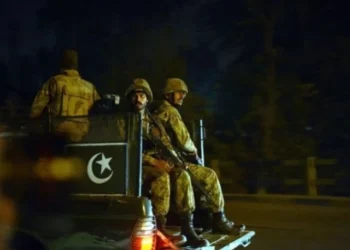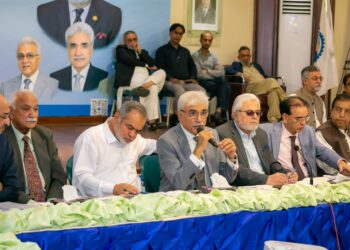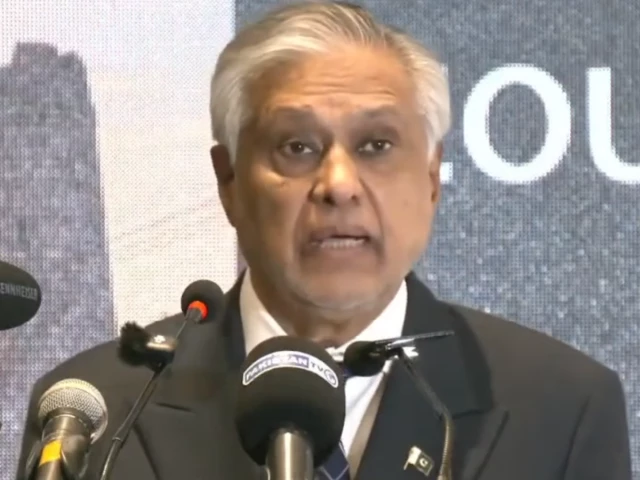
Deputy Prime Minister and Foreign Minister Ishaq Dar has defended the federal government’s decision to impose governor’s rule in Khyber-Pakhtunkhwa (KP), saying it had “no choice” but to act to protect citizens from terrorism.
Speaking at a conference on Pakistan’s evolving counter-terrorism landscape on Monday, Dar said the federal government had a responsibility to protect citizens regardless of where they lived.
“When it comes to the safety and security of our nationals, our citizens, wherever they live, any part of Pakistan, I think it is the duty of the federal government,” he said.
The government imposed governor’s rule in KP under Article 234 of the Constitution after President Asif Ali Zardari approved Prime Minister Shehbaz Sharif’s advice. The move came amid tensions between the federal government and the Pakistan Tehreek-e-Insaf (PTI)-led provincial administration over security and counter-terrorism efforts. PTI rejected the decision as unconstitutional and vowed to resist it.
NEPRA Sets Wheeling Charges for Pakistan’s Competitive Electricity Market
Dar said the measures were not politically motivated but were intended to address what he described as a prolonged terrorism threat in the province.
“It’s not a political move. It is surely against the menace of terrorism which the province has been hit with in the last decade and a half,” he said.
He added that protecting lives and property justified difficult decisions, even when they carried political costs. Dar expressed hope that the measures would produce results in the coming weeks and months, restore peace and curb radicalisation.
Pakistan’s Heavy Losses in the War Against Terrorism
Dar said Pakistan had suffered enormous human, economic and reputational losses because of terrorism. He put the country’s economic losses at more than $150 billion, comparing the figure with Pakistan’s total external debt of $130 billion.
He said terrorism had damaged the country’s international image and undermined confidence in its economy, while the opportunities lost during years of violence were difficult to quantify.
Recalling attacks on civilians, Dar cited the Army Public School massacre in Peshawar, bombings at mosques, markets and bus stops, the seizure of train passengers and the killing of labourers because of their origins.
“These are not just statistics. This is the price the Pakistani nation has paid and continues paying,” he said.
Dar said the government had renewed its counter-terrorism efforts and placed greater emphasis on implementing the National Action Plan. He also highlighted the role of the Federal Apex Committee in bringing civilian and military leadership together to assess threats and coordinate responses.
He said the government had approved the Azm-e-Istehkam initiative with the consensus of provinces and other stakeholders. The initiative, he added, sought to coordinate military, intelligence, law enforcement and diplomatic efforts against militant groups and the networks supporting them.
Dar also called for stronger intelligence coordination and an enhanced role for the National Counter Terrorism Authority, stressing that counter-terrorism required cooperation between federal and provincial institutions.
Dar Says Diplomatic Engagement With Afghanistan Has Not Delivered Results
The deputy prime minister said Pakistan had repeatedly urged Afghanistan’s authorities to prevent their territory from being used by militant groups to launch attacks against Pakistan.
He referred to several diplomatic visits to Kabul in 2025, including meetings with Afghanistan’s acting prime minister, Mullah Mohammad Hassan Akhund, Deputy Prime Minister Abdul Ghani Baradar and Foreign Minister Amir Khan Muttaqi.
According to Dar, the discussions covered trade, economic cooperation, refugees and political issues. Pakistan had fulfilled commitments made during those engagements, he said, while continuing to pursue regional connectivity projects, including a proposed railway linking Pakistan and Uzbekistan through Afghanistan.
“What does Pakistan ask? Only one. Please do not allow your soil to be used against any country, particularly Pakistan, for terrorism,” he said.
Dar also referred to an August 2025 visit to Kabul with Chinese Foreign Minister Wang Yi as part of a trilateral dialogue. Despite these efforts, he said, Pakistan had yet to see the action it sought against militant groups operating from Afghan territory.
He said Pakistan wanted Afghanistan to become stable and prosperous but maintained that the Afghan Taliban authorities needed to honour their counter-terrorism commitments.
Dar cited United Nations monitoring reports concerning the presence of Tehreek-e-Taliban Pakistan (TTP) members in Afghanistan and the group’s links with Al-Qaeda. He alleged that attacks inside Pakistan were planned and launched from across the border, with militants retreating to sanctuaries in Afghanistan.
Pakistan had invested heavily in border fencing and management, he said, but added that physical barriers could not replace action against militant safe havens.
“No fence can substitute for real action against these terrorist sanctuaries,” Dar said.
TTP and BLA Among Groups Cited by Dar
Dar described the TTP as one of the most serious threats to Pakistan’s security, accusing it of carrying out attacks on civilians, schools, mosques, markets and security installations.
He also accused the Balochistan Liberation Army (BLA) of targeting civilians and security personnel and seeking to undermine Pakistan’s economic development.
Among the incidents he cited was the March 2025 hijacking of the Jaffar Express, during which hundreds of passengers were taken hostage. He also referred to attacks on passenger buses, targeted killings and assaults on security infrastructure.
Dar said militant groups benefited from external support networks that provided fighters, funding, weapons and training. He also alleged that India had supported militant organisations operating against Pakistan, including groups based in Afghanistan. These allegations were presented as the Pakistani government’s position.
He called on international partners to address terrorist financing, weapons supplies and safe havens without political considerations or double standards.
Government Warns of Online Radicalisation and New Terrorist Tactics
Dar said militant groups were adapting to modern technology by using social media and encrypted platforms to recruit supporters, spread extremist propaganda and raise funds through digital channels, including cryptocurrencies.
He also warned that terrorist groups were experimenting with drones and artificial intelligence, while modern weapons were making security operations more challenging.
He called for greater international cooperation on intelligence sharing, technology and capacity-building for law enforcement agencies.
Dar stressed that terrorism should not be associated with any religion, nationality, civilisation or ethnicity. Referring to the children killed in the Army Public School attack, he rejected the claim that terrorists represented Islam.
He also warned that Islamophobia could deepen divisions and provide extremist groups with material for propaganda.
Dar Calls for Cooperation With International Partners
The deputy prime minister highlighted Pakistan’s participation in multilateral counter-terrorism efforts, including its role on the United Nations Security Council during the 2025–26 term.
He referred to Pakistan’s work with the UN’s Taliban Sanctions Committee and Counter-Terrorism Committee, as well as its involvement in the Shanghai Cooperation Organisation’s Regional Anti-Terrorist Structure.
Dar said bilateral counter-terrorism discussions, including those with the United States, were also important for addressing shared threats.
He called for timely intelligence sharing, improved access to technology and stronger action against terrorist financing and the networks that support militant groups.
“Pakistan’s sacrifices deserve recognition, but recognition alone is not enough,” he said.
Dar also argued that counter-terrorism efforts should not be used to suppress legitimate struggles for self-determination recognised under the UN Charter and relevant Security Council resolutions. He referred to Palestine and Jammu and Kashmir while outlining Pakistan’s position on international law and the peaceful settlement of disputes.
He further cited Pakistan’s diplomatic engagement in the dispute involving the United States and Iran, saying Islamabad continued to pursue dialogue despite setbacks.
Pakistan Highlights Joint Defence Agreement
Concluding his speech, Dar referred to a joint defence agreement signed in Makkah on August 7, with an inaugural meeting held in Istanbul on August 31.
He said the framework would have its headquarters in Riyadh and that a working committee was preparing its programme and operational arrangements. According to Dar, the agreement includes a strategic, political and defence committee comprising foreign ministers, defence ministers and army chiefs from the participating countries.
“The idea is not any offensive. The idea is totally objective and defensive,” he said, describing the arrangement as a framework for collective self-defence under Article 51 of the UN Charter.
Dar said the agreement was intended to promote peace and closer regional ties rather than target another country. He added that other countries could potentially join once the framework was fully established.
The speech brought together the government’s defence of its decision on KP, its account of Pakistan’s losses from terrorism and its calls for greater international cooperation. Dar maintained that security measures, diplomatic engagement and defence partnerships were intended to protect citizens and improve regional stability.