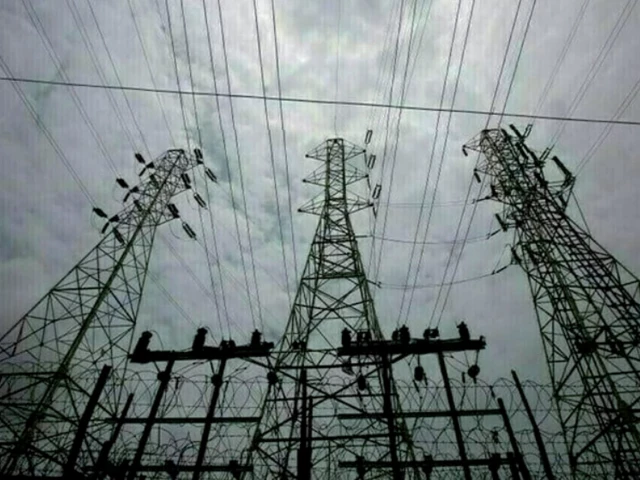
Pakistan has set December 2027 as the deadline to privatise nine power distribution companies, as the government seeks to reduce heavy losses and subsidies in the electricity sector.
The government has briefed the International Monetary Fund (IMF) on the plan during recent discussions. However, the lender has questioned whether the proposed structure will fully address the companies’ financial losses after privatisation.
The plan excludes Quetta Electric Supply Company (QESCO), which has reported some of the sector’s largest losses.
Three Discos Targeted First
The first batch includes Faisalabad Electric Supply Company (FESCO), Gujranwala Electric Power Company (GEPCO) and Islamabad Electric Supply Company (IESCO).
Digital Creators Urge FBR to Review Tax Rules on Social Media Earnings
The government now expects to complete their privatisation during the first quarter of 2027.
FESCO is targeted for January, GEPCO for February and IESCO for March.
The Privatisation Commission has confirmed the first-quarter timeline. The companies are currently moving through due diligence and investor engagement.
Investor interest has also emerged for the first batch.
The commission recently said 10 investors had submitted expressions of interest for IESCO. Three were Turkish companies and seven were local investors.
Ten interested parties have also been prequalified for FESCO, while 11 expressions of interest have been received for GEPCO.
Second and Third Batches
The second batch includes Hyderabad Electric Supply Company and Sukkur Electric Power Company.
The government plans to privatise the two companies between April and June 2027.
The third batch will include Peshawar, Hazara, Lahore and Multan distribution companies. Their privatisation is targeted for completion by December 2027.
The plan divides the nine companies into four batches.
QESCO is not included in the current privatisation programme.
Government to Retain Some Liabilities
The proposed transaction structure follows a model previously used for Pakistan International Airlines.
The government plans to separate certain assets and liabilities from the first three distribution companies before their sale.
Land and pension-related liabilities would be moved away from the companies’ balance sheets. The government would hold these assets and obligations through a separate structure.
The approved restructuring plan has already faced scrutiny.
The government has proposed transferring land assets to a government-owned holding company. The plan is designed to present the companies in a more attractive financial position to potential buyers.
IMF Questions Long-Term Impact
The IMF has raised concerns about whether the restructuring model will eliminate the companies’ financial problems.
The concern centres on the government retaining significant liabilities and continuing to support the sector after privatisation.
The proposed structure also includes a uniform electricity tariff.
Under the policy, consumers would continue to pay the same basic tariff regardless of whether their distribution company is privately or publicly owned.
The Privatisation Commission has told investors that the uniform tariff policy will continue after privatisation.
Officials say investors have been informed about the arrangement.
Critics of the model argue that a uniform tariff could limit the financial benefits of privatisation.
More efficient companies would remain part of a nationwide tariff system. Their consumers would therefore not necessarily see prices based solely on the performance of their own distribution company.
Heavy Cost to the Power Sector
According to the Central Monitoring Unit of the Finance Ministry, 10 distribution companies recorded about Rs299 billion in losses during fiscal year 2025.
The government also provided around Rs551 billion in subsidies to the companies.
Combined, the losses and subsidies amounted to about Rs850 billion.
The figures highlight the financial pressure facing the electricity distribution sector.
The government has separately moved to examine the causes of power theft and technical and commercial losses.
A special committee recently decided to conduct a comprehensive technical audit of the former Wapda distribution companies.
Senate Panel Raises Constitutional Concerns
The privatisation programme has also faced questions in parliament.
A Senate subcommittee recently called for the process to be halted and referred to the Council of Common Interests (CCI).
The committee argued that distribution companies perform functions linked to provincial responsibilities. It said the matter should therefore receive the required constitutional consideration.
The government, however, continues to pursue the privatisation programme.
The Privatisation Commission says the process aims to improve operational efficiency, modernise distribution networks, strengthen customer service and reduce losses.
The government now faces the task of completing the first three transactions in 2027 while addressing concerns over liabilities, tariffs and the long-term financial burden on the national budget.