By Syed M. Abbas Kazmi
Whenever times change, the ways people express themselves also evolve. There was a time when ideas travelled through printed pages. Radio and television later expanded the reach of those ideas. Today, a small mobile screen has transformed into a window through which creators can share their thoughts, creativity and cultural identity with thousands, and sometimes millions, of people within moments.
This is the digital age, where words, images, sounds and videos come together to create new forms of expression.
For Sindh, a region known for its language, literature, music, folk traditions, cultural colours and vibrant social character, the digital world has opened a new space for cultural expression. Stories from Sindh’s villages, the character of its cities, local expressions, humour, lifestyles and cultural references are no longer limited to books, traditional gatherings or conventional media. Through smartphones and social media, they can now reach audiences around the world.
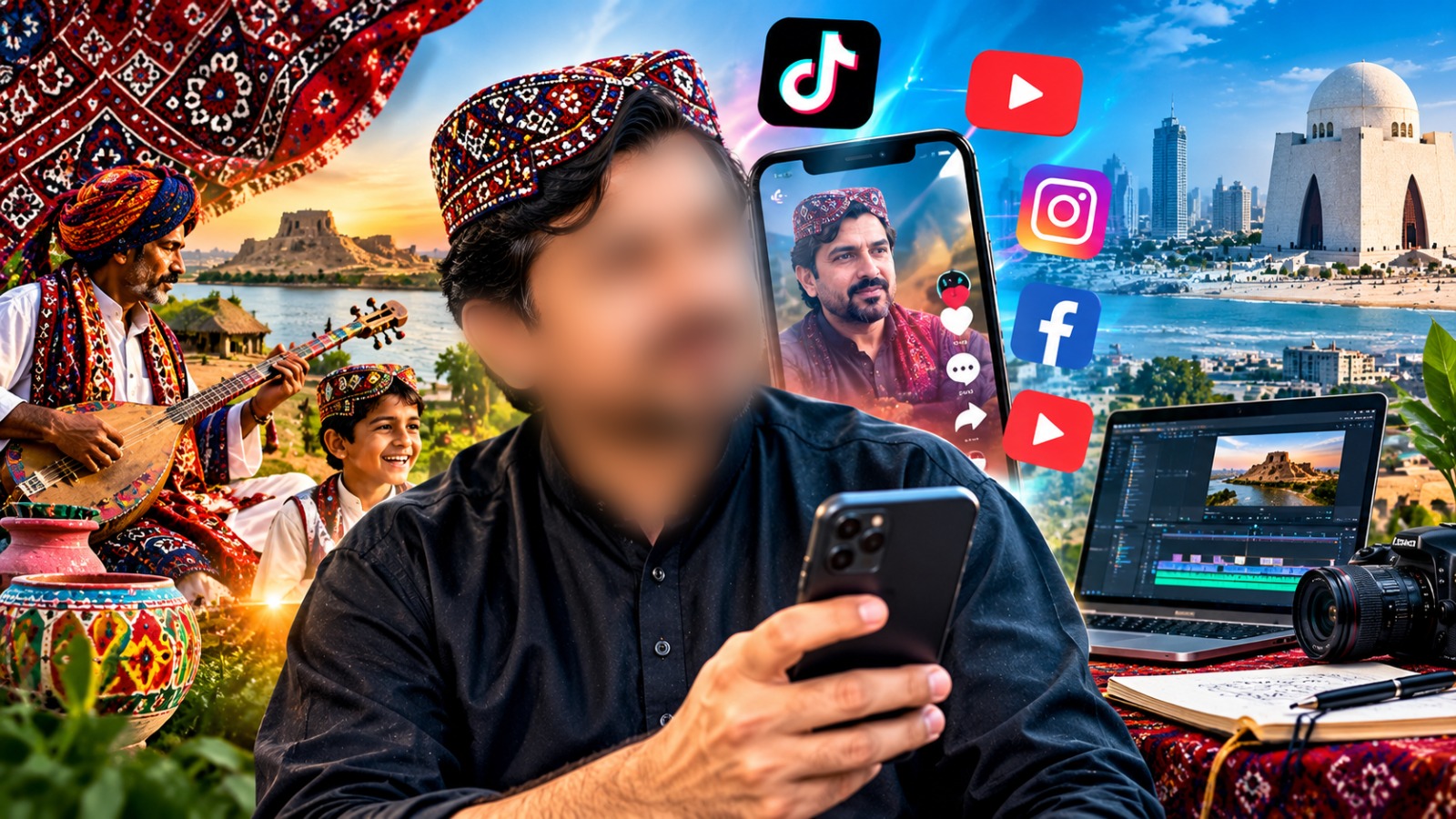
It is within this changing landscape that the digital journey of Pakistani content creator and social media personality Syed Shahid Hussain Shah, popularly known as Syed Shahid Kazmi, has gained attention. Through his social media platforms, particularly his TikTok account @syedshahidkazmi110, he creates content centred on Sindhi culture, humour and entertainment, attracting interest from viewers and followers on social media.
One of the distinctive features of his content is the attempt to present simple and relatable moments from everyday life in a modern digital format. Such content combines entertainment with elements of local society, language and cultural character.
Culture is not limited to traditional clothing, music or ceremonies. It also lives in the way people speak, laugh, think, interact, use expressions and experience their everyday lives. When these elements are presented through modern media, their form may change, but their cultural essence can remain intact.
The content associated with Syed Shahid Kazmi similarly reflects an effort to present these small but familiar aspects of everyday life through digital storytelling. When humour is presented in a positive and constructive way, it can do more than entertain. It can also allow society to see a reflection of itself. At times, a simple humorous scene can communicate an idea more effectively than a lengthy speech.
For many young people today, the screen is often their first point of contact with information and entertainment. This makes digital media increasingly important for languages such as Sindhi. If the language is to remain relevant to future generations, it must also find a place within contemporary forms of communication.
The survival of a language depends not only on preserving its historical heritage but also on ensuring that it continues to be used by future generations. Creative, meaningful and engaging digital content can therefore play a role in keeping Sindhi visible in the modern media landscape.
Another important feature of social media is accessibility. A creator does not necessarily need the backing of a major institution, newspaper or television network to reach an audience. Digital platforms allow individuals to communicate directly with viewers and build their own communities.
However, this freedom also brings responsibility. Every word, image and video shared online can influence the people who see it. For digital creators, therefore, popularity needs to be accompanied by quality, responsibility and a constructive approach to content creation.
Syed Shahid Kazmi has said that his aim is to create content that entertains audiences while also reflecting Sindhi language, culture and local society. In his view, modern digital platforms can be used not only for entertainment but also as a means of introducing language and cultural identity to younger generations.
At the same time, building and maintaining an audience in the digital world requires continuous creativity. New trends, formats and creators appear every day. In such an environment, consistency, originality and sincerity towards one’s subject can give a digital journey greater meaning.
For the Sindhi language, this is an important moment. Sindh has a rich intellectual and literary heritage, from the poetry of Sufi saints to contemporary literature. The challenge is to find new ways of carrying that heritage into the language and media environment of younger generations.
One possible answer lies in embracing technology as a partner rather than viewing it as a threat to tradition. Sindhi creators can use digital platforms to bring the language, stories and cultural identity of their communities into spaces where younger audiences already spend much of their time.
A short video can today carry a message across borders in much the same way that a book carries ideas from one generation to another. The difference is that a video invites people to engage with its message through sight and sound. When that video carries the fragrance of one’s homeland, the richness of one’s language and a reflection of everyday society, it can become more than entertainment. It can become a form of cultural expression.
Syed Shahid Kazmi’s digital journey can be viewed as one small but interesting part of this broader transformation. Sindhi language and culture are increasingly finding space not only in traditional forms of communication but also in the rapidly changing digital world.
Ultimately, times change, platforms evolve and methods of communication continue to transform. Yet the emotional connection people have with their homeland and language can remain strong. If those emotions are now appearing on mobile screens through short videos and digital content, that too is a reflection of the times.
The real challenge is to ensure that the voice of cultural identity does not disappear amid the speed of modernisation.
Perhaps the greatest strength of the digital age lies in its ability to connect people with the wider world while allowing them to maintain a deeper connection with their own roots. When Sindhi language, culture and society find new forms of expression in the digital world, it is not simply the work of an individual creator. It is also part of a wider journey to carry cultural identity into the language of a new generation.