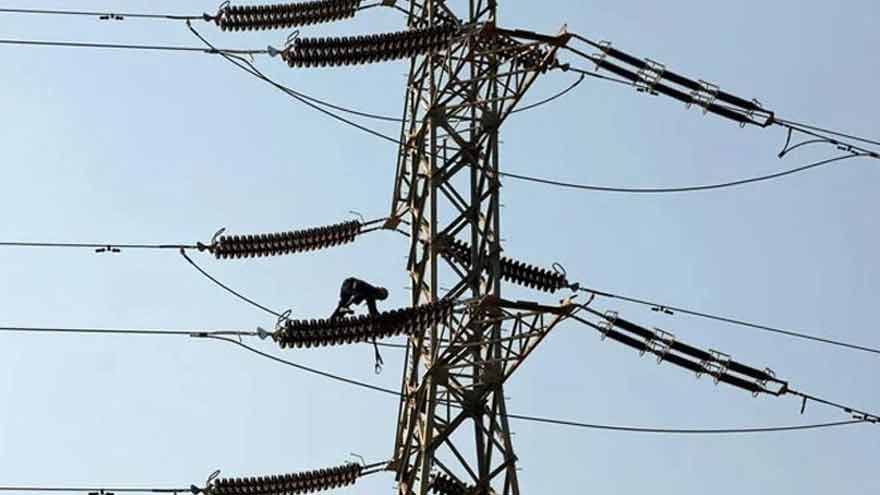
The National Electric Power Regulatory Authority (NEPRA) has approved the Integrated System Plan 2025–35, targeting Pakistan’s electricity generation and transmission needs over the next decade. The plan, submitted by the Independent System and Market Operator (ISMO), envisages around $47.13 billion in new generation investment and another $10.65 billion for transmission upgrades.
Pakistan’s maximum electricity demand is projected to increase from 26,950 megawatts in 2025 to 35,521MW by 2035. To meet the expected requirement, the plan calls for 26,045MW of additional generation capacity, including 17,485MW from already allocated projects and 8,560MW from newly optimised proposals.
However, NEPRA rejected a proposed $900 million Battery Energy Storage System (BESS), saying its costs had not been properly assessed through ISMO’s optimisation model. The regulator ordered a comprehensive technical study before the project can be reconsidered.
Pakistani Rupee Strengthens as Dollar Falls to Rs277.32
The plan also estimates that 2,577MW of existing generation capacity will be retired during the period.
NEPRA declined to endorse ISMO’s proposed 2028 completion date for the NGC-K-Electric interconnection transmission line. It said the timeline was unrealistic because construction of the project would take roughly five years.
The Integrated System Plan focuses on two major areas: developing new power-generation projects and expanding Pakistan’s electricity transmission network. NEPRA directed ISMO to improve the quality and clarity of its data and resolve discrepancies in tariff projections before preparing its next plan.
The decision was not unanimous. NEPRA members submitted separate notes outlining concerns over several aspects of the plan.
Member Maqsood Anwar Khan objected to the removal of several hydropower projects, including Gabrial Kalam, Madian, Kalam Asrit and Asrit Kadam. He argued that the projects had previously been approved and protected, and were removed without clear legal justification.
He warned that excluding projects after investors had relied on earlier assurances could undermine investor confidence.
Stakeholders, including planners, business groups and provincial governments, also questioned the need for further large-scale investment. They pointed out that Pakistan already has an estimated 15–20GW of surplus generation capacity, while existing power plants are operating at only around 45% of their potential.
They warned that additional capacity could increase circular debt and capacity payments, eventually placing more pressure on consumers through higher electricity bills.
NEPRA member Amina Ahmed delivered the strongest criticism in her dissenting note. She pointed out that K-Electric secured renewable energy tariffs as low as 3.09 US cents per kilowatt-hour in a late-2024 auction, the lowest rate achieved in Pakistan so far.
According to Ahmed, ISMO had failed to include renewable projects with a combined capacity of around 640MW in its planning for more than a year, despite repeated questions from NEPRA, including an application submitted in March 2026.
She said ISMO had initially used incorrect data in its optimisation model. After the figures were corrected in July 2026, the results showed that incorporating the cheaper renewable electricity would actually reduce the overall system cost, rather than increase it.
Ahmed said the issue had significantly weakened NEPRA’s confidence in ISMO’s optimisation process.
NEPRA Chairman Waseem Mukhtar supported the final decision but highlighted a broader problem facing Pakistan’s power sector: consumers are paying for more generation capacity than the system currently needs.
He noted that national-grid demand has already fallen to around 12,000MW during daytime hours, partly because households and businesses are increasingly turning to solar panels and other alternative energy sources.
The regulator’s decision therefore highlights a difficult challenge for Pakistan’s electricity sector: balancing future energy needs with existing surplus capacity, cheaper renewable power and the rising financial burden of capacity payments.