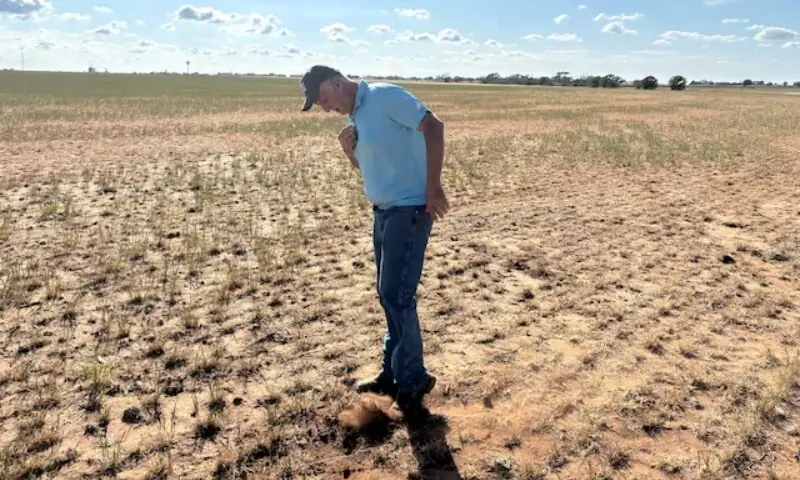
Dry weather across Asia is disrupting crop planting and raising concerns about food supplies. Experts warn that a severe El Niño weather pattern could worsen conditions later this year.
Farmers, traders, and analysts report that low rainfall and high temperatures are affecting major agricultural regions. The impact extends from India’s grain belt and Australia’s wheat farms to Southeast Asia’s rice fields and Indonesia’s palm oil plantations.
El Niño Adds Pressure on Farmers
The expected El Niño event could bring prolonged dry weather to many parts of Asia. At the same time, farmers face fertilizer and diesel shortages linked to the ongoing Iran conflict.
Meteorologists expect one of the strongest El Niño events on record to develop during the second half of 2026. This weather pattern often brings hot and dry conditions to Asia while increasing rainfall in parts of the Americas.
Chris Hyde, a meteorologist at SkyFi, said satellite imagery already shows signs of drought in several Asian regions.
India Faces Delayed Crop Planting
India’s Meteorological Department recently lowered its forecast for the monsoon season. The monsoon supplies nearly 70 percent of the country’s annual rainfall.
Agricultural experts warn that delayed rains could slow the planting of summer crops. These include rice, soybeans, corn, sugarcane, and pulses.
They also fear that extended dry spells could reduce yields after the monsoon arrives.
Southeast Asian Farmers Express Concerns
Farmers across Southeast Asia are preparing for difficult conditions.
In Thailand, many growers worry about water shortages for rice cultivation. Some farmers may limit production to a single harvest if rainfall remains low.
Meanwhile, Indonesia’s meteorological agency reported extended dry periods in several regions. These include parts of Java, Sumatra, Kalimantan, and Sulawesi. Forecasts point to low to moderate rainfall during June.
Food Prices Continue to Rise
Concerns over lower agricultural output have pushed food prices higher.
Wheat prices have risen about 20 percent since the start of 2026. Drought fears in major producing regions have driven much of the increase.
Rice prices at key Southeast Asian export hubs have also climbed around 15 percent over the past month.
Although India holds large rice reserves, traders remain cautious. Some believe authorities could consider export restrictions if monsoon conditions worsen.
Fertilizer Supply Remains a Key Risk
Analysts say fertilizer shortages may pose an even greater threat than drought.
Research from KKP Research in Thailand suggests that severe shortages could cut rice production by 15 to 20 percent in a worst-case scenario.
Australia Watches Weather Closely
Recent rainfall has allowed Australian farmers to begin late wheat planting. However, many growers remain concerned about El Niño-related weather risks.
Forecasts show that major farming regions in New South Wales and Queensland may receive less rainfall than usual over the next three months.
As a result, some farmers have already reduced planting areas.
Global Food Markets Monitor Developments
Agricultural experts say the combination of drought, rising costs, and supply concerns could affect global food markets.
Weather conditions may remain more stable in China and the Black Sea region. However, traders continue to watch developments across Asia as El Niño strengthens.