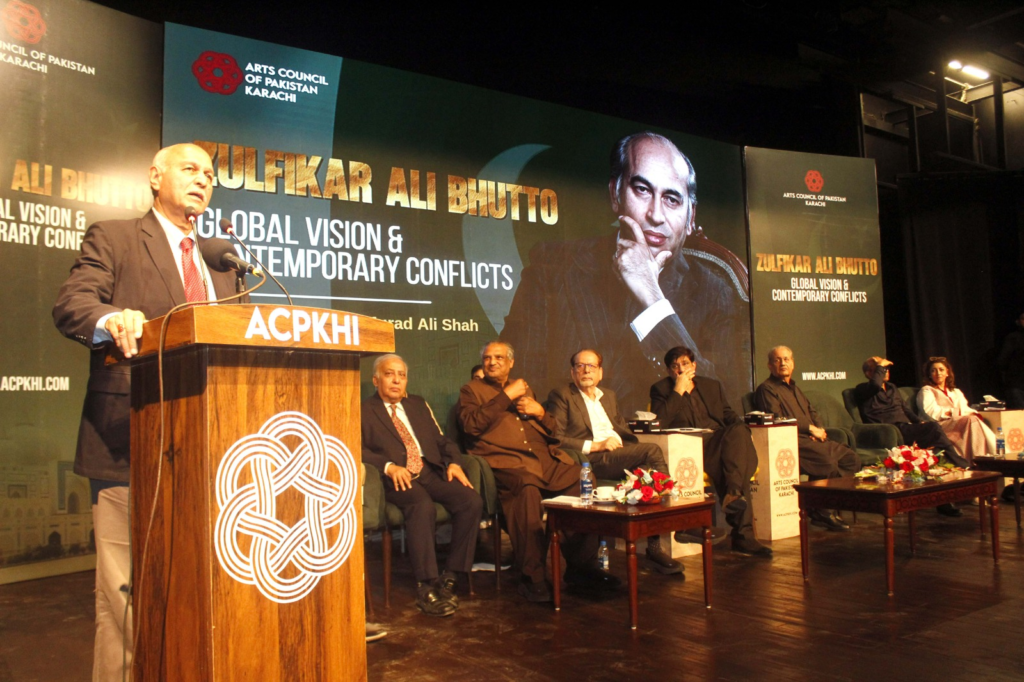
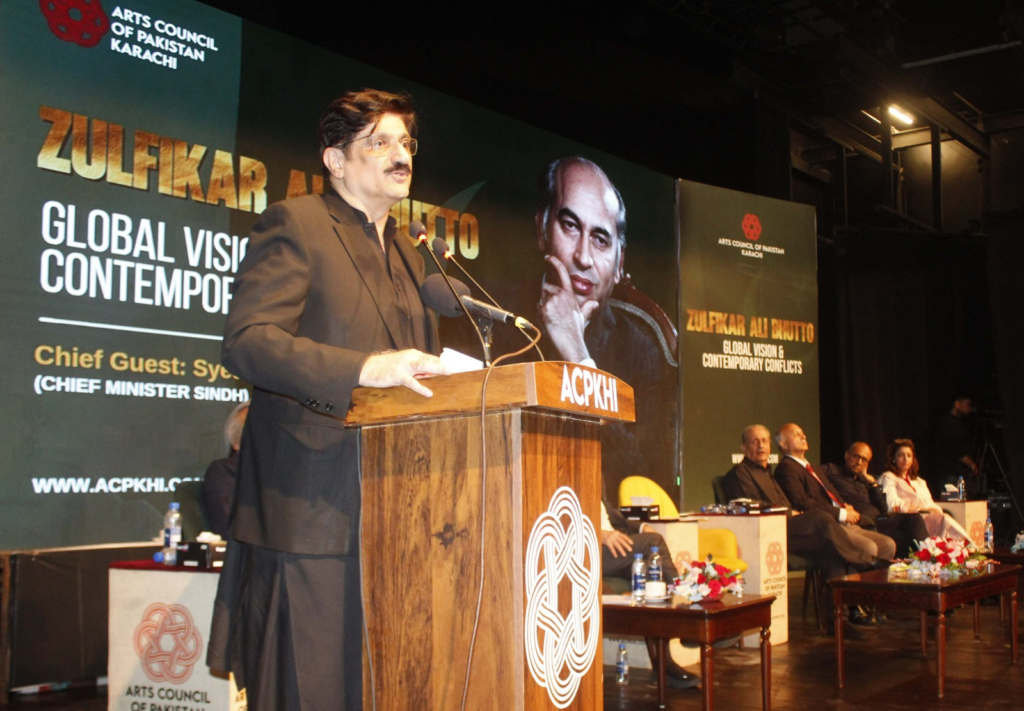
Karachi: The Arts Council of Pakistan Karachi organized a special ceremony at Auditorium One to mark the 47th death anniversary of Shaheed Zulfiqar Ali Bhutto under the title “Zulfiqar Ali Bhutto (Global Vision & Contemporary Conflicts)”.
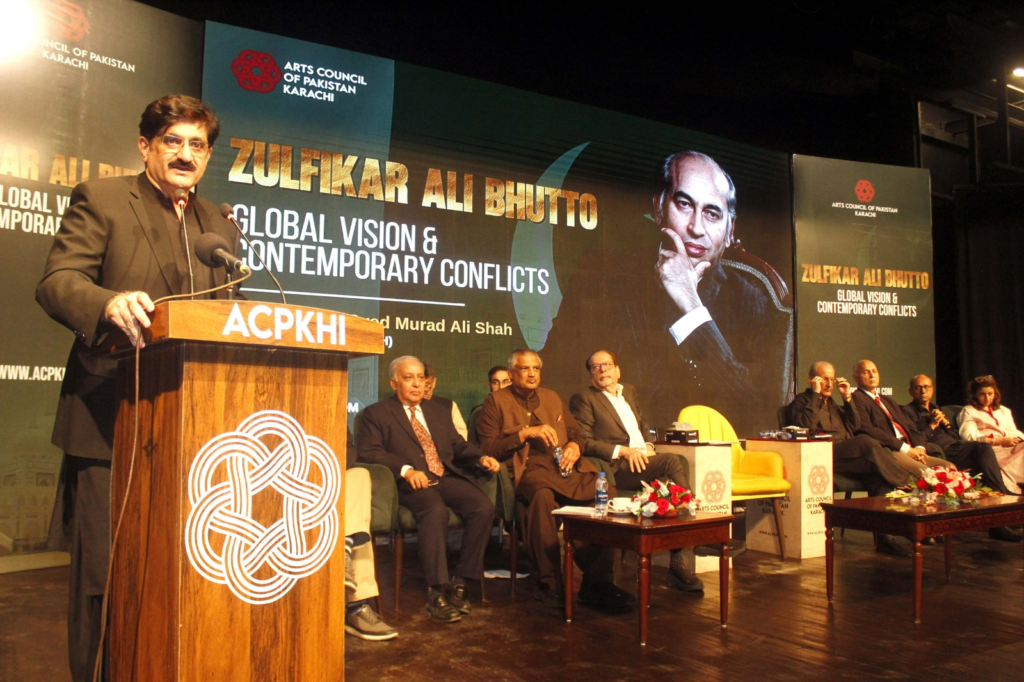
The event was attended by Sindh Chief Minister Syed Murad Ali Shah as the chief guest. Speakers at the session included Muhammad Ahmed Shah, Mushahid Hussain Syed, Raza Rabbani, Sohail Warraich, Saeed Ghani, Huma Baqai, Dr. Jaffar Ahmed and Mazhar Abbas, who spoke on the topic “Zulfiqar Ali Bhutto — Global Vision and Contemporary Conflicts.”
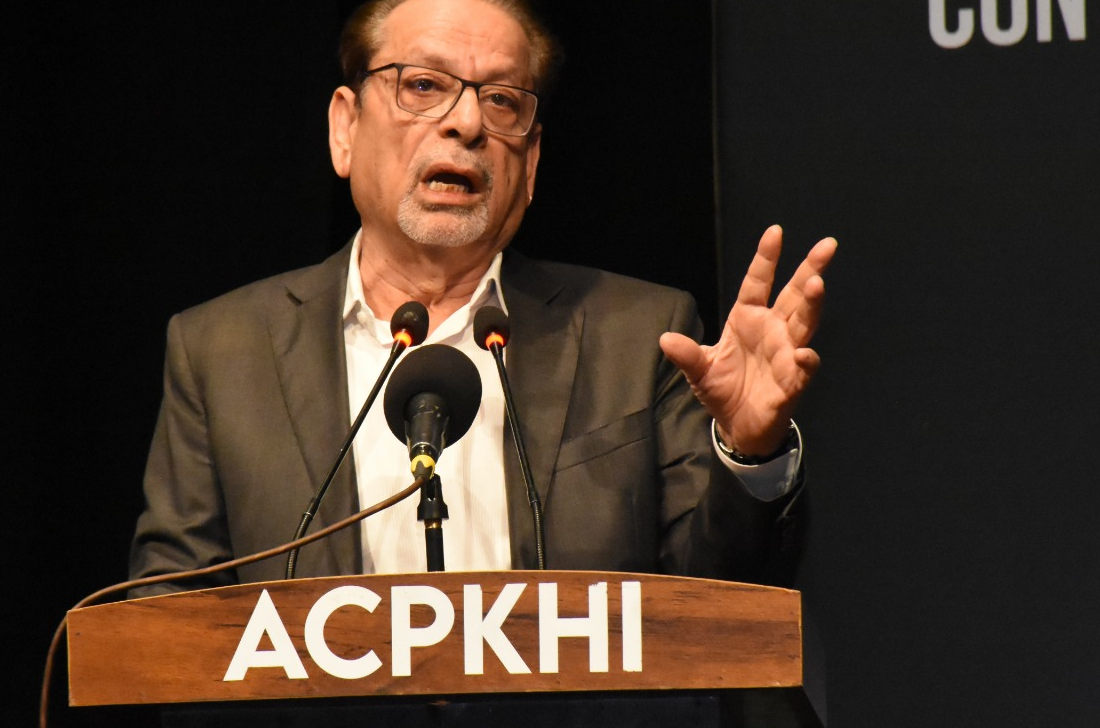
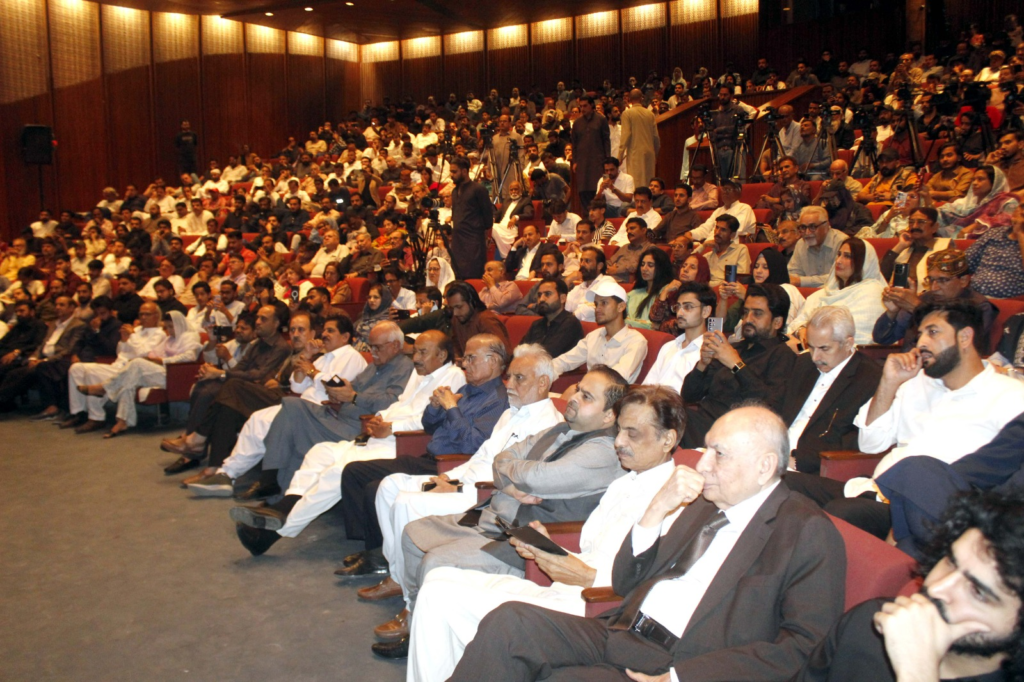
Senior leaders of the Pakistan Peoples Party including Nisar Khuhro, Provincial Minister Saeed Ghani, Waqar Mehdi, Deputy Mayor Karachi Salman Abdullah Murad and Farhan Ghani also attended the event. President Arts Council Muhammad Ahmed Shah warmly welcomed the guests, while the session was moderated by Dr. Ayub Sheikh. The ceremony began with the recitation of the Holy Quran followed by the national anthem.
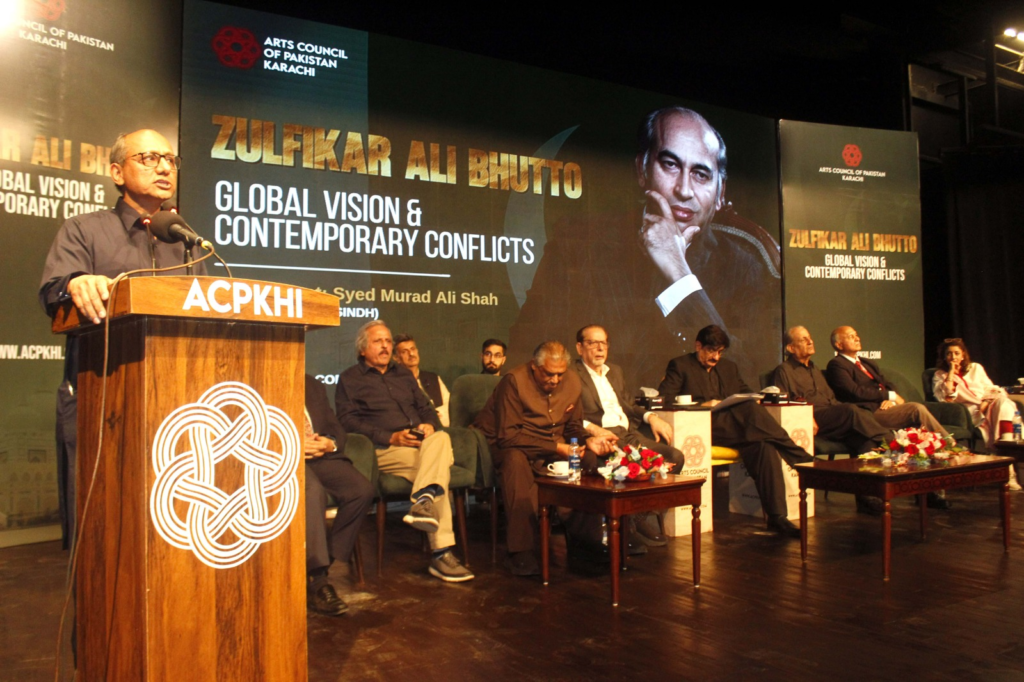
Addressing the audience, Chief Minister Syed Murad Ali Shah said that speaking about Zulfiqar Ali Bhutto requires no research or preparation because his personality and achievements are so well known. He said he felt fortunate to belong to a family that had been associated with the Pakistan Peoples Party since its early days. Murad Ali Shah said that Bhutto believed Pakistan’s progress depended on strengthening ties with China, and that vision later became a cornerstone of Pakistan’s foreign policy and economic strategy. He added that Bhutto understood the importance of unity among Muslim countries. According to him, if Bhutto were alive today, the current geopolitical tensions—particularly those involving Iran and the actions of Israel in the Middle East—might not have reached the current level of crisis. Bhutto’s speeches, especially those delivered at the United Nations, continue to inspire policymakers even today.
Murad Ali Shah further said that Bhutto made the historic decision to launch Pakistan’s nuclear program in order to make the country’s defense invincible. Today Pakistan’s strategic defense capability and much of its foreign policy framework are rooted in those decisions. Quoting Bhutto, he said: “I am a Muslim, the son of a Muslim, and I will make every sacrifice for this country. I will sacrifice my life for Pakistan and even the lives of my children.” President Arts Council Muhammad Ahmed Shah said that Bhutto also understood the importance of culture. He recalled that Bhutto had once delivered speeches on the unpaved grounds of the Arts Council and was the first leader in Pakistan to establish a number of cultural institutions.
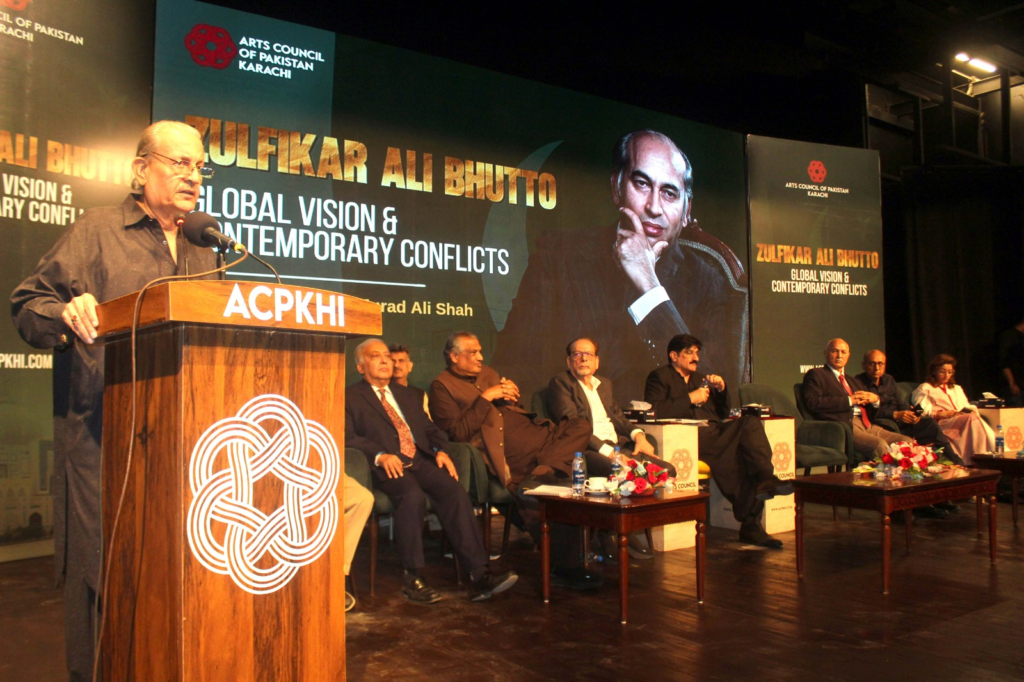
According to him, Bhutto recognized the significance of global connectivity and diplomacy through culture. He also said that the Shimla Agreement was among Bhutto’s major diplomatic achievements. Although Bhutto served as Prime Minister for only four and a half years, he empowered workers, farmers and ordinary citizens with a new sense of dignity and confidence during that short period. Ahmed Shah added that Bhutto’s nationalization policy dealt a major blow to the economic system that concentrated wealth in a few hands. He said Bhutto envisioned Pakistan as a strong and sovereign state, and the nuclear program was one of the most significant steps toward that goal. Speakers also discussed global conflicts and noted that many wars in the Middle East—including the Iran–Iraq War and the Iraqi invasion of Kuwait—have been rooted in struggles over natural resources such as oil, gas and water. Raza Rabbani said that global powers continue to compete for control of oil and mineral resources, citing examples involving Iran and Venezuela.
He noted that Bhutto had warned Arab countries in the 1970s that unless they united and used oil as leverage, global powers would dominate their resources. This vision led to the historic 1974 Islamic Summit Conference in Lahore, which brought together leaders from across the Muslim world. Mushahid Hussain Syed said that Bhutto remains alive through his achievements. He noted that Bhutto transformed Pakistan into the first nuclear power in the Muslim world and laid the foundations of many strategic relationships, including long-standing cooperation with Saudi Arabia. Journalist Sohail Warraich remarked that societies often fail to recognize the greatness of leaders in their own time. He said the execution of Zulfiqar Ali Bhutto deprived the people of Pakistan of their rightful role in democratic governance. Until the political, legal and moral aspects of that event are fully addressed, he said, Pakistan’s democratic system will remain incomplete.
Saeed Ghani said he was proud to be a worker of the Pakistan Peoples Party and described Bhutto as an extraordinary leader whose intelligence and political vision were remarkable. He said Bhutto founded the party at the age of 39 and achieved historic milestones during just four and a half years in power. Senior journalist Mazhar Abbas said Bhutto was not only a leader of Pakistan but also a statesman who deeply understood global politics. He noted that Bhutto wrote insightful analyses about world affairs even while imprisoned, demonstrating his far-reaching vision. Academic Huma Baqai said she developed an intellectual connection with Bhutto while studying international relations. She said reading about Bhutto makes one feel proud that such an extraordinary leader once existed. She also recalled the tragic events surrounding the return of Benazir Bhutto to Karachi and the attack at Karsaz.
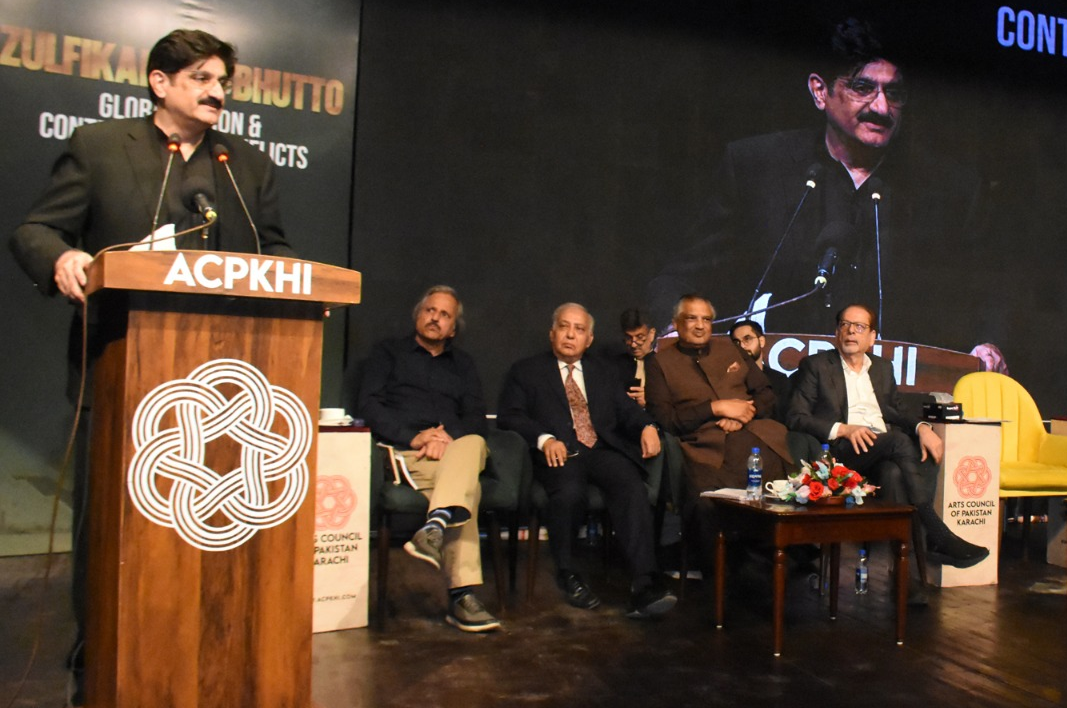
Scholar Dr. Jaffar Ahmed concluded that Bhutto was not only a major political figure but also Pakistan’s first elected Prime Minister who played a crucial role in placing the country on a democratic path. The speakers collectively emphasized that the vision, policies and legacy of Zulfiqar Ali Bhutto continue to influence Pakistan’s political thought, foreign policy and democratic aspirations even decades after his death.