Staff Reporter
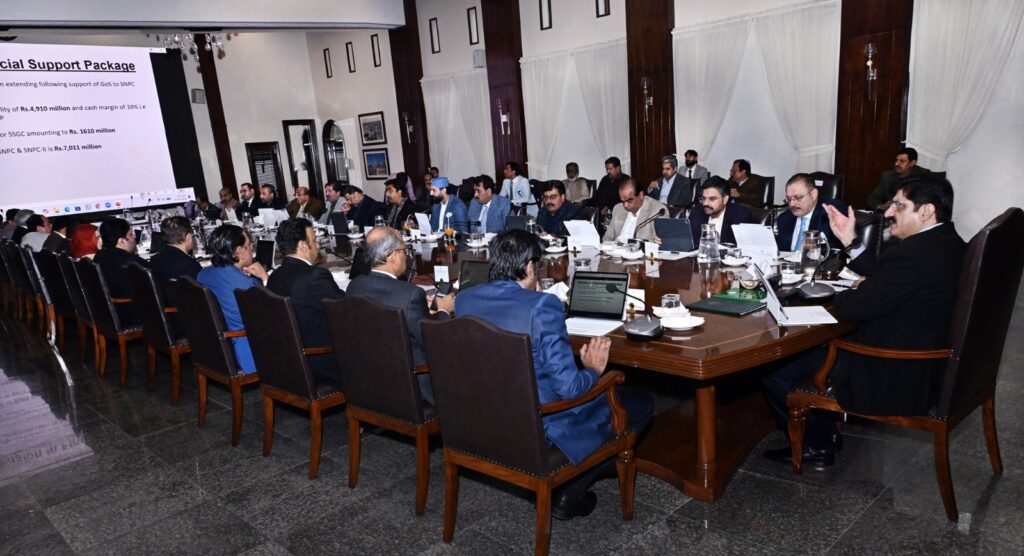
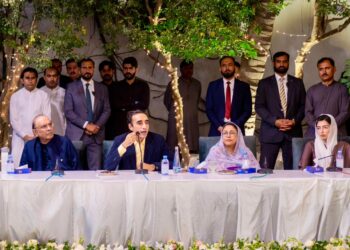
Karachi: The Sindh Provincial Cabinet, chaired by Chief Minister Syed Murad Ali Shah, on Tuesday approved a wide-ranging relief and rehabilitation package for victims of the Gul Plaza tragedy, constituted a high-level subcommittee to review the inquiry report, and sanctioned multi-billion-rupee development projects aimed at strengthening Karachi’s infrastructure and public services.
At the outset of the meeting, the cabinet offered fateha for those who lost their lives in the Gul Plaza incident. The chief minister said the government’s foremost responsibility was to provide immediate relief while ensuring accountability.
“There can be no compromise on human life. Relief, justice, and prevention must go hand in hand,” Murad Ali Shah said.
Gul Plaza tragedy: compensation, loans, and oversight
The cabinet approved Rs10 million compensation for each deceased person’s family. For affected traders, it sanctioned interest-free loans of up to Rs10 million per shopkeeper, with the Sindh government bearing the entire interest cost. In addition, Rs500,000 per shopkeeper will be provided as immediate subsistence support.
The chief minister directed that alternative commercial spaces be arranged within two months to enable shopkeepers to resume business, a move also endorsed by the cabinet.
A high-level subcommittee comprising Sharjeel Inam Memon, Nasir Hussain Shah, Saeed Ghani, and Ziaul Hassan Lanjar was formed to review the inquiry committee’s findings and recommend further action. The inquiry is being conducted by a committee headed by Commissioner Karachi Hassan Naqvi.
“No negligence will be overlooked. Those found responsible will be held accountable,” the CM said.
Rs19.1bn approved for Karachi road network
The cabinet approved Rs19.116 billion for the immediate execution of six major road projects in Karachi, including the Star Gate flyover, Malir Halt underpass, Sohrab Goth flyover, and the reconstruction of key arteries linking M-9 to Malir and Main Korangi Road to Khayaban-e-Saadi.
“These projects are essential for easing congestion, improving safety, and supporting Karachi’s economic activity,” Murad Shah said, directing the Local Government Department to begin work without delay.
Mass transit: BRT Yellow and Red Lines
The cabinet approved the revised PC-I of the BRT Yellow Line, raising the project cost to $620 million, including additional World Bank financing for electric buses and flyovers. The project is targeted for completion by December 31, 2028.
For the BRT Red Line, the cabinet authorised Rs300 million for land acquisition for the Malir Depot, reiterating that the project remains on track for June 2026 completion.
Lyari Expressway affectees
A committee headed by Local Government Minister Nasir Hussain Shah was formed to review compensation claims of 53 Lyari Expressway affectees amounting to Rs315 million. While noting the project falls under federal jurisdiction, the chief minister said the province would step in if claims are legally validated.
Water security and municipal projects
To address Karachi’s water shortages, the cabinet approved awarding the 36-km Dumlottee–DHA water pipeline project to the Frontier Works Organisation (FWO), with the Sindh government providing Rs10.55 billion to the Water Board.
The cabinet also approved the allocation of 100 acres of forest land to the Hyderabad Municipal Corporation for a 6 MGD water filtration plant at Deh Bhelo Miano, directing that alternative land be provided to the Forest Department for compensatory plantation.
Welfare, agriculture and governance decisions
The cabinet approved a two-year extension of the agreement with the Anti-Narcotics Force to continue operating drug rehabilitation centres in Karachi, Manghopir and Malir.
In the agriculture sector, it sanctioned Rs6.371 billion for a state-of-the-art fruit and vegetable mandi in Larkana, featuring cold storage, hospitality facilities and a 1MW solar power system.
The Sindh Workers Welfare Board was reconstituted with equal representation of employers and workers to improve transparency.
The cabinet also approved the closure of the Sindh Renewable Energy Company, citing duplication of functions with the Energy Department, and sanctioned the appointment of seven non-official members to the Boards of Governors of law colleges across the province.
Concluding the meeting, the chief minister stressed the need for swift and high-quality execution.
“Relief for the distressed, modern infrastructure, and transparent governance are our priorities. These decisions must translate into visible improvement for the people,” he said.