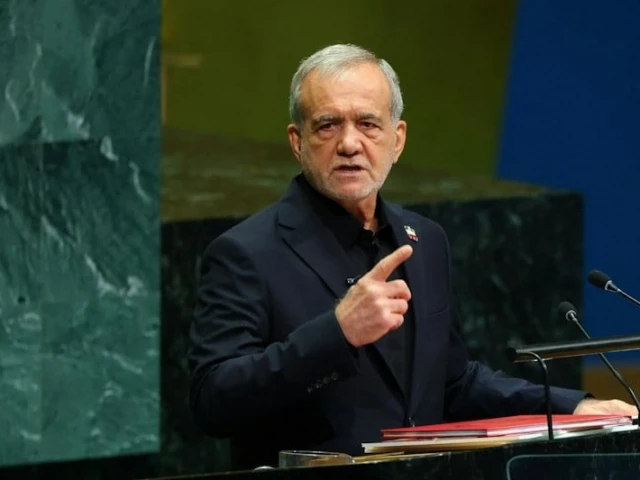
Iranian President Masoud Pezeshkian has said Tehran does not seek war with the United States and remains prepared to pursue a negotiated agreement, as tensions between the two countries continue.
In an interview with Fox News host Bret Baier, Pezeshkian was asked whether Iran was choosing between war and a diplomatic deal.
“We do not choose war. The war was imposed on us. We do not seek war,” he said.
Pezeshkian said Iran remained willing to revive an agreement with Washington. He referred to an earlier understanding that he said had called for a final agreement within 60 days before talks broke down over differences involving navigation in the Strait of Hormuz.
“We did reach an agreement with your president, Donald Trump,” Pezeshkian said. “Based on that, we are willing and still wish to move forward.”
He added that the United States would have to decide whether it wanted to end the conflict.
Asked whether Iran would give up uranium enriched to 60%, Pezeshkian said Tehran would follow its obligations under international law and the Nuclear Non-Proliferation Treaty.
Italy Approves School Decree Banning Face Coverings, Capping Foreign Pupils
“Yes,” he said when asked whether Iran would comply with those obligations.
The comments came as diplomatic efforts continued around the United Nations General Assembly in New York. Iran has also proposed reopening the Strait of Hormuz within seven days if Washington eases military pressure and lifts its blockade on Iranian ports.
The waterway remains a major focus of the crisis. Recent ship-tracking data showed commercial traffic well below its pre-war level, although some vessels may not appear in tracking data when their transponders are switched off.
Pezeshkian also rejected the suggestion that Iran had closed the Strait of Hormuz.
He was further asked about Supreme Leader Mojtaba Khamenei, who has made few public appearances since succeeding his father, Ayatollah Ali Khamenei.
Pezeshkian said he had met Mojtaba Khamenei in person about a month earlier and spent roughly seven hours with him. He also said the supreme leader was healthy and continuing to provide direction.
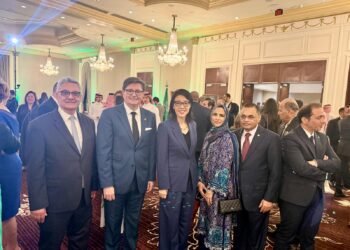
Meanwhile, Saudi Arabia, Türkiye and Pakistan are preparing for an urgent meeting of their military chiefs under the Makkah Joint Defence Agreement. The talks are expected to address support for Saudi Arabia following attacks by Yemen’s Houthis.
The developments come amid wider regional tensions involving Iran, Saudi Arabia and Yemen. Tehran has sought to distance itself from Houthi military decisions, with Pezeshkian saying the group was responsible for its own actions.
The US Senate also rejected a Democratic-led resolution on Thursday that sought to limit President Donald Trump’s authority to continue military operations against Iran without congressional authorization. The measure failed in a 50-49 vote.