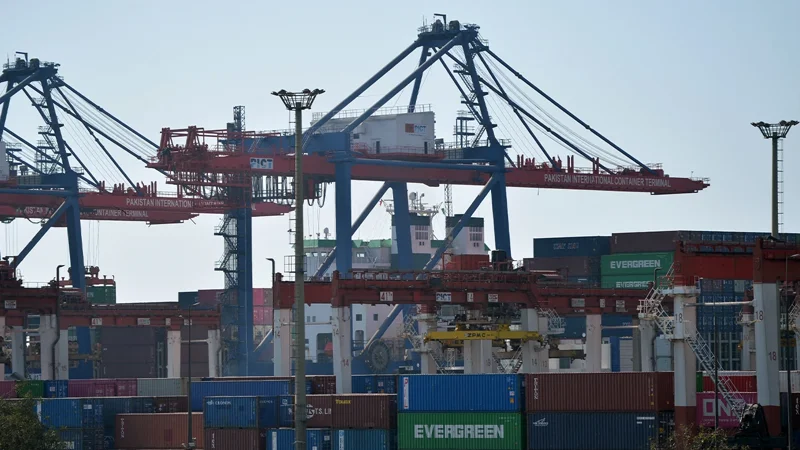
Pakistan’s trade deficit widened by nearly 20 per cent year-on-year to $3.88 billion in October 2026, compared with $3.24 billion in the same month last year, according to data released by the Pakistan Bureau of Statistics (PBS) on Friday.
The increase reflected stronger import demand and relatively slow export growth, adding pressure to the country’s external trade balance.
Exports during October 2026 reached $2.93 billion, up 2.8 per cent from $2.85 billion in October 2025.
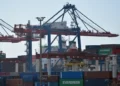
Imports, meanwhile, climbed nearly 12 per cent to $6.81 billion from $6.09 billion a year earlier.
Trade deficit rises 10% month-on-month
The trade deficit also increased by more than 10 per cent compared with September 2026, when it stood at $3.52 billion.
The monthly expansion came as imports increased while exports remained largely unchanged.
Four-month trade deficit reaches $14.63 billion
During the first four months of fiscal year 2026-27, Pakistan’s trade deficit widened by nearly 16 per cent to $14.63 billion, compared with $12.61 billion in the corresponding period last year.
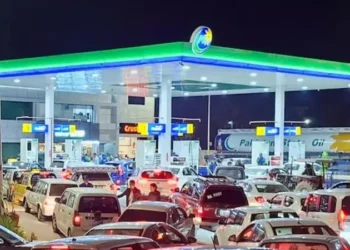
Pakistan Cuts Petrol Price by Rs9.41, Diesel by Rs5.56 Per Litre
Imports increased by more than 12 per cent to $25.96 billion from $23.06 billion, while exports grew by more than 8 per cent to $11.34 billion from $10.45 billion.
The figures show that import growth continued to outpace export growth, contributing to the widening trade gap.
Heavy import dependence weighs on trade balance
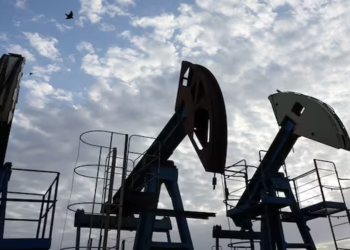
Pakistan relies heavily on imported fuel, machinery, chemicals and food products. Petroleum products account for a substantial portion of the import bill, increasing pressure on foreign exchange reserves.
Automobile imports have also recorded a significant increase, adding to overall import expenditure.
On the export side, Pakistan remains heavily dependent on traditional and consumer-based products, including rice, raw cotton, textiles and leather.
The manufacturing sector continues to face challenges in moving towards higher-value-added production. High energy tariffs, increased taxation, expensive financing, policy uncertainty and declining competitiveness have also affected the country’s export performance.