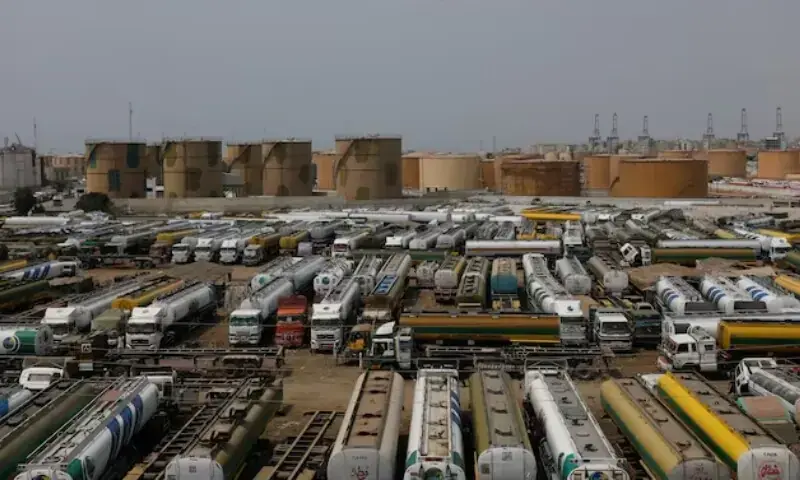
Pakistan’s oil industry has asked Prime Minister Shehbaz Sharif to intervene in its growing financial crisis.
In a letter, the Oil Companies’ Advisory Council (OCAC) requested an urgent meeting with the prime minister.
The council wants discussions with leaders of major oil companies and refineries.
According to OCAC Chairman Asif Iqbal, the sector faces serious financial pressure.
He said delayed recoveries continue to hurt the industry. In addition, operating costs have increased sharply.
Furthermore, companies face higher compliance costs and policy uncertainty.
As a result, the industry says it needs immediate government support.
Industry Seeks Release of Rs66bn in Pending Claims
The industry’s biggest concern is the delayed payment of Price Differential Claims (PDCs).
These claims relate to fuel supplied at lower prices during the early days of the US-Iran conflict.
According to OCAC, the government has released around Rs54 billion so far.
However, about Rs66 billion remains unpaid.
The council says these delays have created severe liquidity problems.
Consequently, many companies face growing cash flow pressures.
Furthermore, OCAC says auditors have already verified most claims.
Therefore, it wants the Oil and Gas Regulatory Authority (Ogra) to clear all payments by June 8.
Industry leaders believe quick payments would ease financial stress.
Oil Firms Oppose Proposed Tax on Inventory Gains
Meanwhile, the industry has objected to a proposed tax on inventory gains.
Reports suggest the government may introduce the measure in the upcoming budget.
According to OCAC, a high-level committee is reviewing the issue.
The committee is examining gains linked to rising global oil prices.
While the industry supports the review, it wants fair treatment.
Oil companies must maintain a mandatory 20-day fuel stock.
Therefore, OCAC argues that any policy should also recognise inventory losses.
This would apply when international oil prices fall.
Marketing Margins Remain Frozen
In addition, OCAC highlighted the issue of stagnant marketing margins.
The council says authorities have not revised margins since September 2023.
However, inflation and operating costs have continued to rise.
As a result, company profitability has declined.
Furthermore, investment in critical infrastructure has slowed.
Therefore, the industry wants a predictable annual margin adjustment system.
It says such a mechanism would improve long-term sustainability.
Industry Questions EV Charger Requirement
The oil industry has also criticised the mandatory installation of Level-3 EV chargers.
According to OCAC, the policy is too expensive.
Moreover, EV adoption remains low across Pakistan.
The council says supporting infrastructure is still limited.
Consequently, many companies view the requirement as commercially unviable.
Industry leaders fear they may face major costs without adequate returns.
New Rules Delay Retail Expansion
OCAC also raised concerns about K-Form approval requirements.
Authorities now link some approvals to EV charger installations.
According to the industry, this policy has slowed retail expansion.
As a result, companies face delays in opening completed outlets.
Furthermore, investors may hesitate to develop new sites.
The council says the policy also diverts funds from essential fuel projects.
Consequently, businesses fear an increased risk of stranded assets.
Sector Seeks Immediate Relief
Overall, OCAC says the sector faces several challenges.
These include delayed payments, rising costs and regulatory uncertainty.
In addition, companies face new investment requirements.
Therefore, the council has asked the prime minister for direct intervention.
Industry leaders believe swift action would improve liquidity.
Furthermore, they say it would encourage investment and support fuel supply stability.
As a result, they want the government to address these concerns before the new budget.