Uzbekistan is strengthening its social protection system by expanding constitutional guarantees, increasing pension payments and introducing digital services aimed at ensuring a decent standard of living for all citizens.
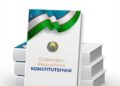
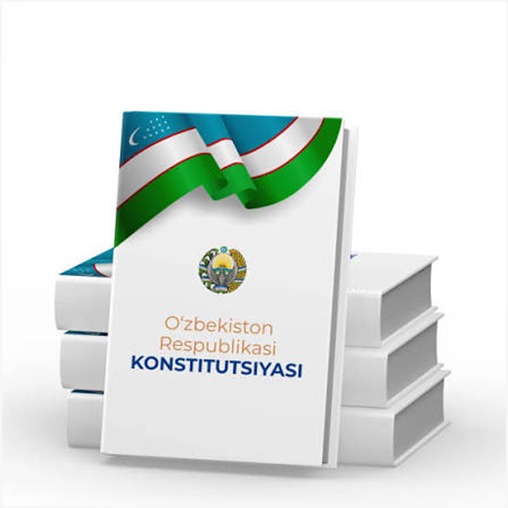
In 2026, the country marks the 34th anniversary of the adoption of its Constitution. Under Presidential Order No. F-63, issued on November 6, 2026, the anniversary is being celebrated under the motto: “The Constitution is the foundation of a life in freedom and a new future in which human dignity is upheld.”
Article 1 of the Constitution defines Uzbekistan as a social state committed to social justice and a decent standard of living. Its social protection framework covers financial benefits, assistance during social risks, access to social services and support to help vulnerable people achieve economic independence.
Constitutional Guarantees of Social Security
Article 46 of the Constitution guarantees everyone the right to social security in old age, in cases of disability, unemployment, loss of a breadwinner and other circumstances established by law.
This provision covers major social risks and aligns with Article 22 of the Universal Declaration of Human Rights and Article 9 of the International Covenant on Economic, Social and Cultural Rights.
TCF Honours 5,500 Women Teachers and Principals at Annual Awards 2026
Article 57 further strengthens these protections by placing people unable to work, older people living alone, persons with disabilities and other vulnerable groups under state protection.
The government implements these constitutional guarantees through legislation, including laws on state pension provision, funded pensions and the social protection of persons with disabilities.
Uzbekistan’s pension system combines solidarity-based and funded schemes, balancing support between generations with individual responsibility. People who acquire disabilities because of occupational injuries or diseases qualify for pensions regardless of their length of service. Children of deceased breadwinners are also entitled to survivor pensions, regardless of whether they were financially dependent on the deceased.
Pension Payments Linked to Minimum Living Standards
A significant provision of Article 46 requires pensions, benefits and other legally prescribed forms of social assistance to remain at or above the official minimum consumer expenditure (MCE).
The MCE increased by approximately 10%, rising from 648,000 soums in May 2024 to 715,000 soums in 2026.
Minimum pension payments also increased. The minimum old-age pension rose from 834,000 soums on September 1, 2024, to 983,000 soums, while the minimum disability pension increased from 920,000 to 1,083,000 soums.
The revised rates took effect on July 1, 2026, under Presidential Decree No. UP-115, issued on June 23, 2026. Both increases amounted to nearly 18%.
As a result, the minimum old-age pension increased from 129% to 137% of the MCE, while the minimum disability pension rose from 142% to 151%.
Digital Systems Strengthen Social Protection
Uzbekistan’s reforms build on its Social Protection Strategy, approved under Presidential Decree No. UP-175 on July 25, 2022. The strategy drew on a 2020 assessment prepared by the International Labour Organization, the World Bank and UNICEF.
Presidential Decree No. UP-82, issued on June 1, 2023, brought previously fragmented social protection programmes under the National Agency for Social Protection, operating under the President of Uzbekistan. The decree also established local Inson Social Services Centres.
A unified Social Register began operating on February 1, 2026, under Presidential Decree No. UP-258 of December 26, 2025. It combines the former Unified Social Protection Register with the Register of Poor Families.
The system extends assistance to low-income households as well as families considered to be at the poverty threshold, whose per capita income ranges between one and 1.5 times the MCE.
Cabinet of Ministers Resolution No. 35, issued on January 29, 2026, sets out procedures for supporting these households.
The digital system also simplifies access to assistance. Benefits for children with disabilities and their caregivers are granted proactively, without requiring applications. Certain other social benefits are also awarded automatically through the information system.
Family, Mahalla and Employment at the Centre
Uzbekistan’s social protection model draws on traditional values of mehr-oqibat, or mutual care, and hashar, a practice of collective work. These principles also feature in the country’s constitutional framework.
Article 76 recognises the protection of the family by society and the state, while Article 78 provides for state protection of motherhood, fatherhood and childhood.
The mahalla, or local community, plays a central role in identifying families’ needs. Its “Mahalla Seven” group of designated officials assesses household circumstances through xonadonbay, a door-to-door assessment system.
In 2026, designated as the “Year of the Development of the Mahalla and Society as a Whole,” the government allocated 7.5 trillion soums to establish 40 microprojects in each mahalla and create employment opportunities for 360,000 people.
Greater Focus on Children’s Protection and Inclusion
The reforms also place particular emphasis on children’s rights and welfare.
In 2025, Uzbekistan introduced inclusive education for the first time in 208 kindergartens. The Law on the Protection of Children from All Forms of Violence came into force on May 15, 2025.
Presidential Decree No. UP-256, issued on December 24, 2025, approved the Strategy for the Protection of Children from All Forms of Violence for 2026–2030.
In September 2025, Uzbekistan became the first country in Central Asia and the 46th worldwide to join the Pathfinding Global Alliance to End Violence Against Children.
Poverty Reduction and International Recognition
According to a survey by Uzbekistan’s National Statistics Committee and the World Bank, the country’s poverty rate declined from 17% in 2021 to 11% in 2023, 8.9% in 2024 and 5.8% in 2025.
Nearly 1.5 million people moved out of poverty in 2025, while 1,435 mahallas achieved poverty-free status for the first time. The World Bank estimates that 3.7 million people moved out of poverty between 2021 and 2025.
The Ministry of Employment and Poverty Reduction reported that the poverty rate fell further to 3.6% during the first nine months of 2026. Overall, more than 8.5 million people have reportedly moved out of poverty during the reform period.
On November 4, 2025, the President presented Uzbekistan’s social protection model at the Second World Summit for Social Development in Doha.
During the final year of the 2021–2025 cooperation cycle with the United Nations, approximately 200,000 people received essential social assistance, 12.8 million citizens gained access to digital public services, and 1.8 million women and newborns received specialised medical care.
Uzbekistan also improved its position in the 2025 Sustainable Development Goals Index, rising 19 places to rank 62nd. The country was identified as the fastest-progressing nation in Central Asia and Eastern Europe since 2015.
By June 2026, more than 900 subprojects had been completed in 306 mahallas under the Rural Infrastructure Development Programme. The programme received USD 100 million from the World Bank and USD 82 million from the Asian Infrastructure Investment Bank.
Economic growth has also supported the expansion of social policies. Uzbekistan’s GDP grew by 7.7% in 2025, exceeding USD 147 billion.
Building a More Inclusive Future
Uzbekistan’s social protection reforms seek to translate constitutional rights into accessible services and practical support for citizens. Through stronger institutions, digital systems, improved pension payments and community-based initiatives, the country aims to extend social guarantees to vulnerable groups and uphold human dignity.
The Constitution’s role as the foundation of a life in freedom and a new future, therefore, depends not only on legal commitments but also on making those rights meaningful in people’s everyday lives.
By Shokhrukh Sobirov, Chief Research Fellow, Institute of Legislation and Legal Policy under the President of the Republic of Uzbekistan
By Oybek Egamov, Leading Research Fellow, Institute of Legislation and Legal Policy under the President of the Republic of Uzbekistan