Samira Nizami
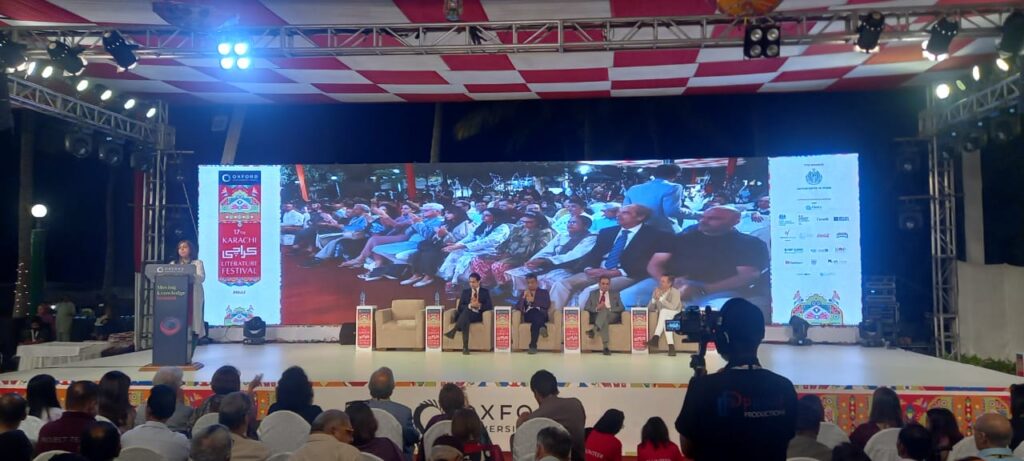
Karachi: The 17th Karachi Literature Festival (KLF) concluded on Sunday at the Beach Luxury Hotel after three days of discussions, book launches, performances and public debates, bringing together writers, academics, students and cultural practitioners from across Pakistan and abroad.
From early morning sessions to a late evening qawwali, the final day reflected the festival’s focus on literature, education and civic engagement, reaffirming its reputation as one of the country’s most inclusive intellectual platforms.
The day opened with an inter-school debate titled “Literature Today: Elitist or Essential?”, where students from Karachi Grammar School (KGS), Lyceum and Cedar College discussed the accessibility and relevance of literature. KGS won the competition. Dramatic readings by Yousuf Bashir Qureshi, Ali Mazhar and Usman Qureshi added to the literary atmosphere.
Books, ideas and critical conversations
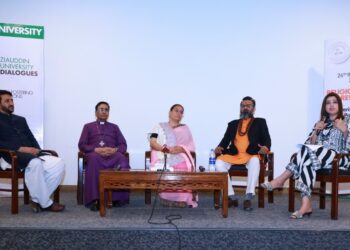
Panel discussions ranged from classic literature to contemporary global and local challenges, including women and children’s health amid climate change, power dynamics in South Asia, policing and civic accountability in Karachi, and the future of higher education.
Physicist and academic Pervez Hoodbhoy stressed the need for intellectual independence in universities. “Academic freedom is essential. Universities must enrich young minds to think freely,” he said.
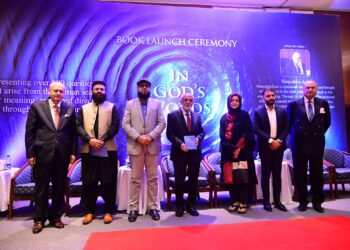
Book launches and author talks remained central to the festival throughout. Notable releases included Rebel English Academy by Mohammed Hanif, Umar Mujhay Likhti Hai by Kishwar Naheed, and Pakistan Cricket Chronicles 1948–2024, alongside translations and poetry collections reflecting Pakistan’s linguistic diversity.
Sessions such as Future Shock: Dystopia in a Dystopian World and Karachi Between the Lines explored literary traditions through contemporary lenses.
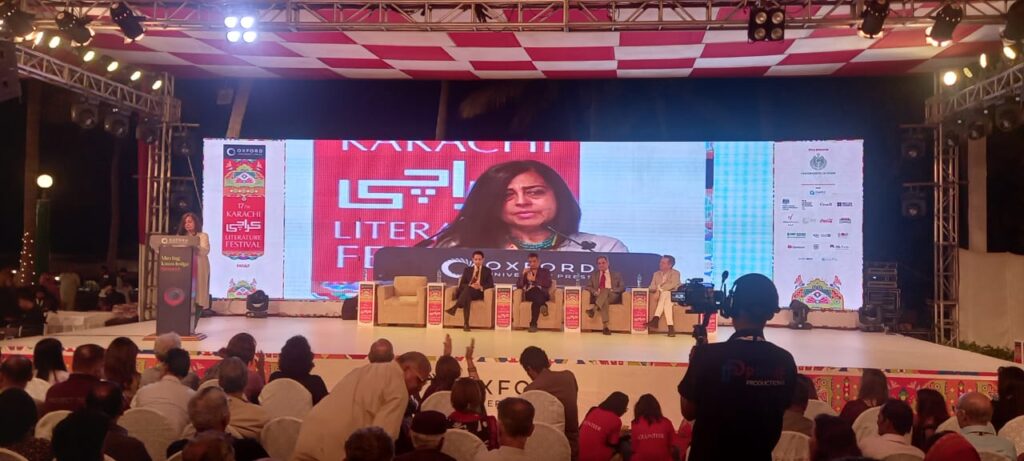
Youth engagement and skills development
The Youth Pavilion hosted storytelling, writing and calligraphy workshops, theatre and music performances, and interactive sessions aimed at nurturing creativity and critical thinking among students.
School performances and dialogues on future skills highlighted the festival’s focus on engaging younger audiences and building the next generation of readers and writers.
Salma Alam, CEO of Durbeen, said efforts were under way to improve teacher training through public-private partnerships. “A good teacher is a good educator. We are planning to scale up teachers’ skills through dedicated graduate programmes,” she said.
Culture, media and technology
Cultural and public-interest discussions addressed topics such as Pakistani television drama, media transformation, artificial intelligence and the role of museums. The debate “Will AI Take Over?” drew strong audience participation.
Other highlights included a session with banker and author Zafar Masud on resilience and survival, and talks on art and heritage, including the Gulgee Museum. Film screenings featured Screen Locked and the 2025–26 Banff World Tour.
Closing ceremony
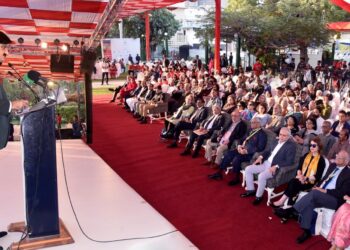
The festival concluded with a ceremony in the Main Garden. Writer Mohammed Hanif delivered the keynote address, reflecting on literature’s role in questioning authority and imagining alternative futures. Representatives of partner organisations delivered votes of thanks.
A qawwali performance by Hamza Akram Qawwal & Brothers brought the three-day event to a lively and celebratory close.
Organisers said the festival once again demonstrated Karachi’s continuing appetite for books, ideas and dialogue, cementing KLF’s position as Pakistan’s premier literary and cultural gathering.