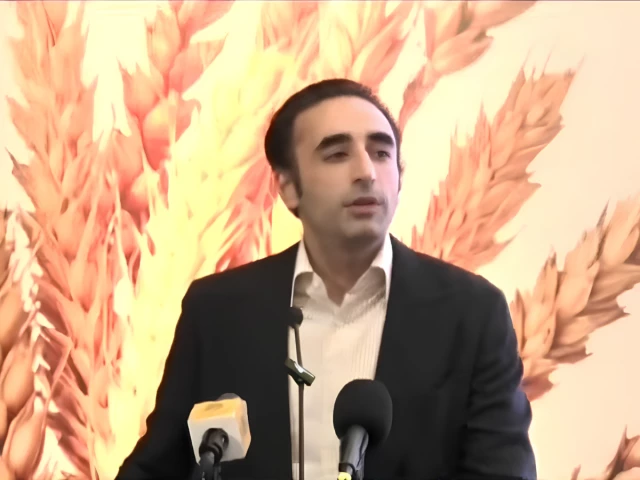
Pakistan Peoples Party (PPP) Chairman Bilawal Bhutto Zardari on Friday called for national unity to address the country’s economic crisis, urging political parties to set aside their differences and support Prime Minister Shehbaz Sharif in tackling inflation, unemployment and poverty.
Addressing the Sindh Wheat Growers Support Programme 2026 in Karachi, Bilawal said political disputes should not take precedence over the economic hardships facing ordinary citizens. He urged the prime minister to focus on the economy and develop a plan to provide relief to the public.
Bilawal criticised government ministers for raising separate political issues whenever Shehbaz Sharif attempted to pursue an economic agenda. He said he wanted to strengthen the prime minister’s position rather than create difficulties for his government.
“I want Shehbaz Sharif to be the first prime minister of this country to complete a full five-year term,” Bilawal said, adding that his support was driven by the challenges facing Pakistan and the need for political stability.
He described the country’s economic situation as a historic crisis, saying the conflict involving Iran, Israel and the United States had further increased pressure on the public. Rising petrol, diesel, electricity and food prices were adding to the financial difficulties of ordinary people, he said.
Bilawal acknowledged that the government had averted the immediate threat of default and stabilised key economic indicators. However, he said the next priorities should be economic growth, employment generation and strengthening the country’s economy.
NCCIA Uncovers Alleged Rs1 Trillion Online Gambling Network in Karachi
He urged political parties across the divide to cooperate, saying no single party or alliance could resolve the country’s problems alone. He called for the engagement of opposition leaders, including Jamiat Ulema-e-Islam-Fazl chief Maulana Fazlur Rehman and Pakistan Tehreek-e-Insaf founder Imran Khan.
The PPP chairman said personal grievances and political differences should not undermine national interests. He added that ordinary citizens were more concerned about food, housing and basic necessities than political disputes or proposals to create new provinces.
Shehbaz, Zardari Agree to Resolve Issues Through Dialogue
Bilawal’s remarks came a day after Prime Minister Shehbaz Sharif and President Asif Ali Zardari agreed to resolve outstanding matters through dialogue and mutual consultation.
The understanding was reached during a meeting at Aiwan-e-Sadr, where the two leaders discussed the country’s political situation and regional developments, particularly the Middle East crisis.
According to a statement from the President’s Office Media Wing, the leaders agreed that all matters would be resolved through dialogue and collective consultation. They also discussed the role of coalition partners in previous constitutional amendments.
Interior Minister Mohsin Naqvi also attended the meeting. He has faced criticism from Bilawal over the debate on creating new provinces and administrative units.
It was the second meeting between Shehbaz and Zardari, following their November 14 meeting in Lahore, where they agreed to strengthen cooperation among coalition partners and continue consultations on public welfare initiatives.
The debate over new provinces gained momentum after Naqvi called for additional administrative units to reform what he described as an outdated governance system. His proposal drew mixed reactions from political parties, including the Muttahida Qaumi Movement-Pakistan (MQM-P), which has long advocated the creation of new provinces from Sindh.
On September 4, the Sindh Assembly passed a resolution rejecting attempts to divide the province or establish new administrative units. Chief Minister Syed Murad Ali Shah also said there would be no compromise on Sindh’s geographical unity.
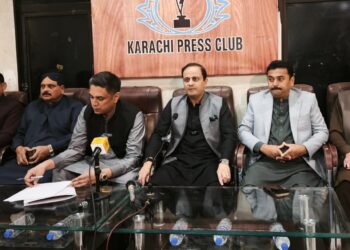
Bilawal recently intensified the debate during an address at the Karachi Press Club, warning of serious consequences if Sindh were administratively divided. His remarks drew criticism from government figures, including Adviser to the Prime Minister on Political Affairs Rana Sanaullah and Defence Minister Khawaja Asif.
Bilawal later defended his position in televised interviews, urging government officials to listen to his views as a major political stakeholder. He also rejected calls for a referendum on the issue and reiterated his opposition to dividing Sindh.
Sindh Announces Financial Support for Farmers
Speaking about the provincial government’s agriculture initiatives, Bilawal said the Benazir Hari Card programme would provide financial assistance to 600,000 farmers and sharecroppers facing rising agricultural costs.
Under the programme, eligible beneficiaries would receive Rs4,000 per acre to meet crop-related expenses. An additional Rs2,000 would be provided when the government procured their wheat.
He said the initiative was designed to support small landowners and sharecroppers rather than large landlords, adding that farmers cultivating up to 25 acres formed the backbone of the country’s agricultural sector.
Bilawal said higher diesel and fertiliser prices had increased farmers’ financial burden, while concerns about fertiliser availability had added to their difficulties.
He also welcomed financial assistance for drought-affected families in Tharparkar, where an emergency had been declared. Under the Benazir Income Support Programme, eligible families would receive Rs8,000 to help them cope with the effects of drought.
Housing and Healthcare Initiatives
Bilawal said the Sindh government was building one million homes across the province, with women receiving ownership of the land and access to banking and financial assistance.
He claimed the housing initiative had also generated one million jobs, providing employment opportunities to families affected by inflation and unemployment.
On healthcare, he highlighted specialised institutions offering free treatment, including the National Institute of Cardiovascular Diseases, the Sindh Institute of Urology and Transplantation and the ChildLife Foundation, along with facilities in Karachi and Gambat.
He said these institutions enabled patients to receive treatment for heart, kidney and liver diseases without travelling abroad or facing the full financial burden of expensive medical care.
Bilawal said the PPP remained committed to providing bread, clothing and shelter, with a focus on poor communities, labourers, workers and farmers.
He urged the government to direct its limited resources towards easing the financial pressure on ordinary citizens, warning that economic difficulties could intensify further.