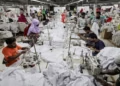
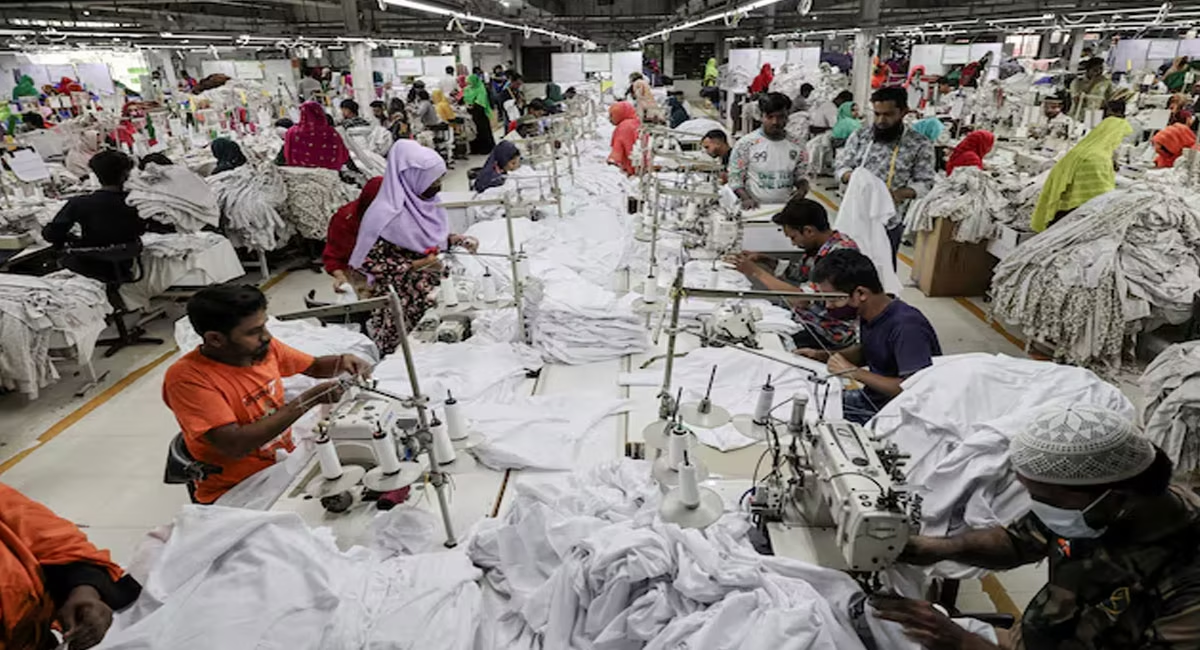
Bangladeshi garment workers clashed with police on Thursday, a day after securing a 36-percent increase in the minimum wage following weeks of protests that disrupted production across the country’s vital export industry.
Dozens of protesters blocked roads and marched through the industrial zone of Gazipur, on the outskirts of the capital, Dhaka. Police later dispersed the crowds using tear gas and stun grenades, according to an AFP reporter at the scene.
“Clashes took place mainly in two areas, but we were able to disperse the crowds — the situation is now under control,” said Israil Hawladar, chief of the police force’s specialised industrial unit.
He said the situation in other parts of the country remained relatively calm. Factories continued operating in Narayanganj, another major garment manufacturing hub, while only a few factories in Savar reported workers staying away.
Bangladesh, the world’s second-largest garment exporter after China, has witnessed widespread demonstrations since October as workers demand better pay.
An agreement reached on Wednesday increased the minimum monthly wage from 12,500 taka to 17,000 taka ($136). The new rate will take effect in January.
Workers say their wages have not kept pace with rising costs of food, housing, transport and healthcare. They had initially demanded a minimum monthly salary of 30,000 taka.
Kuwait Engages Pakistan, Four Other Countries for Infrastructure Cooperation
The garment industry is a major pillar of Bangladesh’s economy. It supplies clothing to millions of consumers across Europe and North America, accounts for four-fifths of the country’s export earnings and employs more than four million people.
Labour Minister Ariful Haque Chowdhury urged workers to avoid further disruption and support the industry’s growth.
“I urge our workers to ensure that we move our industrial sector forward and establish ourselves as a competitive industry in the eyes of the world,” he told reporters on Thursday.
“There will be problems, but please do not resort to protests impulsively without first holding a dialogue,” he added.
The Bangladesh Garment Manufacturers and Exporters Association (BGMEA) said on Sunday that the protests had caused estimated losses of $428 million to the industry. It added that orders worth another $254 million had shifted to other countries.