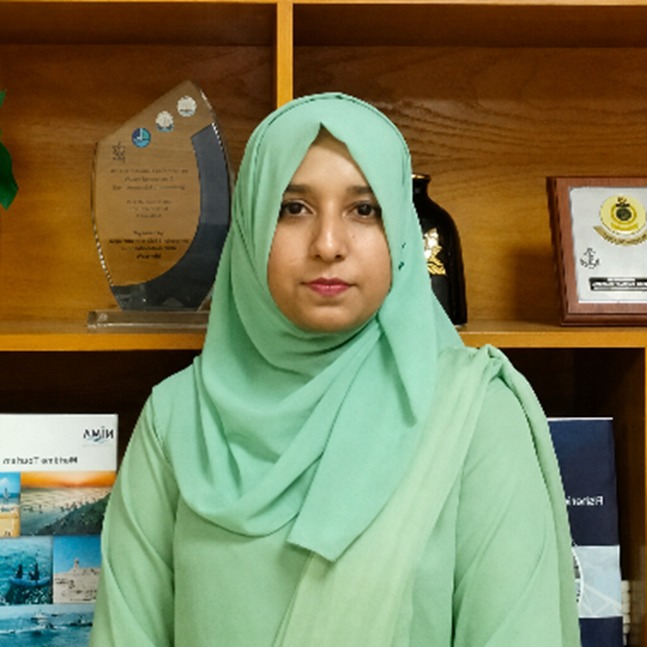
By Ms. Safia Noor
Research Assistant, National Institute of Maritime Affairs, Karachi | MS Environmental Science, Bahria University, Karachi
Pakistan’s exposure to the EU’s Carbon Border Adjustment Mechanism remains concentrated in specific industrial sectors, but carbon transparency is increasingly becoming a decisive factor in international export competitiveness.
Environmental attributes of products are becoming increasingly important for international trade, market access and competitiveness. Global commerce is entering a new phase in which the carbon intensity of products is emerging as an economic consideration. At the centre of this transformation is the European Union’s Carbon Border Adjustment Mechanism (CBAM).
The definitive CBAM regime entered into force on January 1, 2026, covering selected carbon-intensive imports into the European Union. The mechanism aims to address carbon leakage by incorporating emissions associated with covered imports into the EU’s carbon-pricing framework.
CBAM currently applies to cement, iron and steel, aluminium, fertilisers, electricity and hydrogen. Under the definitive regime, EU importers of covered goods must declare their embedded emissions and surrender the corresponding CBAM certificates. Where an eligible carbon price has already been paid in the country of production, the importer may deduct the applicable amount.
Mustafa Ramday Appointed Chairman of PSO Board for Three Years
Importantly, CBAM does not impose a direct payment obligation on Pakistani exporters at the EU border. The compliance and financial obligations rest with authorised EU CBAM declarants. However, the carbon intensity of products can influence their import costs and consequently affect the competitiveness of Pakistani producers in the European market.
Pakistan’s Exposure: Targeted Rather Than Economy-Wide
Pakistan’s exposure to CBAM should be assessed through specific products and export markets rather than broad assumptions about the national economy.
The European Union remains an important trading partner for Pakistan, accounting for 14.1 per cent of the country’s total trade in 2025, with bilateral goods trade valued at €12.2 billion. The EU’s Generalised Scheme of Preferences Plus (GSP+) also provides significant benefits to Pakistan, allowing more than 85 per cent of Pakistani exports to enter the European market tariff-free and quota-free.
Nevertheless, most Pakistani exports to the EU are not currently directly covered by CBAM. Textiles and clothing, which represent a substantial share of Pakistan’s exports to Europe, remain outside its present scope.
This means Pakistan’s immediate exposure is more limited than often perceived. Yet CBAM represents a broader transformation in international trade, where carbon transparency and low-carbon production are becoming increasingly important commercial considerations.
Measurement Is the First Step Towards Compliance
The immediate priority for Pakistani producers of covered goods is the accurate measurement of embedded greenhouse gas (GHG) emissions.
Reliable plant-level emissions data will determine compliance under CBAM. Producers need systems to collect operational data, apply appropriate emission factors, calculate embedded emissions and maintain supporting documentation.
Reported emissions must also undergo verification by recognised bodies, strengthening the credibility and reliability of the information provided.
Measurement, Reporting and Verification (MRV) is therefore becoming increasingly important for export competitiveness. Industries must establish credible emissions-intensity baselines before identifying effective reduction measures.
Without reliable measurement, producers cannot accurately identify major emission sources, assess improvements or demonstrate environmental performance to international buyers and verification bodies.
Sector-Specific Decarbonisation Strategies
Technical responses to carbon reduction must reflect the characteristics of individual industries. A uniform decarbonisation strategy cannot effectively address the different emissions profiles of CBAM-covered sectors.
In cement production, emissions arise primarily from fuel combustion and clinker manufacturing. Iron and steel emissions depend on production processes, fuel sources and raw materials. Electricity consumption is a major contributor to aluminium production emissions, while fertiliser manufacturing involves substantial energy consumption and process-related emissions.
These differences require sector-specific approaches to emissions measurement and reduction.
Pakistan should therefore prioritise measurement before mitigation. Once industries establish credible emissions baselines, they can identify technically and economically viable measures, including energy efficiency, process optimisation, waste heat recovery, cleaner energy adoption and technological modernisation.
Building Pakistan’s Domestic MRV Capacity
Government institutions, industry associations, standards organisations, universities and accreditation bodies have an important role in developing national capacity for greenhouse gas accounting, assessment, verification and conformity assessment.
A stronger technical ecosystem would enable Pakistani exporters to generate transparent, reproducible and internationally credible emissions data.
The year 2026 is particularly significant for industries affected by CBAM. Under the definitive framework, the first declarations covering imports made during 2026 will be submitted in 2027.
Consequently, exposed producers should establish monitoring, reporting and verification systems well ahead of financial compliance deadlines.
Pakistan needs a targeted approach to CBAM preparedness. Government agencies should identify industrial establishments with actual or potential EU exposure and assess their emissions profiles, data availability and verification readiness.
Technical assistance and financial support should then focus on measurable improvements in energy efficiency and emissions reduction.
Pakistan should also maintain technical engagement with the European Union on CBAM methodologies, emissions-data requirements and verification procedures. International cooperation and capacity-building initiatives can further support industrial decarbonisation.
CBAM Is Becoming an Industrial Competitiveness Issue
CBAM should not be viewed solely as an environmental regulation. It is increasingly an industrial competitiveness issue with implications for production costs, market access and export performance.
Reducing emissions intensity can improve environmental performance while also lowering energy consumption and production costs in many circumstances.
Pakistan’s response should avoid both alarm and complacency. Although the country’s immediate CBAM exposure remains concentrated in specific sectors, the mechanism reflects a wider transformation in global trade: carbon data are becoming trade-relevant data.
Pakistan’s priorities should therefore include accurate emissions measurement, credible MRV systems, industrial emissions reduction and sustained engagement with international markets.
Carbon intensity does not determine a product’s entire global market position, but it is becoming an increasingly important economic variable.
For Pakistan’s exposed industries, preparing for this transition is no longer optional. It is essential to maintaining export competitiveness and securing a stronger position in an increasingly carbon-conscious global trading system.