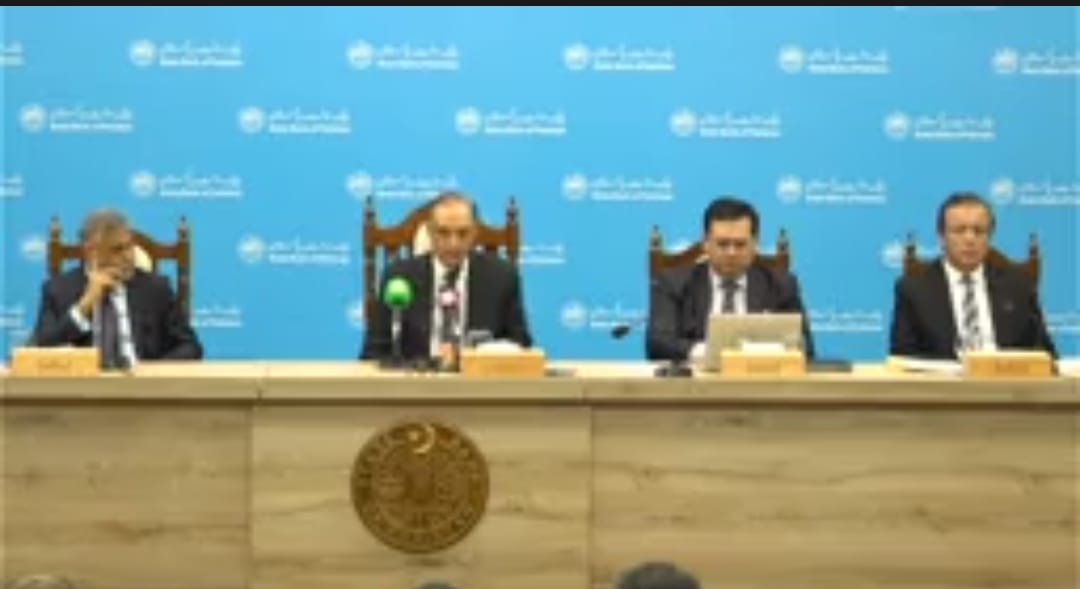
The State Bank of Pakistan’s (SBP) Monetary Policy Committee (MPC) has increased the policy rate by 50 basis points to 12%, with effect from October 27, 2026, in a majority decision supported by nine of the committee’s 10 members.
In its monetary policy statement issued on October 26, the MPC said the intensification of the Middle East conflict and limited prospects for a near-term resolution had kept global energy prices persistently high, worsening Pakistan’s inflation outlook.
The committee noted that the impact of the global shock on the domestic economy had remained contained so far, supported by proactive monetary policy adjustments and continued fiscal discipline. However, it said geopolitical developments had increased risks to inflation, prompting the latest rate hike to anchor inflation expectations and limit second-round effects of the supply shock.
The SBP said the decision was intended to bring inflation within its target range of 5% to 7% over the medium term while preserving macroeconomic stability and supporting sustainable economic growth.
Economic Activity Shows Signs of Recovery
The MPC said economic activity had begun recovering gradually compared with the fourth quarter of FY26. Large-scale manufacturing output grew 1.9% year-on-year during July and August FY27, compared with marginal growth of 0.4% in the fourth quarter of FY26.
Fundraising Dinner Held to Support Karachi Football Academy
Other indicators, including cement and petroleum, oil and lubricants (POL) sales, private-sector credit and the Purchasing Managers’ Index, also pointed to improving economic activity.
The committee noted that initial official estimates for Kharif crops were better than expected, improving the outlook for agriculture. Indicators related to services, including information and communication technology exports, import volumes and business confidence, also suggested gradually improving prospects.
The MPC maintained its real GDP growth projection for FY27 at 3.5% to 4.5%, while warning that further escalation of the Middle East conflict and adverse climate events amid worsening El Niño conditions could pose significant risks.
Current Account Deficit Reaches $874 Million
Pakistan recorded a current account deficit of $874 million during the first quarter of FY27.
According to the MPC, exports were recovering, supported by rice, high-value-added textile products and services exports. Workers’ remittances remained resilient and were projected to exceed earlier expectations.
However, imports were also rising sharply, driven primarily by non-energy imports amid recovering economic activity and higher prices.
The committee expects the current account deficit to remain within its earlier projected range of zero to 1% of GDP for FY27. Higher financial inflows, alongside the projected external account performance, are expected to help increase SBP foreign exchange reserves beyond their current level.
The MPC cautioned that elevated global commodity prices, tighter international financial conditions and supply constraints could affect this outlook.
Foreign Exchange Reserves Remain at $21.5 Billion
The SBP’s foreign exchange reserves remained stable at around $21.5 billion, supported by continued foreign exchange purchases. The reserve level provides approximately three months of import cover, according to the statement.
The committee also noted that Pakistan had reached a staff-level agreement with the International Monetary Fund (IMF).
Meanwhile, major central banks have raised interest rates in response to rising inflationary pressures, while the IMF has revised its global inflation projections upward.
Fiscal Position Supported by Revenue Collection
The Federal Board of Revenue’s (FBR) tax collection grew 7% year-on-year during the first quarter of FY27, exceeding its target by Rs33 billion.
The MPC said the transfer of substantial SBP profits and contained government expenditures had helped keep the overall fiscal and primary balances in surplus during the quarter.
However, it warned that the intensifying Middle East conflict had made fiscal management more challenging.
The committee stressed the need for stronger fiscal discipline, broader tax-base coverage, improved revenue mobilisation and faster implementation of structural reforms to strengthen the economy’s resilience.
Private-Sector Credit Growth Accelerates
Broad money (M2) growth rose to 12.7% year-on-year as of October 9, compared with 11.4% on August 28. The increase was driven by stronger net foreign assets growth following the rise in SBP foreign exchange reserves.
Growth in net domestic assets slowed amid continued fiscal consolidation and higher external financing, reducing the government’s net borrowing from the banking system.
This created additional room for private-sector credit, which grew 14.1% year-on-year. The increase was broad-based across working capital, fixed investment and consumer financing.
Major borrowing sectors included textiles, wholesale and retail trade, and agriculture. The MPC expects private-sector credit growth to maintain momentum alongside the anticipated recovery in economic activity.
Inflation Remains Elevated at 10.3%
The committee identified renewed Middle East tensions and domestic wheat supply disruptions as major factors keeping inflation elevated.
Headline inflation reached 10.3% year-on-year in September, exceeding the MPC’s expectations, largely because of higher energy and wheat-related prices. Core inflation remained elevated at around 8.4%.
The MPC warned that persistently high food and energy prices could raise inflation expectations and eventually feed into core inflation.
It said the rate increase was necessary to maintain an adequately positive real policy rate on a forward-looking basis and help bring inflation back within the 5% to 7% target range over the medium term.
Risks to the inflation outlook include geopolitical tensions, volatility in global commodity prices, unexpected energy tariff adjustments, further increases in wheat and related product prices, and adverse weather conditions.
The committee also emphasised that a prudent combination of monetary and fiscal policies, supported by timely structural reforms and stronger external and fiscal buffers, would remain essential for macroeconomic stability and sustainable growth.