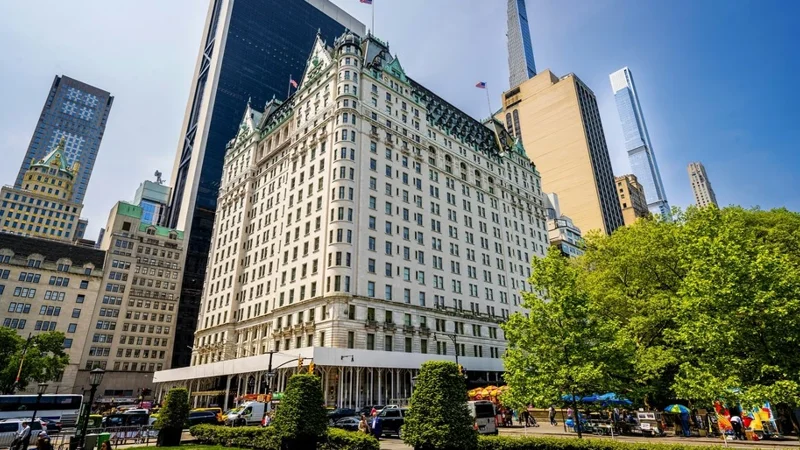
NEW YORK: The Plaza Hotel, one of New York City’s most recognisable landmarks, will close in 2027 for an extensive exterior renovation expected to take approximately four years, its management company has announced.
Fairmont Hotels and Resorts said the project would focus on repairing and restoring the hotel’s landmark-protected façade overlooking Central Park. The work will address the challenges of preserving a historic building while maintaining long-term structural care and public safety.
“The Plaza Hotel is advancing plans for repair and restoration works to its landmark-protected façade,” Fairmont said in a statement, adding that the project would take into account preservation requirements and the safety of guests, employees and the wider community.
Restoration Linked to Landmark Requirements
The renovation appears to be connected to requirements established when the property sought permission to convert part of its accommodation into luxury condominiums.
The New York City Landmarks Preservation Commission designated the hotel a city landmark in 1969. A 2006 Restrictive Declaration associated with the conversion project required significant restoration of the building’s façade, roof and landmark interior spaces.
The declaration also required the owner to maintain the property in that condition permanently.
Details remain unclear about how the closure will affect residents of the building’s 181 luxury condominium units. However, the property’s lead broker has expressed confidence that residents will not be significantly affected.
It is also uncertain whether restaurants, a spa and a salon operating inside the hotel will have to close during the renovation.
Pakistan Weathers Energy Price Shock, but Gulf Attacks Threaten Economic Outlook: Aurangzeb
A Historic New York Landmark
Designed by architect Henry Janeway Hardenbergh, the French château-style hotel opened in 1907 after being built at a cost of $12.5 million, equivalent to approximately $400 million today.
Over the decades, the property has passed through several ownership changes. Former US president Donald Trump once owned the hotel, which entered bankruptcy protection during his tenure before being sold at a reported loss of $83 million.
The Plaza has hosted prominent figures, including writer F. Scott Fitzgerald, singer Frank Sinatra and actress Marilyn Monroe. It also became widely known through popular culture, including the fictional children’s book character Eloise.
The hotel has appeared in numerous films and television programmes, notably Home Alone 2: Lost in New York and Gossip Girl.
Hotel’s Conversion Into Condominiums
In 2005, El Ad Properties purchased the building for $675 million and closed it for a major renovation.
The redevelopment transformed the original 805 rooms into 284 hotel rooms and 181 condominium units. The renovated property reopened in 2008.
The Plaza subsequently continued to operate as a luxury destination, with themed suites reportedly costing as much as $20,000 per night.
Interest in its condominiums has fluctuated over the years as newer luxury developments have entered the market.
Currently, 30 of the 181 units are listed for sale, according to the report. Prices range from $810,000 for a 476-square-foot studio to $45 million for a seven-bedroom penthouse measuring 10,000 square feet.
Employees to Receive Return Rights
The planned closure will affect the hotel’s 378 employees. Under an agreement with the Hotel & Gaming Trades Council, the union representing Plaza workers, employees will be eligible to return to their jobs at their current salaries when the hotel reopens.
The arrangement provides a measure of employment continuity during the lengthy renovation, although the future operating arrangements for the hotel’s other businesses remain uncertain.
Fairmont has not provided further details about the full construction schedule or the impact on condominium residents and businesses operating within the property.
The project will mark another major chapter in the history of the Plaza, as the hotel prepares to restore its historic exterior while navigating the practical challenges of preserving one of New York’s best-known luxury properties.