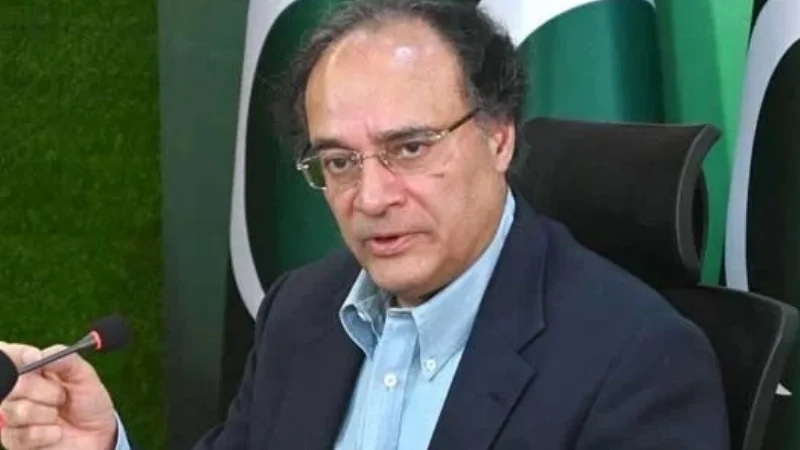
BANGKOK: Pakistan has so far managed the immediate impact of soaring global energy prices triggered by the US-Israeli war on Iran, but attacks on energy infrastructure across Saudi Arabia and other Gulf countries pose growing risks to the country’s longer-term economic outlook, Finance Minister Muhammad Aurangzeb has said.
Speaking to AFP on the sidelines of the International Monetary Fund (IMF) and World Bank annual meetings in Bangkok on Saturday, Aurangzeb said Pakistan had secured sufficient energy supplies through November and was now preparing for the winter months, when household demand typically increases.
“The first-order impact has been negotiated well by Pakistan,” Aurangzeb said, adding that the country had experienced no energy shortages, queues at petrol stations or related law-and-order problems.
He said the government would avoid purchasing liquefied natural gas (LNG) from the spot market unless there was an “absolute dire need”, as spot cargoes tend to cost significantly more than supplies secured under existing contracts.
Gulf Infrastructure Attacks Raise Concerns
Global energy prices have risen sharply since the United States and Israel launched military operations against Iran in February, according to the report. Tehran’s retaliatory actions have targeted US allies in the Gulf and disrupted oil and gas supplies.
Renewed fighting involving Yemen’s Houthi movement has also raised concerns about regional security. Recent attacks have reportedly targeted Saudi infrastructure, including energy facilities and airports.
Aurangzeb warned that continued damage to critical infrastructure could delay the restoration of economic stability, even if hostilities ease.
“What is now the worrying part of it is when the energy infrastructure starts getting hit,” he said. “I, to be very honest, I don’t know where that would go. But one thing is very clear: that if the infrastructure continues to get hit, the return to normalcy, even if things subside, will take longer.”
For Pakistan, prolonged disruption to regional energy supplies could increase import costs and complicate efforts to maintain economic stability.
Pakistan Continues Fiscal Consolidation
Aurangzeb also highlighted Pakistan’s efforts to strengthen public finances as governments worldwide face elevated debt levels and economic uncertainty.
Pakistan is currently undertaking its 25th programme with the IMF since independence in 1947, including at least 11 outright bailout arrangements, according to the report.
The IMF has urged countries attending this year’s annual meetings to pursue fiscal consolidation to reduce the risk of future financial crises, including economies particularly vulnerable to the effects of the Iran conflict.
“Fortunately for us, we have been on this fiscal consolidation path for a while,” Aurangzeb said.
He noted that Pakistan’s tax revenues had increased significantly in recent years. However, he said the government was working to address tax evasion by businesses that collect sales tax from consumers but fail to transfer the money to government accounts.
Aurangzeb said the practice cost the state billions of dollars and added that income tax collection also offered scope for improvement.
Reform Agenda Faces Resistance
The finance minister acknowledged that the government’s reform programme had encountered opposition from businesses, lobbying groups and other vested interests.
“Every reform, everything that you try to do when you try to change the status quo, there is pushback,” he said.
The government has continued efforts to broaden the tax base and improve revenue collection as part of its commitments under the IMF programme.
Pakistan remains engaged with the fund through a $7 billion Extended Fund Facility (EFF) and a $1.4 billion Resilience and Sustainability Facility (RSF).
Earlier this month, Pakistan and the IMF reached a staff-level agreement following the fourth review of the EFF and the third review of the RSF. The agreement could enable Pakistan to access approximately $1.2 billion in additional funding, subject to the required approvals.
Aurangzeb Holds Talks With Global Financial Leaders
Aurangzeb is leading Pakistan’s delegation at the annual meetings and holding engagements with international financial institutions, finance ministers, policymakers and investors.
On Friday, he met World Bank Group President Ajay Banga at a dinner hosted by Thailand’s prime minister on the sidelines of the meetings, according to state-run Pakistan Television.
The finance minister’s remarks underscore the challenge facing Islamabad: maintaining progress on economic reforms and fiscal stability while preparing for the possibility of prolonged energy-market disruption.
Although Pakistan has secured supplies through November, the outlook for the winter months and beyond will depend partly on the duration and severity of the regional conflict and its impact on Gulf energy infrastructure.