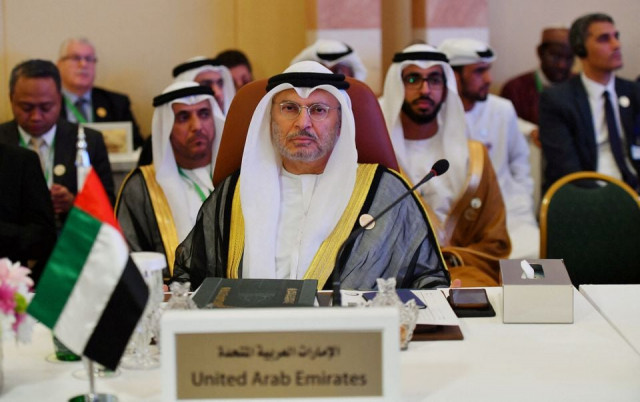
UAE presidential adviser Anwar Gargash has called for the revival of joint Gulf action, particularly in security and defence, warning that attacks on Saudi Arabia threaten the security of all Gulf states.
Gargash said neglecting collective Gulf security had emboldened other actors to overreach against countries in the region. His remarks came as Saudi Arabia faced a series of attacks attributed to Yemen’s Iran-backed Houthi movement.
Turkey, Pakistan, Egypt and Saudi Arabia jointly condemned the attacks on Riyadh’s international airport, describing them as a “dangerous escalation” that could not be justified under any circumstances.
Saudi authorities reported that one person was killed and nearly a dozen others were injured in an attack on the airport on Sunday. The incident followed an earlier Houthi-claimed strike that reportedly killed 13 people and injured more than 300.
Regional Powers Reaffirm Support for Saudi Arabia
The four countries, referred to as the R4 group, reaffirmed their solidarity with Saudi Arabia and expressed support for what they described as legitimate measures to counter the attacks, deter further threats and prevent similar incidents.
Iran Reviews US Negotiation Proposals as Strait of Hormuz Tensions Persist
In a joint statement issued on Sunday, the group held the Houthi movement responsible for the consequences of the attacks and warned of their implications for regional and international peace and security.
The countries demanded an immediate and unconditional halt to the attacks.
The statement reflects growing concern among regional governments about the potential for further escalation and the security risks facing critical infrastructure and transport hubs.
Saudi Arabia’s Defence Cooperation With Turkey and Pakistan
The latest developments have drawn attention to Saudi Arabia’s defence agreements with regional partners.
Turkey and Pakistan signed a joint defence pact with Saudi Arabia in August. Under the agreement, an attack on one party is treated as an attack on all parties.
Last week, the countries said they had agreed to implement their collective defence commitments and ensure the rapid deployment of forces and capabilities in Saudi Arabia amid the Houthi attacks.
However, the status of Turkey’s participation remains subject to its domestic approval process.
Turkey Rules Out Troop Deployment
Turkish Foreign Minister Hakan Fidan said on Thursday that Ankara was assessing ways to assist Saudi Arabia but ruled out deploying troops or participating in offensive operations.
A day earlier, officials told Reuters that Turkey was providing Riyadh mainly with defensive and technical support.
Turkey’s assistance to Saudi Arabia has so far largely taken place on a bilateral basis, as the Turkish parliament has not yet formally ratified the joint defence agreement. The pact is expected to be submitted to parliament in the coming days.
Turkey has NATO’s second-largest army and a substantial defence industry. It has supplied defence equipment to Saudi Arabia and agreed to join a Saudi-led coalition aimed at safeguarding navigation in the Red Sea.
Regional Security Concerns Intensify
The airport attacks have added urgency to discussions about Gulf security cooperation, military coordination and the protection of strategic infrastructure.
Gargash’s call for stronger joint Gulf action highlights concerns that fragmented security arrangements could leave regional states more vulnerable to attacks.
The response from Saudi Arabia and its partners will depend on how they coordinate defensive support and implement existing agreements, while efforts to prevent further escalation remain a key regional concern.