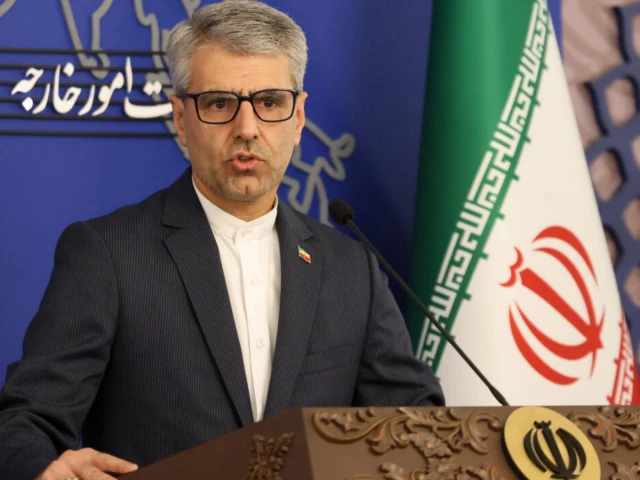
Iran is reviewing US proposals for negotiations as Tehran and Washington continue exchanging messages through mediators, Iranian Foreign Ministry spokesperson Esmaeil Baghaei said on Monday.
Baghaei told his weekly press conference that Pakistan and Qatar continued to facilitate communication between the two sides. He said Iran was assessing Washington’s proposals but insisted that Tehran’s preconditions must be respected before negotiations could proceed.
“The exchange of messages between Iran and the US through mediators continues,” Baghaei said.
He also described Russia’s role in discussions over Iran’s nuclear programme as constructive, citing Moscow’s involvement in the 2015 nuclear agreement. However, he said Pakistan and Qatar remained the principal mediators in the current exchanges between Tehran and Washington.
Iran Links Strait of Hormuz Tensions to US and Israeli Attacks
Baghaei said the continuing instability in the Strait of Hormuz resulted from US and Israeli attacks on Iran, rejecting suggestions that Tehran was using the strategic waterway to gain leverage in negotiations.
Security Forces Kill One Terrorist in Intelligence-Based Operation in Bannu
“What we have seen in the Strait of Hormuz since February 28 was the direct result of the US and the Israeli regime’s attack on Iran,” he said.
He also rejected US claims that Iran had lost its leverage, arguing that developments in energy markets did not support Washington’s assertions.
The Strait of Hormuz is a critical route for international oil and gas shipments. Disruptions to shipping through the waterway have raised concerns about energy supplies, maritime security and the wider economic consequences of the conflict.
Baghaei said Iran was also concerned about rising tensions in the Arabian Peninsula. He expressed Tehran’s willingness to facilitate dialogue between Saudi Arabia and Yemen’s Houthi movement, saying Iran did not want hostilities to continue between Muslim countries.
IRGC Navy Reports Mine Strike on Oil Tanker
Separately, Iran’s Islamic Revolutionary Guard Corps (IRGC) Navy said on Sunday that an oil tanker struck a naval mine while attempting to cross the Strait of Hormuz, causing an explosion in its engine room.
According to the IRGC Navy, the supertanker could carry approximately two million barrels of oil and was attempting to transit the waterway with its navigation system switched off.
The statement described the vessel as the third ship to strike a naval mine along what Iran called a prohibited route since Saturday. It did not identify the tanker or disclose its nationality or flag.
The IRGC Navy warned that vessels switching off their navigation systems while crossing the strait would be treated as hostile.
The announcement followed a statement by the US Central Command (CENTCOM) in late August that international shipping lanes had reopened after US forces removed Iranian naval mines.
Iran announced on July 12 that it had closed the strait again following the resumption of US attacks on July 8. Tehran has also warned vessels against using routes other than those designated by Iranian authorities or attempting to cross without permission.
Iranian Official Accuses US and UAE of Oil Smuggling
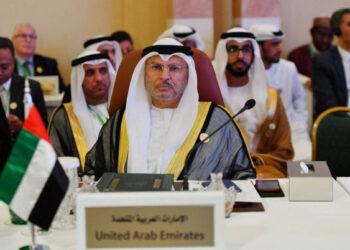
Mohsen Rezaei, secretary of Iran’s Supreme National Security Council, accused the head of CENTCOM, Admiral Brad Cooper, of directing alleged oil-smuggling operations in the Strait of Hormuz with assistance from the United Arab Emirates military.
Speaking to Iranian state-run Press TV over the weekend, Rezaei claimed that small boats were transferring oil to larger tankers and alleged that Iranian forces had struck several vessels involved in these operations each night over the preceding two or three months.
The claims had not received an immediate public response from the United States or the UAE.
Rezaei also disputed US President Donald Trump’s assertion that the strait was open, maintaining that Iran continued to control the management of the waterway.
He warned that Iran could target US-linked technology infrastructure in the region if hostilities resumed, including undersea cables, data centres and artificial intelligence facilities. He said Tehran was prepared to introduce additional military capabilities if the conflict escalated again.
Saudi and Iranian Foreign Ministers Discuss Regional Escalation
Meanwhile, Saudi Foreign Minister Prince Faisal bin Farhan and Iranian Foreign Minister Abbas Araghchi discussed the latest regional escalation during a telephone call on Sunday, according to Saudi Arabia’s Foreign Ministry.
The ministry said Araghchi initiated the call and that the two ministers discussed developments in the region and efforts to address them.
The conversation came as Iran continued to signal its willingness to facilitate regional dialogue while maintaining its position on security in the Strait of Hormuz.
Nuclear Dispute and Maritime Security Remain Key Issues
The United States and Israel launched attacks on Iran on February 28, prompting Iranian missile and drone strikes across the region. The conflict also disrupted shipping through the Strait of Hormuz, while Washington subsequently imposed a naval blockade on Iranian ports.
The two sides signed a memorandum of understanding in June concerning freedom of navigation through the strait, but implementation stalled amid disagreements over security arrangements.
Iran’s latest statements indicate that diplomatic contacts are continuing, although Tehran has not confirmed that it has accepted the US proposals or agreed to resume formal negotiations.
With Pakistan and Qatar continuing their mediation efforts, the immediate outlook remains uncertain as the parties remain divided over the conditions for negotiations, maritime access and regional security.