Pakistan and Bahrain have agreed to establish a joint working group on trade and investment and accelerate efforts to finalise the GCC-Pakistan Free Trade Agreement.
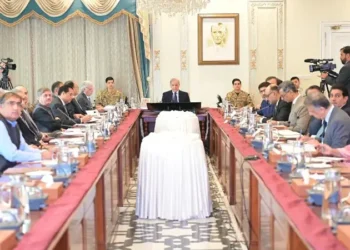
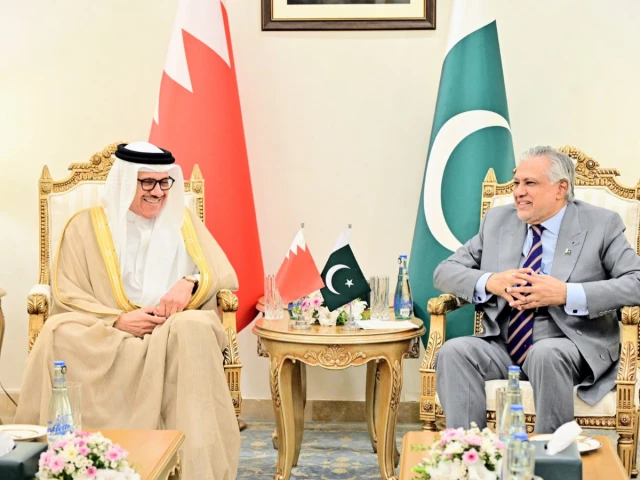
The understanding came during the third session of the Pakistan-Bahrain Joint Ministerial Commission (JMC) in Islamabad. Deputy Prime Minister and Foreign Minister Ishaq Dar and Bahraini Foreign Minister Dr Abdullatif bin Rashid Al Zayani co-chaired the session.
The two sides signed agreed minutes covering more than 15 areas of cooperation.
Al Zayani said the new trade group would focus on strengthening economic and investment ties. The two countries will also convene a joint working group on energy next month.
The energy group will discuss cooperation in oil, gas and minerals. Other areas include food security, information technology, law enforcement, media, labour mobility, health, education, culture and sports.
Bilateral Trade Target
Bahrain and Pakistan also agreed to accelerate efforts to double bilateral trade within three years.
Sharjeel Memon Urges KP CM to Focus on Governance Amid Security Crisis
Al Zayani said Bahrain would use its current presidency of the Gulf Cooperation Council (GCC) to help speed up progress on the GCC-Pakistan Free Trade Agreement.
Dar said the agreement was close to completion. He noted that the GCC secretary general had described the deal as “almost ripe”, with one member state still required to give its approval.
Pakistan and Bahrain had earlier set a target of increasing bilateral trade to $1 billion within three years. Dar said stronger government-to-government and business-to-business engagement would be needed to meet the target.
Wider Economic Cooperation
Dar described the JMC as comprehensive and productive. Discussions covered agriculture, energy, tourism, sports and business cooperation.
The two sides also agreed to expand cooperation in industrial development, food security, skills training, higher education, information technology, logistics and maritime affairs.
Dar highlighted the Pakistani community in Bahrain as an important link between the two countries. He called for greater cooperation in labour mobility, vocational training and human-resource development.
Pakistan and Bahrain also discussed the recognition of professional qualifications and greater opportunities for skilled Pakistani workers.
Around 134,000 Pakistanis live in Bahrain, according to Radio Pakistan. Dar said their role remained important to bilateral ties.
Bahrain has also recruited Pakistani personnel for its security institutions. Pakistan said 1,800 personnel, including 30 retired army officers, had been recruited for the Bahrain National Guard.
Regional Security and Gulf Tensions
The two ministers also discussed the ongoing regional crisis and developments involving the United States and Iran.
Both sides stressed restraint, de-escalation, dialogue and diplomacy as the preferred means of resolving disputes.
They also highlighted the importance of safe navigation through the Strait of Hormuz and Bab el-Mandeb. Both waterways are vital to regional and global food and energy security.
Al Zayani praised Pakistan’s diplomatic efforts and its role in facilitating dialogue between Washington and Tehran.
He also condemned attacks on Saudi civilian infrastructure, including Abha International Airport and King Khalid International Airport. He said attacks on airports and civilian facilities violated international law and international humanitarian law.
Palestine and Regional Issues
Dar reaffirmed Pakistan’s support for Palestinian rights and called for urgent and unhindered humanitarian assistance to Gaza.
He also expressed concern over Israeli settlement expansion and attempts to alter the status of Al-Quds Al-Sharif.
The ministers discussed Afghanistan and the Indus Waters Treaty as well.
Dar criticised India’s unilateral decision to place the Indus Waters Treaty in abeyance. He described the move as a material breach of international law.
He also warned that the dispute could threaten Pakistan’s water, food and energy security.
Stronger Diplomatic Coordination
Al Zayani said Pakistan-Bahrain relations had gained momentum through recent high-level visits.
These included Prime Minister Shehbaz Sharif’s visit to Bahrain in November 2025 and President Asif Ali Zardari’s visit in January 2026.
He also noted that October 14 will mark 55 years of diplomatic relations between the two countries.
The Bahraini minister highlighted the King Hamad University for Nursing and Allied Medical Sciences in Islamabad. He also praised the role of Pakistanis living and working in Bahrain.
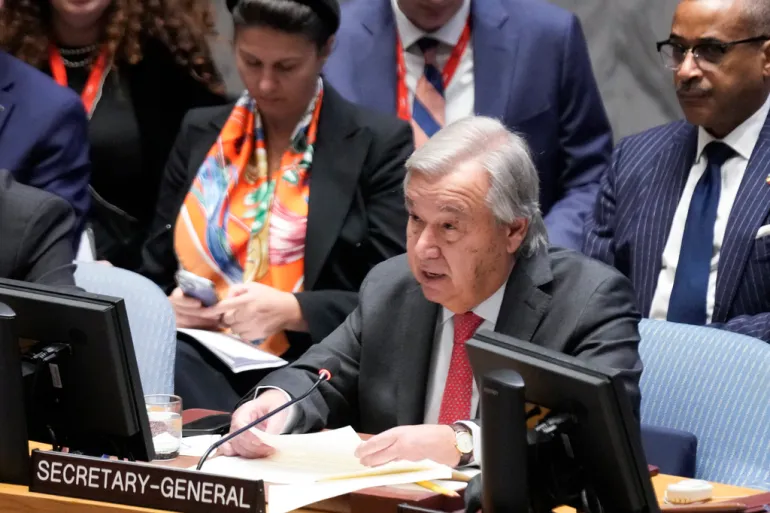
The two countries agreed to continue coordination at the United Nations. Both are currently serving as non-permanent members of the UN Security Council.
Dar said the fourth session of the JMC would be held in Bahrain in 2027. He committed to holding the meeting within 365 days of the current session, after the latest JMC took place following a five-year gap.
Al Zayani said the visit had reaffirmed the strategic nature of Pakistan-Bahrain relations. He said both countries wanted to turn their agreements into practical outcomes for peace, stability and prosperity.