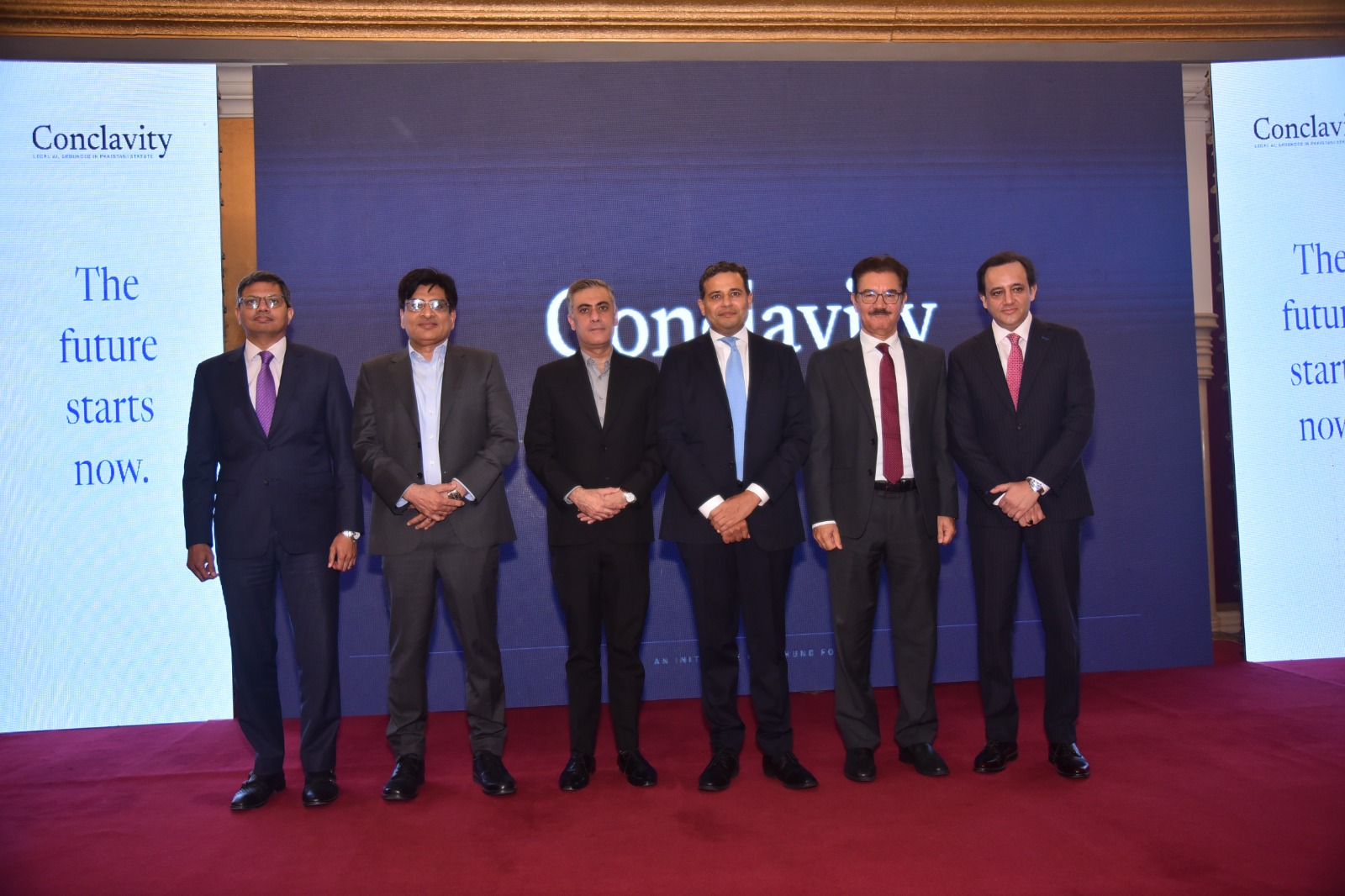
Akhund Forbes has launched Conclavity, a legal intelligence platform designed specifically for Pakistani law and grounded in a maintained database of Pakistani statutes, ordinances, rules and regulations.
The platform was unveiled on Wednesday at the Mövenpick Hotel in Karachi by Rabel Z. Akhund, Managing Partner of Akhund Forbes and Founder of Conclavity. The launch brought together members of the judiciary, in-house legal teams, banking and industry executives, and clients of the law firm.
The organisers described Conclavity as a locally developed commercial legal AI platform built by Pakistani lawyers and engineers for professionals working with Pakistani law.
AI Designed Around Pakistani Legislation
The launch highlighted a key challenge facing lawyers who use general-purpose AI tools. Such systems often draw from legal information across multiple jurisdictions, which can lead to references to foreign legal doctrines, outdated provisions or inaccurate authorities.
Conclavity takes a different approach by focusing on Pakistani legislation. Its maintained legal database covers statutes, ordinances, rules and regulations, along with relevant amendments.
SECP Issues Final Notices to Four in Unity Foods Trading Probe
The platform links its answers to the legal provisions on which they rely. This allows users to verify the source behind an AI-generated response rather than relying solely on the system’s conclusion.
Research, Drafting and Contract Review
Conclavity is designed to support three common areas of legal work: research, drafting and review.
For legal research, the platform answers questions on Pakistani law and provides statutory references. Lawyers can use those references to move from a client query to the relevant legal provision more quickly.
The drafting function can produce initial versions of agreements, notices, board resolutions and other legal documents. Lawyers can then review and refine those drafts according to the specific circumstances of a matter.
The review function analyses contracts and other legal instruments against legislation currently in force. It can flag areas where a document may not address applicable legal requirements.
Platform Does Not Replace Lawyers
Akhund Forbes said Conclavity does not provide independent legal advice or replace the professional judgment of qualified lawyers.
Instead, the platform aims to reduce the time lawyers spend on research and first drafts, allowing them to focus more closely on analysis, strategy and client advice.
The developers have also positioned confidentiality and security as core elements of the platform, given the sensitive information routinely handled by legal teams.
Justice Yousuf Ali Sayeed Highlights AI’s Potential
Mr Justice Yousuf Ali Sayeed of the Sindh High Court delivered the keynote address at the launch. He discussed the limitations of artificial intelligence while highlighting its potential to improve access to verified legal information.
“For years, lawyers and judges alike have dreamt of having that kind of resource, and today perhaps we are at the crux of having realised that dream. AI can help us realise that ambition,” he said.
Justice Sayeed also pointed to the risk of AI presenting unsupported information as fact. He said Conclavity’s approach of grounding responses in verified legal sources could help address that concern.
Rabel Akhund: Built for Pakistani Law
Rabel Akhund said the platform was developed in Pakistan specifically for the country’s legal system.
“Conclavity was conceived and developed in Pakistan, for Pakistani law. Its ambition is not to replace lawyers but to raise the floor, so that the standard of work once available only to those who could pay for the largest firms becomes the ordinary standard,” he said.
He added that the platform was developed by Pakistani lawyers and engineers for Pakistani businesses.
Mr Akhund founded Akhund Forbes after returning to Pakistan in 2008 following legal practice in London. He studied at University College London and is a solicitor of England and Wales.
Over the past two decades, he has advised on corporate, finance and projects transactions in Pakistan. His experience in legal practice has also shaped the development of Conclavity.
Nasim Beg Stresses Continuing Role of Lawyers
Nasim Beg of the Arif Habib Group said AI could remove much of the routine work associated with professional services while allowing people to devote more time to judgment and interaction.
“AI has again transformed lives and we have seen that around us,” he said. “But I think human interaction especially in law will continue and, perhaps in a bigger way, because the mundane part could have been taken out of it and then people can apply their minds.”
Wider Release Planned
Conclavity will initially be offered to a group of early adopters, mainly in-house legal teams and corporate clients, over the coming months.
Feedback from these users will inform further development of the platform. The company also plans to expand its legal corpus beyond legislation as the platform evolves.
The launch represents a move by an established Pakistani corporate law practice into legal technology, combining AI-assisted research, drafting and review with a legal database focused on Pakistani law.
About Conclavity
Conclavity is a secure legal intelligence platform developed by Akhund Forbes for Pakistani lawyers, legal teams and businesses. It supports AI-assisted legal research, drafting and document review, with responses grounded in a maintained database of Pakistani legislation and supported by legal citations.
About Akhund Forbes
Akhund Forbes is a corporate and commercial law firm advising clients on privatisations, mergers and acquisitions, capital markets, banking and finance, projects and complex commercial matters. The firm says it is ranked in the top tier by Chambers & Partners and The Legal 500. It operates from Karachi and Dhaka, with representative offices in London and Dubai.