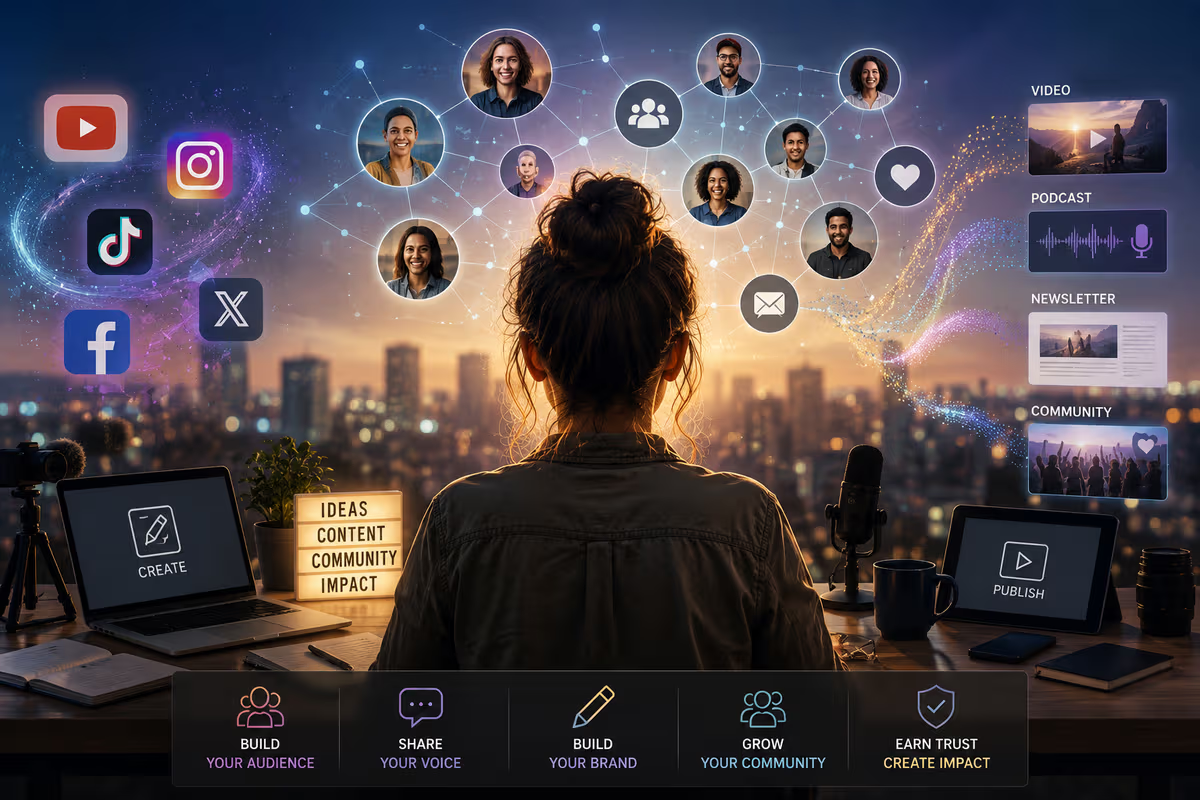
Creator media is changing how audiences discover, understand and engage with news. For years, platforms such as Facebook, Instagram, YouTube, TikTok and X shaped the distribution of information. Today, however, creators are increasingly building direct relationships with audiences that can extend beyond any single platform.
The shift marks a major change in the media landscape. Individual creators now operate as publishers, commentators, educators and, in some cases, full-scale media brands. They can produce a video in the morning, host a podcast in the afternoon, publish a newsletter in the evening and build an active community without owning a traditional newsroom or media outlet.
The Reuters Institute’s 2026 Digital News Report found that 27% of respondents globally receive some news from news-focused creators each week. The figure rises to 46% when creators who sometimes discuss current affairs are included. The report also found that audiences generally view creators as more entertaining, easier to understand and more relatable than traditional news organisations. However, they also regard them as less trustworthy and impartial.
The growing appeal of creators comes largely from connection. Audiences increasingly want to know who explains a story, what that person understands about the subject and whether the explanation feels relevant to their interests.
Hayden Panettiere: American actress dies at 36
Platforms provide distribution, but creators build the relationship. Successful creators can eventually turn their names into brands and their communities into valuable assets. Their credibility then becomes one of their most important forms of capital.
That makes ownership increasingly important. A creator can lose reach almost overnight when an algorithm changes or a platform alters its strategy. By contrast, a strong personal brand, loyal community, email database, website, podcast or independent media business can provide a more stable foundation.
The Reuters Institute also found that most people who consume news from creators do not necessarily abandon traditional media. Instead, they often use creators alongside established news sources. Only 3% of respondents said they relied solely on news-focused creators for their news needs.
Trust, therefore, will determine which creators build lasting media businesses.
Popularity does not automatically establish credibility. Creators who focus only on views can attract large audiences quickly, but long-term influence requires consistency, transparency and accuracy. In an environment where almost anyone can publish information, credibility becomes one of the most valuable commodities.
This shift also changes the way brands approach marketing. Advertising is no longer simply about reaching the largest possible audience. Brands increasingly need voices that can connect with specific communities and command genuine attention.
A creator with 100,000 highly engaged followers can potentially deliver greater value than a much larger but disconnected audience if people actively listen to that creator and trust their recommendations. Reuters Institute research points to continued growth in creator advertising and increasing interest from publishers and brands.
However, the rise of creator media does not mean traditional journalism will disappear. Instead, the industry appears to be moving towards a hybrid model.
Traditional news organisations offer professional journalism, editorial standards, institutional knowledge and established resources. Creators offer personality, speed, accessibility, community and direct audience relationships. The strongest media organisations may combine these strengths rather than treating them as competing models.
Newsrooms can learn from creators about presentation, personality and audience engagement. At the same time, creators who want lasting influence can learn from journalism about verification, editorial discipline, transparency and accountability.
The broader transformation also means that building a media brand no longer requires a television studio, newspaper printing operation or large newsroom. Ideas, consistency, expertise and an audience can provide the foundation for a modern media business.
Platforms will continue to change. Algorithms will evolve, new technologies will emerge and some of today’s dominant networks may eventually lose their influence. But the relationship between creators and audiences can survive those changes if creators build something that exists beyond a single platform.
The future of media, therefore, may not belong to Facebook, Instagram, YouTube, TikTok or whatever platform comes next. It may belong to the people who earn the audience’s attention, build communities around their ideas and, above all, give people a reason to trust them.