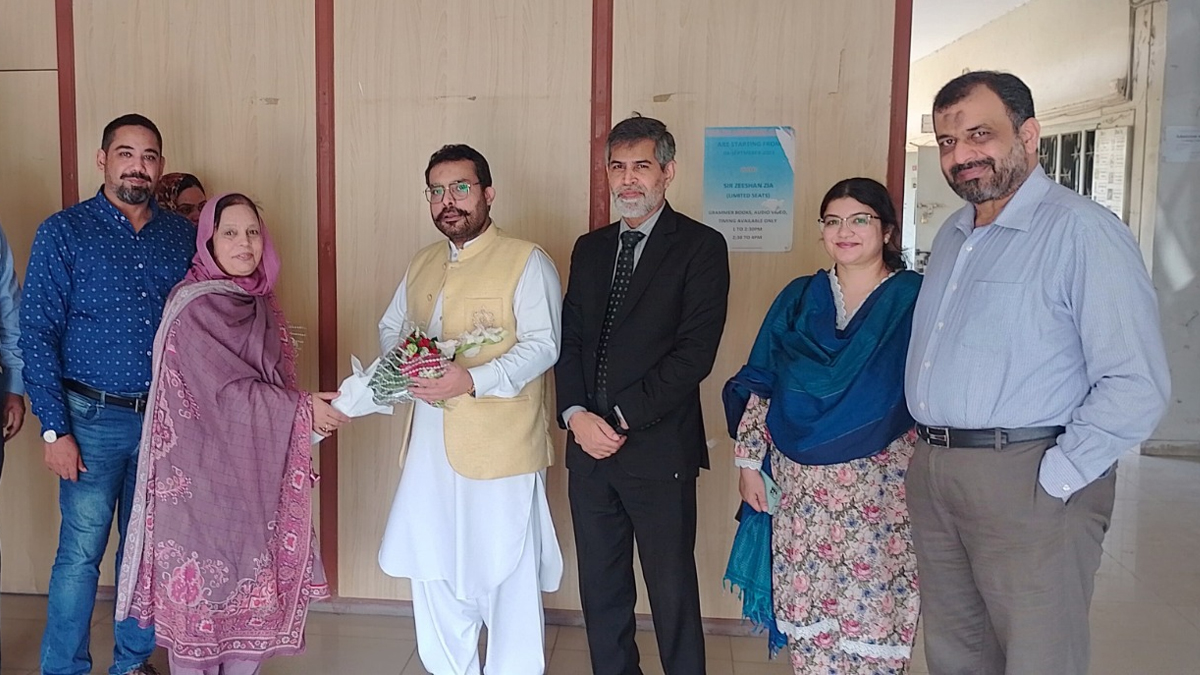

KARACHI, July 24, 2026: Affordable Flour remained the focus of a high-level meeting between the Sindh Government and representatives of the Flour Mills Association, as both sides agreed to strengthen coordination to ensure stable prices and an uninterrupted supply of flour across the province.
Sindh Minister for Food Makhdoom Mehboob uz Zaman chaired the meeting, which reviewed wheat stocks, flour prices, market conditions and supply chain challenges. The session was attended by the Adviser to the Chief Minister on Rehabilitation, the Chairman of the Chief Minister’s Inspection Team (CMIT), the Commissioner of Karachi Division, the Secretary of Food, senior government officials and a delegation of the Flour Mills Association led by Chief Patron Haji Yousif, Chairman Junaid Aziz and Vice Chairman Abid Masood.
PTA warns mobile users against sharing SIM cards over legal risks
Addressing the meeting, the minister said ensuring affordable flour for every household remains the Sindh Government’s highest priority.
“The welfare of the common man is our foremost concern. Flour prices must remain affordable, and all stakeholders must fulfil their responsibility to provide relief to consumers,” he said.
The minister directed flour mill owners to keep flour prices as low as possible while maintaining uninterrupted production and distribution throughout the province.
He said the Sindh Government had intensified intelligence-led operations against wheat hoarders, illegal profiteers and unlicensed traders. According to the minister, the ongoing crackdown has improved market stability and will continue to prevent artificial shortages.
The Food Minister told participants that the Sindh Food Department currently holds 446,947 metric tonnes of wheat, including 140,000 metric tonnes of carry-over stock, 81,812 metric tonnes procured during the current season and 225,135 metric tonnes recovered through anti-hoarding operations.
He said these strategic reserves would help stabilise the market and protect consumers from unnecessary price increases. He also confirmed that no restrictions exist on the movement of wheat between districts within Sindh, allowing smooth transportation and uninterrupted supply.
The minister added that the provincial government would procure additional wheat from the Pakistan Agricultural Storage and Services Corporation (PASSCO) if required to maintain market stability and support continuous flour production.
Representatives of the Flour Mills Association appreciated the Sindh Government’s cooperation and noted that Sindh had supplied wheat to other provinces whenever needed. However, they expressed concern that some provinces had not allowed wheat movement into Sindh, contributing to higher wheat costs and putting pressure on flour prices.

The association also urged the government to increase the wheat storage limit for flour mills from one month’s grinding capacity to two months, arguing that the current limit affects operational efficiency and market stability.
Commissioner Karachi told the meeting that close coordination between the district administration and flour millers had helped stabilise flour prices in the city. He said wheat is currently selling at around Rs11,600 per unit, while flour is available at the government-notified price of approximately Rs125 per kilogram.
The Secretary of Food informed the meeting that many traders involved in wheat hoarding were operating without licences issued by the Sindh Food Department. He said strict legal action against unlicensed traders and hoarders would continue.
Concluding the meeting, Makhdoom Mehboob uz Zaman assured the Flour Mills Association that its proposals, including increasing the permissible wheat storage limit, would be presented to the provincial government for consideration.
He reiterated that the Sindh Government would maintain its zero-tolerance policy against hoarding, illegal profiteering and artificial shortages to safeguard consumers and ensure affordable flour across the province.