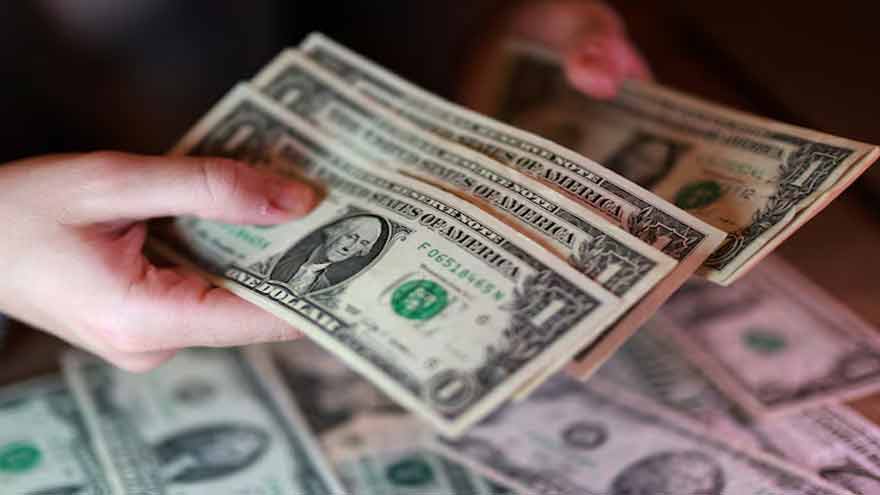
US Dollar traded steady on Friday but remained on track for a weekly decline after softer-than-expected US inflation data reduced expectations of an immediate Federal Reserve interest rate hike. However, escalating tensions in the Middle East helped limit the currency’s losses.
Current Account Pakistan Posts Rs39.5 Billion Deficit in FY2025-26
Iran and the United States exchanged fresh attacks during the past week. As a result, investors increased demand for safe-haven assets, while oil prices climbed to near one-month highs.
Meanwhile, investors awaited a speech by US President Donald Trump, which markets expected to provide further direction on economic and geopolitical developments.
In the currency market, the euro traded at $1.1445. Meanwhile, it remained on course for a weekly gain of 0.29%.
Sterling traded at $1.3476. In addition, it headed for a 0.56% weekly gain, marking its third consecutive week of advances as concerns over Britain’s fiscal outlook eased.
The Japanese yen traded at 162.39 per US dollar. However, it remained close to the 40-year low of 162.84, keeping traders alert for possible intervention by Japanese authorities.
The US Dollar Index stood at 100.72. Overall, the index was set for a weekly decline of 0.24% after touching a one-month low earlier this week.
OCBC strategists said the US dollar remains the highest-yielding safe-haven currency among G10 economies. They added that the greenback could continue to perform well during periods of stronger US growth or rising global uncertainty.
US economic data released on Thursday showed retail sales increased slightly in June. At the same time, lower gasoline prices reduced receipts at service stations, while online spending recorded strong growth.
Furthermore, separate data pointed to a stable labour market, reinforcing expectations that the US economy remains resilient.
Many economists now expect the Federal Reserve to leave interest rates unchanged later this month. Nevertheless, policymakers remain cautious because inflation has remained elevated in recent months.
Federal Reserve Vice Chair Philip Jefferson said he would support another rate hike if inflation fails to improve in the near term.
According to the CME FedWatch Tool, markets now assign an 11% probability of a July rate hike. By comparison, traders had priced in a 25% chance last week.