
China Retail Sales Fall for First Time Since 2022 as Demand Weakens
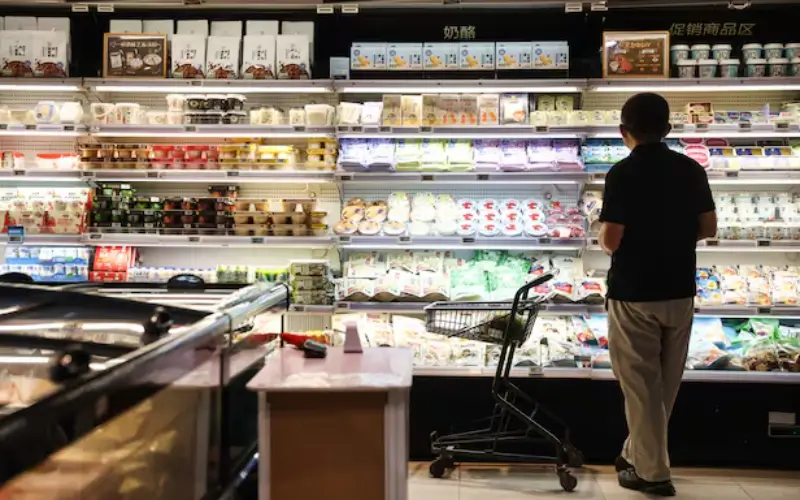
The China economy showed new signs of strain in May as retail sales fell for the first time in more than three years. The decline highlights weakening domestic demand even as industrial output remained relatively strong.
Moreover, the latest data suggests an uneven recovery, with consumer spending slowing while factory production continues to outperform expectations. This divergence is raising concerns about the sustainability of China’s post-pandemic economic growth.
China Economy Retail Sales Decline
The China economy saw retail sales drop by 0.6% in May compared to the same period last year, according to the National Bureau of Statistics. This marks the first decline since December 2022.
Furthermore, the result came as a surprise to economists, who had expected flat growth. Even the Labor Day holiday failed to significantly boost consumer spending across the country.
In addition, earlier reductions in trade-in subsidies are believed to have further weakened household consumption, contributing to the slowdown.
China Economy Investment Weakness Deepens
The China economy also faced pressure from declining fixed-asset investment. Urban investment fell by 4.1% in the January–May period, worse than market expectations.
Moreover, the property sector continued to be a major drag, with real estate investment dropping 16.2% during the same period. Manufacturing investment also declined for the first time since 2020, reflecting broader caution among businesses.
However, infrastructure investment slightly increased by 0.6%, offering limited support to overall investment figures.
China Economy Industrial Output Growth
The China economy showed resilience in industrial production, which rose by 4.5% in May. This exceeded expectations and improved slightly from April’s growth rate.
Furthermore, high-tech manufacturing and government-supported industries continued to show strength. However, overall demand conditions remained weaker compared to supply.
As a result, economists have pointed to an increasing imbalance between strong production and weak consumption across the economy.
China Economy Demand Pressure Concerns
The China economy is now facing growing concerns over weak domestic demand. Officials from the statistics bureau acknowledged that the imbalance between supply and demand is becoming more serious.
In addition, businesses are reportedly under increasing operational pressure as consumer spending slows. The manufacturing purchasing managers’ index also fell to 50, indicating stagnation.
Moreover, analysts expect policymakers to introduce new support measures in the coming months to stabilize consumption and boost confidence.
China Economy Policy Outlook
The China economy outlook remains uncertain as policymakers assess weakening retail activity and investment trends. Economists suggest that additional stimulus measures may be introduced following second-quarter GDP data.
Furthermore, experts believe that targeted policy support for consumption and employment could become a priority in the coming months. The government is also expected to focus on stabilizing the property sector and boosting domestic demand.
In conclusion, while industrial output remains stable, the broader economic picture shows increasing pressure on China’s growth momentum.