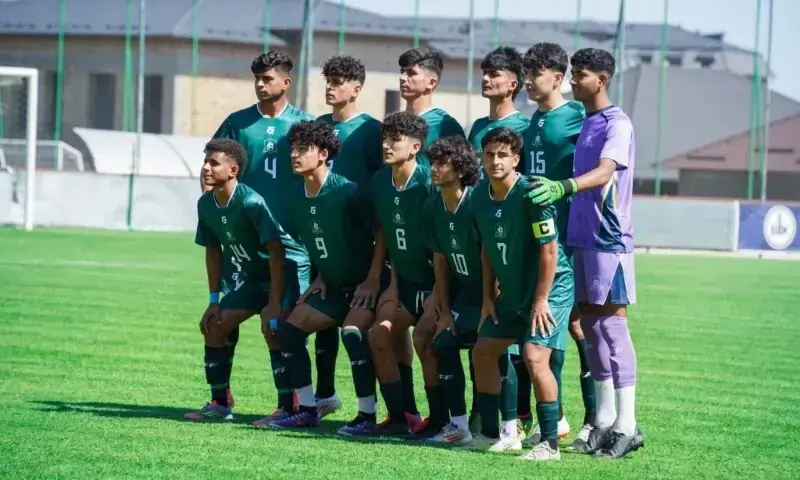
Abdul Samad, captain of Pakistan’s Under-16 football team, has described his side’s debut in a European tournament as a valuable learning experience, despite a winless campaign.
The young striker recalled a defining moment during Pakistan’s match against Kazakhstan, where he scored a header shortly after requesting a positional change. However, the goal came in a 4-1 defeat, one of three losses that saw Pakistan finish bottom of their group.
Pakistan also fell 2-1 to Russia and 1-0 to Azerbaijan, managing just two goals in the tournament. Despite the results, the tour marked the first-ever participation of a Pakistani team in a UEFA competition.
Head coach Mohammad Essa termed the experience a major step forward, emphasizing the importance of exposure to stronger international opponents.
“The players wanted to test themselves outside South Asia. Playing against better teams improves both skill and confidence,” he said.
However, the tour also highlighted the stark contrast in infrastructure and preparation. Samad, who represents Popo FC, pointed to the lack of proper grounds and facilities in Pakistan.
“In Pakistan, just to be able to play is a task. We don’t even have grounds and often have to request access,” he said, comparing it to the professional environment in Kazakhstan.
Differences in pitch quality also affected performance, with Pakistan receiving two red cards during the tournament. Essa noted that players were unaccustomed to faster, high-quality surfaces, which influenced their timing in tackles.
Despite the defeats, Pakistan showed competitiveness, particularly against Russia and Azerbaijan, where close contests were decided by narrow margins and missed chances.
The coach admitted that limited preparation time—just 15 days—restricted the team’s development. Trials, selection, and tactical training were compressed into a short window, leaving little room for physical conditioning or individual player improvement.
“It’s hard to build a team in such a short time. At this level, you need long-term preparation,” Essa said.
Samad echoed the need for structured development, stressing improvements in fitness, tactical awareness, and exposure to modern football systems.
The experience also left a strong impression on the young captain, who follows Desire Doue and drew inspiration from European playing styles.
Looking ahead, Essa revealed that under the Pakistan Football Federation, more opportunities are planned, including a U-17 championship and potential international tours.
Both player and coach remain optimistic. They believe that with proper facilities, consistent training, and regular competition, Pakistan’s young footballers can compete at a much higher level.
For Samad, his memorable goal may not have changed the result, but it symbolized the beginning of a journey—one that could shape the future of football in Pakistan.