Junaid Kafili
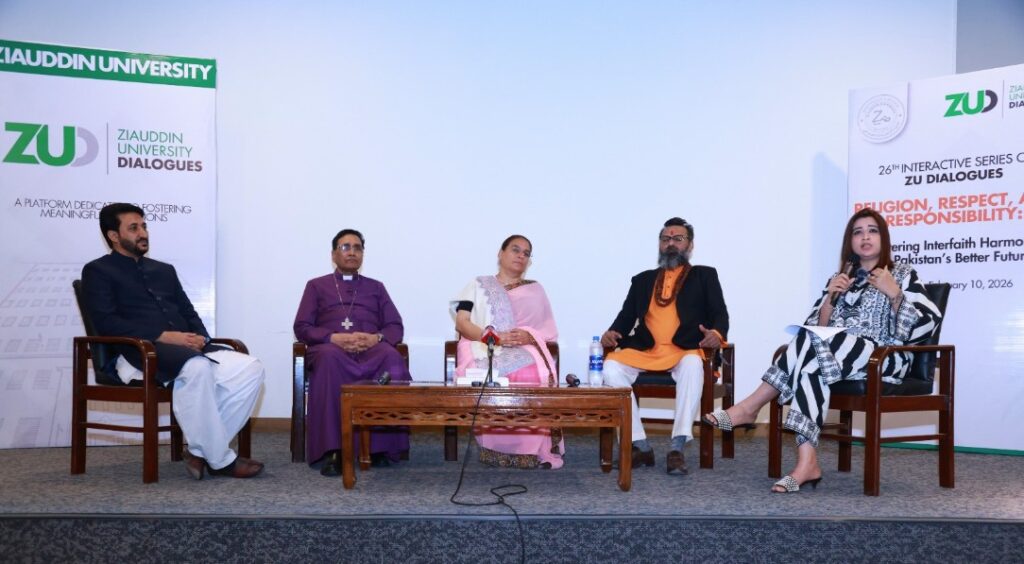
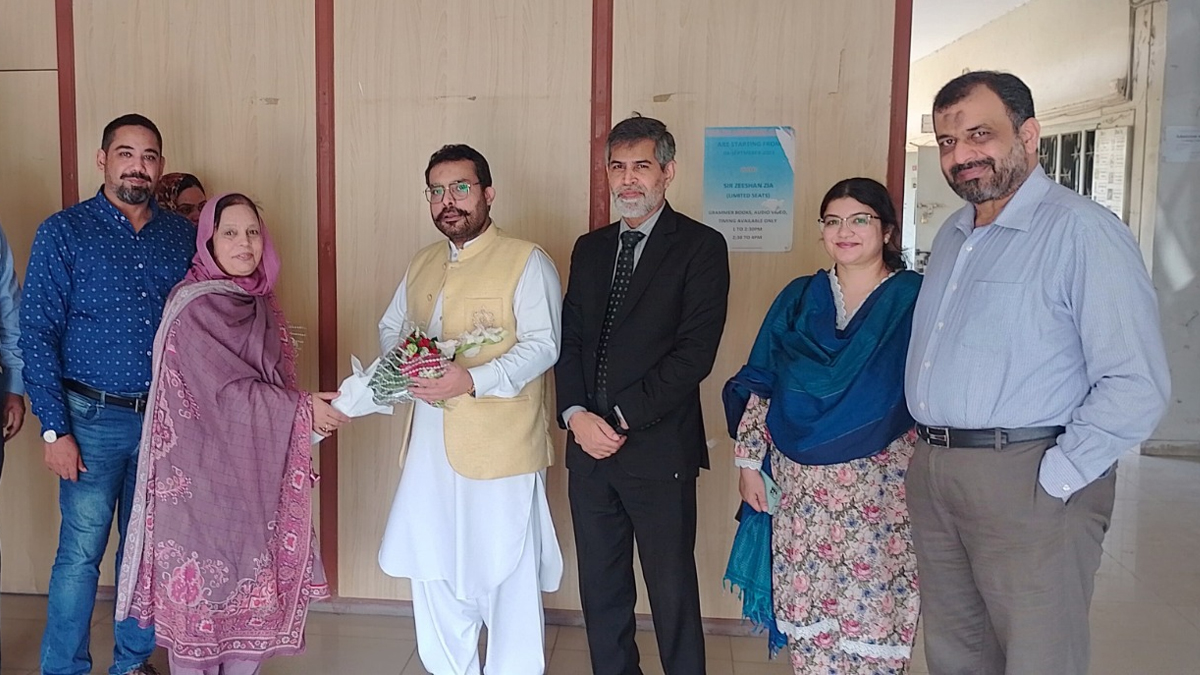
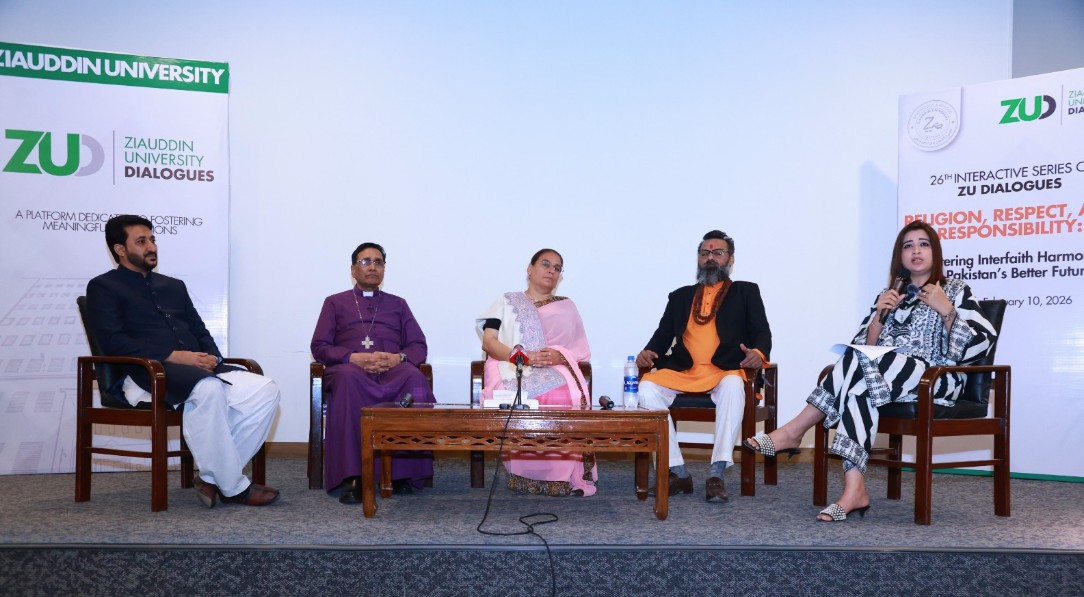
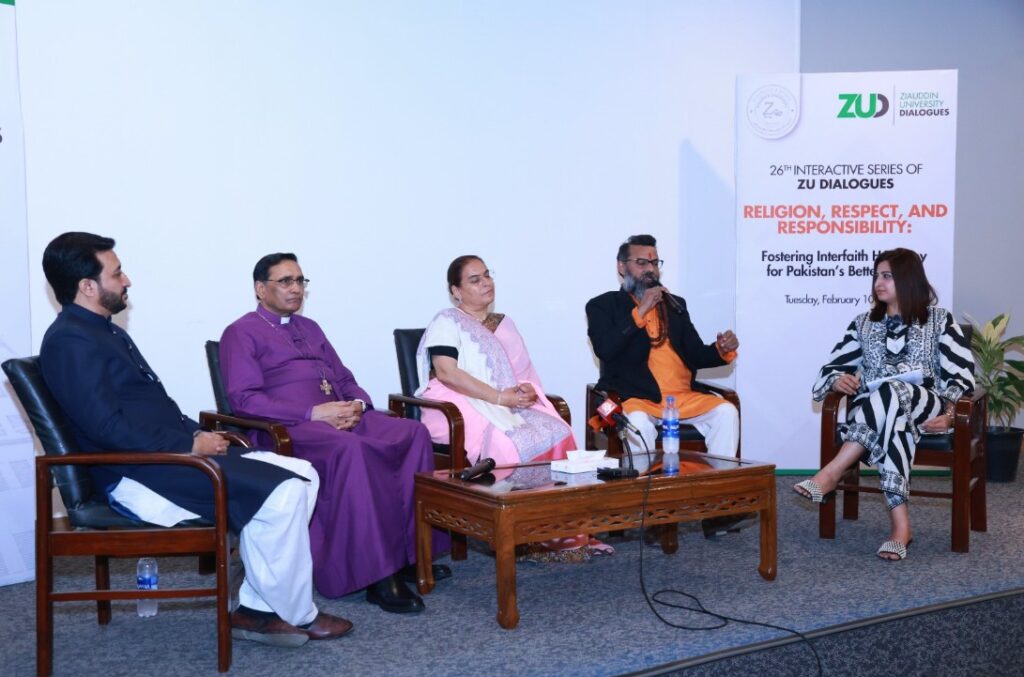
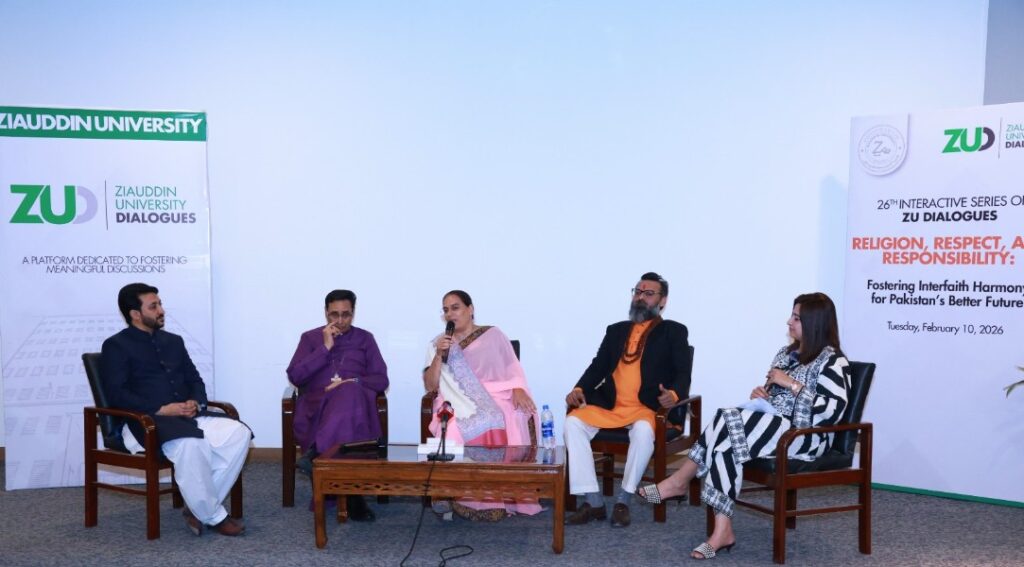
Karachi: Ziauddin University (ZU) convened religious scholars, faith leaders and civil society representatives for an interactive dialogue session aimed at promoting interfaith harmony, ethical responsibility and peaceful coexistence in Pakistan.
The event, titled “Religion, Respect, and Responsibility: Fostering Interfaith Harmony for Pakistan’s Better Future,” marked the 26th session of the university’s dialogue series, focusing on strengthening interfaith and intrafaith understanding while countering extremism and misinformation.
Speakers stressed that love, respect, verified information and shared human values are essential to building a tolerant and cohesive society.
Focus on interfaith and intrafaith understanding
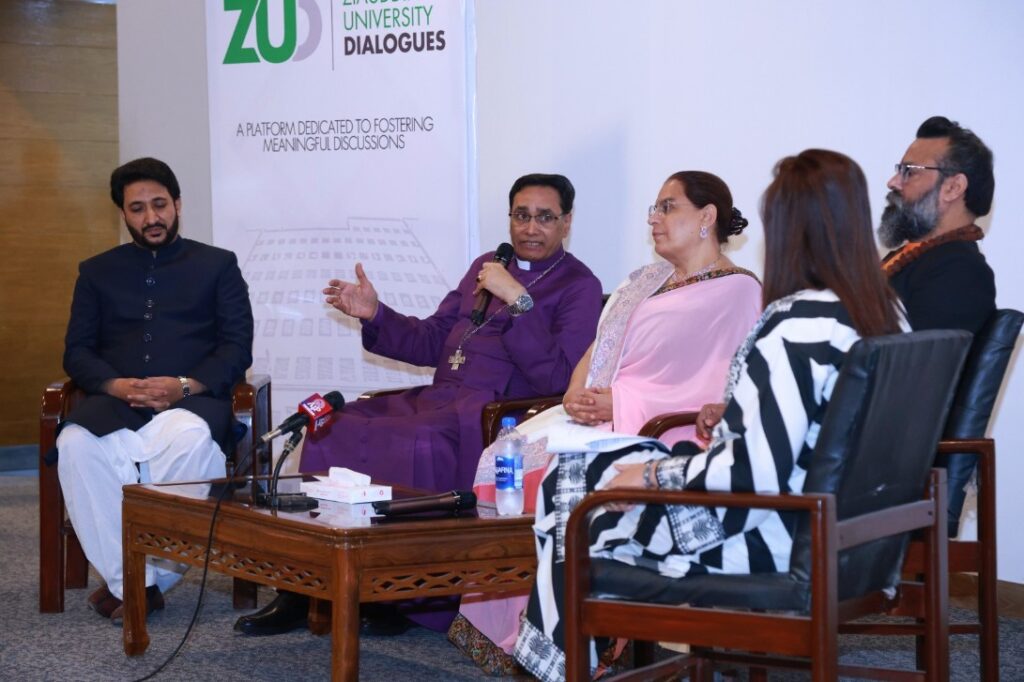
Reverend Fredrick John, Bishop of Karachi and Balochistan, Church of Pakistan, highlighted what he described as a gap in public discourse.
“We often speak about interfaith harmony but rarely address intrafaith understanding, which is equally essential,” he said, adding that teachers and religious leaders play a central role in shaping social values.
Ethics and responsible citizenship
Representing the Parsi community, Tushnamaity Patel, a business leader and social advocate, emphasized the importance of ethical conduct in everyday life.
“Good thoughts, good words, and good deeds — if we truly incorporate these principles, no one needs to ask which religion we belong to,” she said.
She called for the reintroduction of ethics and civic education in schools and urged young people to verify facts before sharing information, stressing the need for responsible public discourse.
Islamic perspective on coexistence
From an Islamic viewpoint, Dr Syed Muzaffar Hussain, Assistant Professor of Islamic Studies at ZU, said differences of opinion should not lead to division.
“Islam upholds freedom of religion and teaches that human beings were created into nations and tribes for recognition, not superiority,” he noted, adding that dignity and respect for others are religious obligations.
Unity beyond religious identity
Professor Manoj Chouhan, President of the National Interfaith Harmony Council, said no faith teaches hostility toward others.
“To build a society rooted in understanding, we must consciously choose peace, love and brotherhood,” he said, urging citizens to prioritize unity and social responsibility.
Continuing the dialogue
In his opening remarks, Amir Shahzad, Convener of ZU Dialogues, described Pakistan as a diverse society where people of different faiths have long lived together, adding that meaningful conversations help strengthen mutual understanding.
The session concluded with reflections by Dr Pamela Marshall, Dean of the Faculty of Nursing & Midwifery, and Kermin Parekh, Academic Consultant, both underscoring that sustained dialogue and shared responsibility are key to lasting harmony.
Moderated by Dr Sumaira Khawaja Punjwani, the event ended with a question-and-answer session focused on youth engagement, ethical communication and fact-based discussion.
University officials said the dialogue series will continue to serve as a platform for inclusive debate and community-building initiatives.