Abid Ali Abbasi
Larkana: World Bank Group President Ajay Banga on Tuesday visited flood-affected areas of Sindh to review progress on a massive community-led housing reconstruction programme, describing it as a global model for inclusive and sustainable disaster recovery.
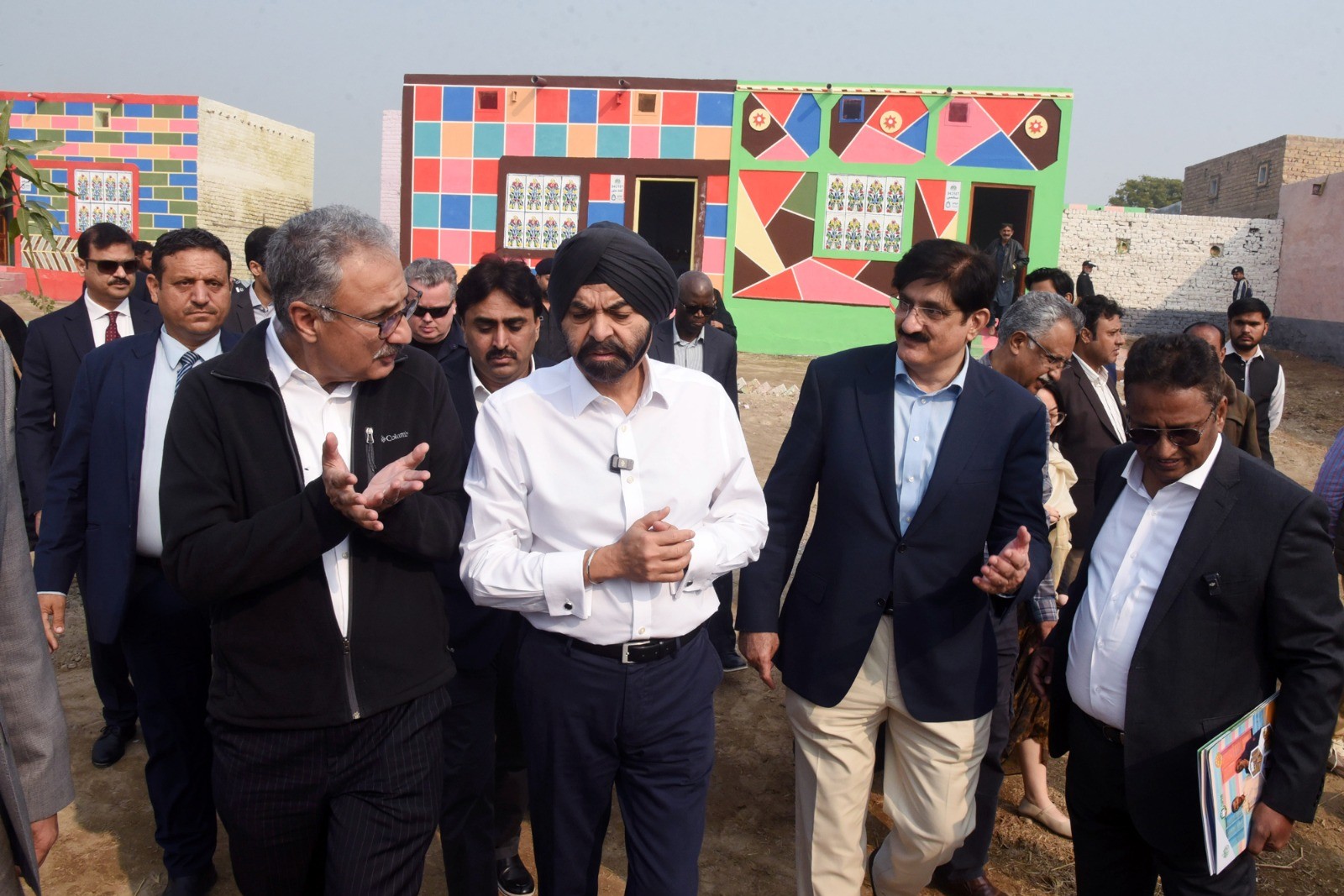
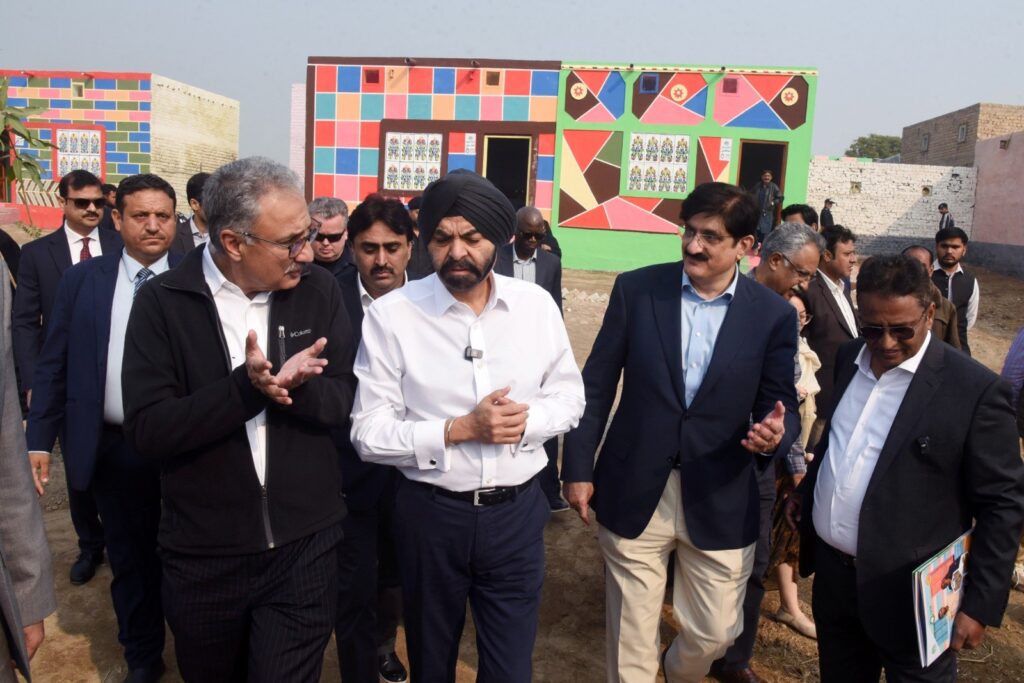
Accompanied by a 10-member delegation, Mr Banga arrived at Mohenjo-Daro Airport where he was received by Sindh Chief Minister Syed Murad Ali Shah before travelling to Bhawal Jat village in Taluka Dokri to meet families rebuilding homes destroyed in the 2022 floods.
Village-level reconstruction underway
Officials told the delegation that 145 flood-affected houses in Bhawal Jat have been reconstructed with joint support from the Sindh government and the World Bank. Around 83 per cent of ownership titles have been issued to women.
“Sindh’s women are empowered, and we are strengthening social inclusion through this programme,” the chief minister said.
2.1 million homes under SPHF programme
The reconstruction drive is being carried out under the Sindh Peoples Housing for Flood Affectees (SPHF) programme, which aims to rebuild 2.1 million homes across the province — one of the largest post-disaster housing efforts globally.
According to officials, more than 1.55 million beneficiary bank accounts have been opened, 1.5 million houses are under construction, and about 750,000 have been completed so far.
Mr Shah said the model allows families to build their own homes, ensuring income stays within local communities. Each house generates around 160 days of paid labour, directly benefiting daily wage earners.

World Bank support and funding
Mr Banga praised the scale and transparency of the initiative, calling it the world’s first community-led reconstruction programme of such magnitude.
Since the project’s launch, the World Bank has committed $950 million, including an initial $500 million followed by an additional $450 million. Each eligible household receives approximately $1,400 in housing assistance, prioritising the poorest families.
He stressed that housing recovery must also include clean water, sanitation and nutrition to ensure long-term human development.
Women at the centre of recovery
The chief minister said more than one million women have received land ownership titles, while around 800,000 have directly benefited from financial assistance and livelihood support.
“Women’s ownership rights are transforming household security and strengthening local economies,” he added, a view echoed by the World Bank president.
Community interaction and cultural showcase
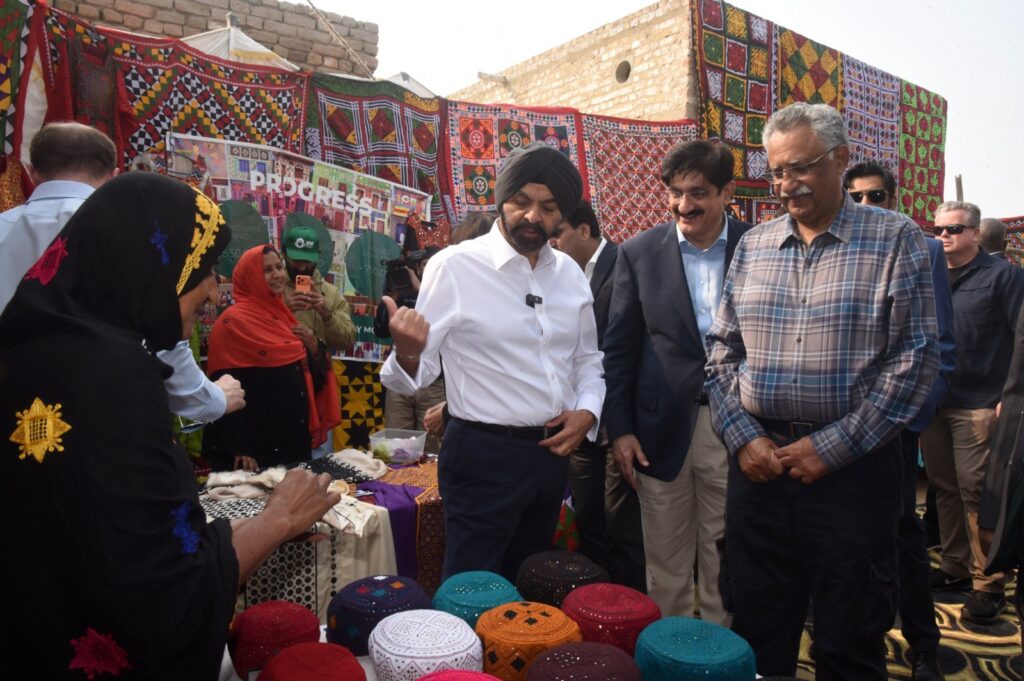
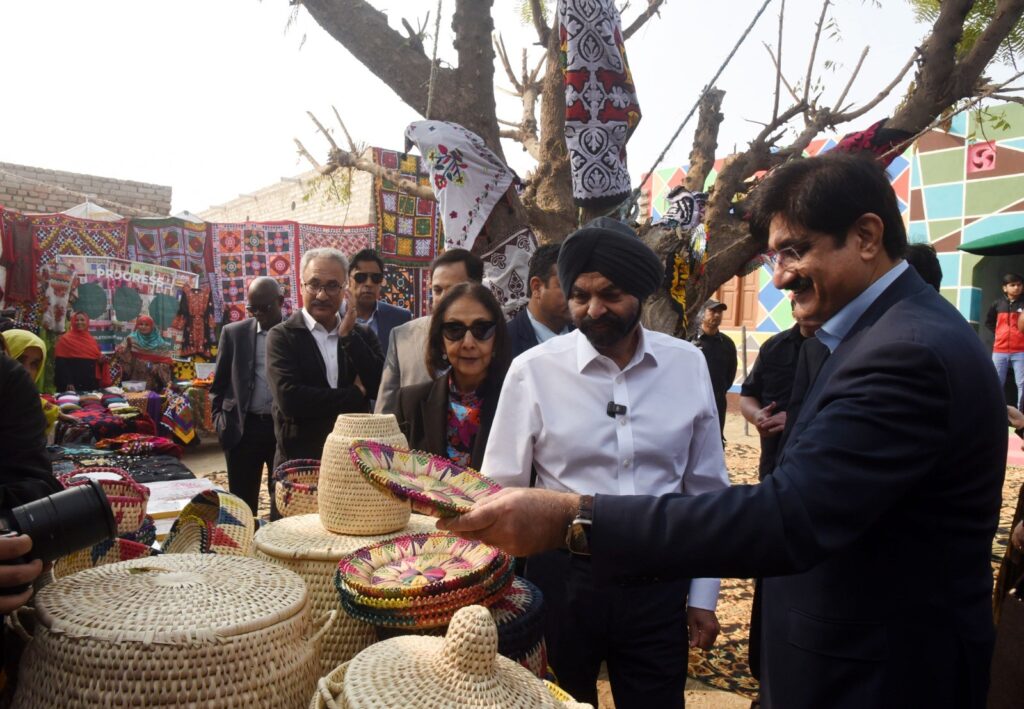
During the visit, the delegation toured a community centre where local women displayed traditional Sindhi handicrafts, including rillis and woven items. Ownership certificates were distributed to beneficiaries, while ajraks and Sindhi caps were presented as cultural gifts. Mr Banga also planted a commemorative sapling in the village.
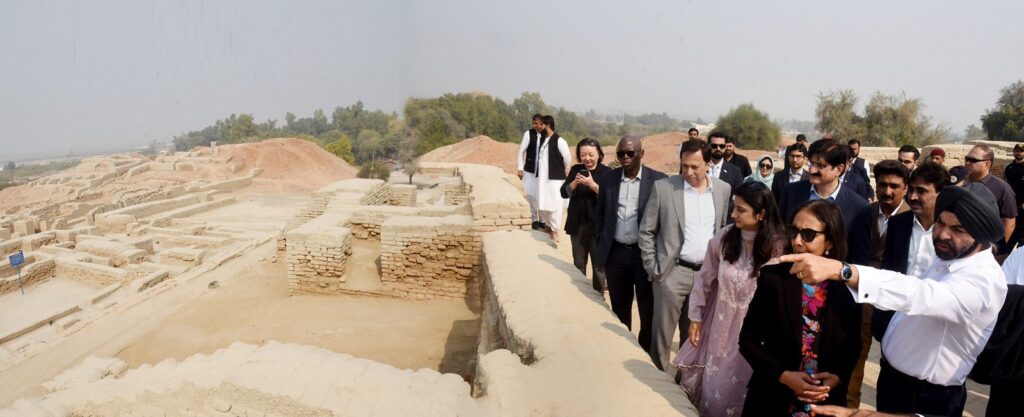
Mohenjo-Daro heritage tour
Later, the World Bank president and the chief minister visited the archaeological site of Mohenjo-Daro. They toured the ruins and museum, viewed historic artefacts, and attended a cultural event featuring Sindhi music and crafts.
Mr Banga described the 5,000-year-old site as a testament to early human ingenuity and stressed the importance of preserving heritage for future generations.
The delegation returned to Karachi after completing the day-long visit.