By Bekhzod Alimjanov
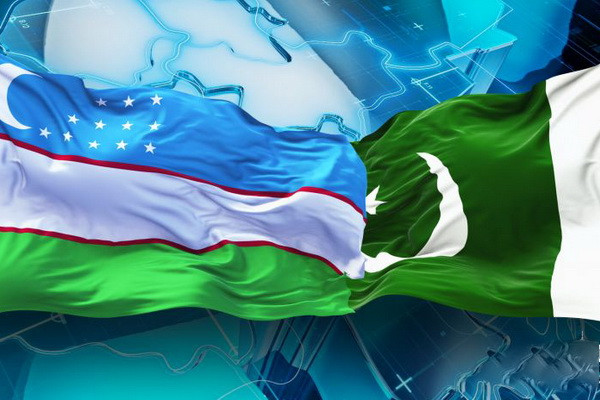
Tashkent/Islamabad: Uzbekistan and Pakistan are steadily strengthening their longstanding ties, building on historical connections and expanding cooperation across political, economic and cultural spheres.
In an opinion piece, Bekhzod Alimjanov, Chief Research Fellow at the Center for Foreign Policy Studies, reflected on the enduring goodwill between the two nations, noting that Pakistan warmly welcomed Uzbekistan’s independence in the early 1990s — a gesture that left a lasting impression in Tashkent.
He described a sense of “spiritual closeness” between the peoples of both countries, despite geographical distance, shaped by centuries of historical interaction.
Historical and Cultural Foundations
The relationship between present-day Uzbekistan and Pakistan traces back to the Silk Road era, when traders and pilgrims travelled between Central Asia and the Indian subcontinent.
Cultural and spiritual ties were further strengthened by Sufi traditions and shared historical figures, notably Babur, whose legacy is central to both Uzbek and South Asian history.
According to Alimjanov, this shared heritage has fostered similarities in language, traditions and cultural outlook, reinforcing mutual understanding at both official and public levels.
Strategic Partnership Since 2021
Bilateral engagement reached a new milestone in 2021 when Uzbekistan and Pakistan elevated their relationship to a strategic partnership, reflecting growing cooperation across diverse sectors.
Observers attribute the recent momentum largely to the political will of Shavkat Mirziyoyev and Shehbaz Sharif, whose sustained dialogue has strengthened trust and institutional coordination.
Over the past decade, both countries have expanded collaboration in trade, defence, security, cultural exchange and multilateral coordination.
Trade, Connectivity and Regional Integration
Economic cooperation has gained prominence, with both sides seeking to boost bilateral trade and enhance connectivity between Central and South Asia.
A key initiative under discussion involves linking Uzbekistan to Pakistani seaports through Afghanistan, a project viewed as strategically significant for regional transit and economic integration.
Closer engagement between government agencies and business communities has also contributed to more dynamic commercial interaction.
Growing Cultural Exchange
Cultural ties continue to deepen, with rising interest in Uzbek language and literature in Pakistan. The teaching of Uzbek at the National University of Modern Languages in Islamabad is cited as a sign of growing academic and cultural engagement.
Analysts note that such exchanges reinforce people-to-people contact and broaden the scope of bilateral relations beyond traditional diplomacy.
A Model for Interregional Cooperation
As global geopolitical dynamics shift, relations between Tashkent and Islamabad are increasingly viewed as a model of interregional cooperation that bridges Central and South Asia.
Officials in both capitals maintain that continued collaboration — grounded in mutual respect and shared interests — can contribute to regional stability, economic growth and sustainable development.
With political confidence on the rise and new avenues of cooperation emerging, Uzbekistan–Pakistan relations appear set to enter a more mature and multidimensional phase.