Staff Reporter
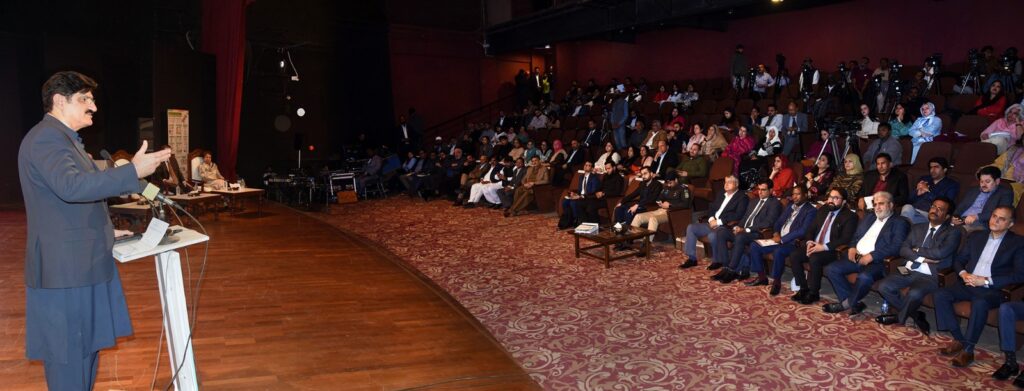
Karachi: Sindh Chief Minister Syed Murad Ali Shah on Friday described unchecked population growth as one of Pakistan’s most serious social and economic challenges, calling for sustained, evidence-based family planning policies to safeguard the country’s future.
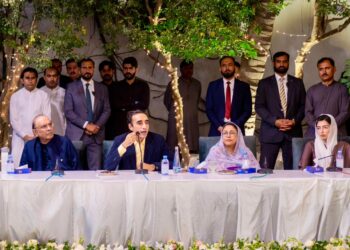
He was speaking at “Waqfa – Tawazun Ke Liye”, a programme organised by the Mir Khalil-ur-Rahman Foundation (MKRF) and Population Council Pakistan at the Hindu Gymkhana’s NAPA Auditorium, marking the launch of a nationwide social and behavioural change communication (SBCC) campaign on family planning. The event was also addressed by MPA Nida Khuhro, Population Council Pakistan Country Director Dr Zeba Sathar, UK Deputy High Commissioner Lance Domm, and MKRF Managing Director Shahrukh Hasan.
Pakistan’s population growth outpaces regional peers
Recalling the demographic situation following the country’s division in 1971, CM Murad Ali Shah said Pakistan’s population stood at around 62 million at the time, compared to 70 million in Bangladesh and under 550 million in India. Today, India’s population has reached about 1.48 billion, Bangladesh stands at 177 million, while Pakistan’s population has surged to nearly 259 million.
Highlighting the disparity, he noted that India’s population increased 2.7 times, Bangladesh’s about 2.5 times, while Pakistan’s grew by 4.2 times over the past 54 years.
Missed opportunities in population management
The chief minister said India and Bangladesh maintained population growth rates close to 1.8 per cent, with India keeping its growth rate 1.7 per cent lower than Pakistan’s through consistent long-term policies. Had Pakistan followed Bangladesh’s population trajectory since 1971, he said, the country’s population today would have been around 155 million — nearly 100 million fewer people.
Calling population growth a deep-rooted social issue with far-reaching economic consequences, he questioned why timely corrective measures were not taken.
Decline of public awareness campaigns
CM Murad Ali Shah recalled that during the 1970s, public awareness campaigns such as “Small family, prosperous family” were regularly broadcast on Pakistan Television. He said population control lost priority during the martial law period, and family planning gradually disappeared from public discourse, while other countries acted early to avoid long-term economic strain.
Role of Lady Health Workers and social misconceptions
The chief minister credited Shaheed Mohtarma Benazir Bhutto’s Lady Health Workers Programme for taking family planning awareness door to door and creating meaningful impact at the community level. However, he acknowledged that Pakistan still lags behind comparable countries and rejected the notion that family planning is a religious issue, calling it a development and governance challenge.
Global comparisons underline urgency
Citing international examples, Murad Ali Shah said population growth rates over the past decade stood at 1.22 per cent in Saudi Arabia, 0.5 per cent in Iran, 0.54 per cent in Iraq, and 0.12 per cent in Turkey. Despite having a land area of about 800,000 square kilometres, he said Pakistan had failed to implement a sustainable population management programme.
Fertility rates and contraceptive use
The chief minister noted that at the time of Pakistan’s creation, the average fertility rate was seven children per woman, similar to Bangladesh. Today, Pakistan’s fertility rate remains around 3.5 to 3.6, while Bangladesh has reduced it to nearly two. Pakistan’s contraceptive prevalence rate stands at about 34 per cent, compared to 62 per cent in Bangladesh, he added.
SBCC campaign launched to drive behavioural change
The ceremony marked the launch of Pakistan’s largest and most comprehensive SBCC campaign on family planning, jointly initiated by MKRF and Population Council Pakistan. The chief minister expressed hope that the initiative would support informed decision-making and contribute to long-term socio-economic stability.
Call for national consensus and media’s role
Murad Ali Shah stressed that population growth and polio eradication require sustained national consensus and collective effort. He urged media organisations to support the upcoming nationwide polio campaign from February 2 to February 8 and appealed to parents to ensure their children receive polio drops.
He also called on media outlets to dedicate airtime to public welfare messaging, noting the powerful role of media in shaping public opinion.
Conclusion
Concluding his address, the chief minister said Pakistan still has time to address population challenges, but warned that the country now needs to work “15 to 20 times harder than before” to achieve meaningful results.