By Sarosh Mustafa
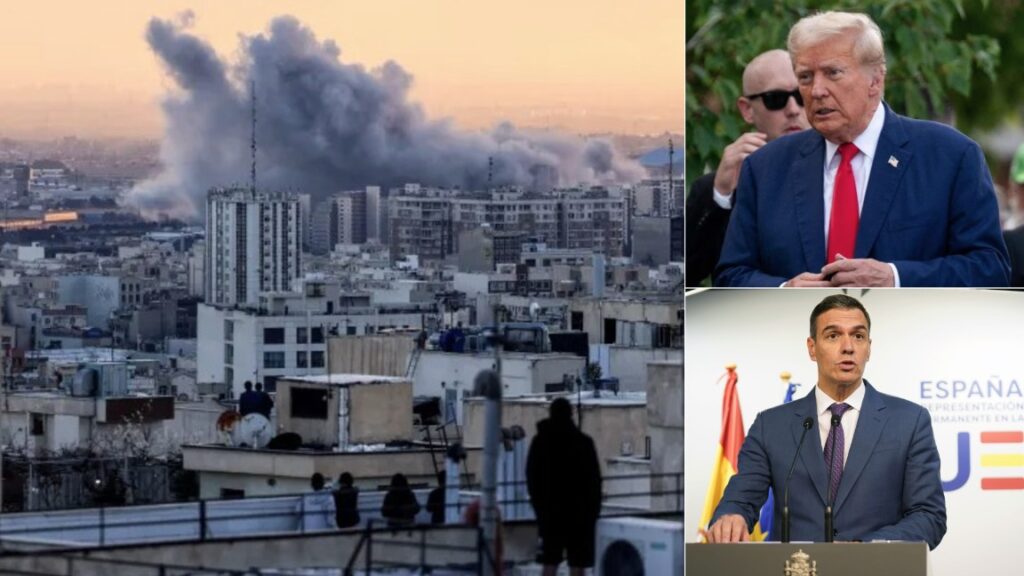
Washington/Madrid: A diplomatic rift has emerged between the United States and Spain after former U.S. president Donald Trump sharply criticized Madrid for refusing to authorize the use of key military bases for potential operations linked to escalating tensions with Iran.
The dispute centres on access to Naval Base Rota and Morón Air Base — strategic installations that host U.S. forces under long-standing bilateral agreements tied to NATO commitments.
Strategic Bases at the Centre
Spain’s Naval Base Rota and Morón Air Base play a vital role in U.S. operations across the Mediterranean, the Middle East and parts of Africa.
According to officials familiar with the matter, Madrid declined to permit their use in operations connected to recent U.S.–Israeli actions involving Iran. In response, Trump accused Spain of failing to stand by an ally during a moment of crisis and warned of possible economic retaliation, including threats to restrict trade ties.
While disagreements over defence spending and burden-sharing within NATO are longstanding, direct trade threats against a member state represent a more confrontational turn in transatlantic diplomacy.
Spain Cites Sovereignty, Legal Concerns
Spanish Prime Minister Pedro Sánchez defended the government’s position, framing the decision as an issue of national sovereignty and compliance with international law.
Madrid has emphasised that any participation in military escalation must meet legal and constitutional standards. Spanish officials also pointed out that trade policy is handled collectively by the European Union, meaning unilateral U.S. trade action against Spain would likely draw in broader EU mechanisms.

Wider European Implications
The standoff has drawn attention across European capitals, including London, where policymakers are closely monitoring developments.
The episode highlights deeper differences between Washington and some European governments over Middle East policy and escalation risks. While European states remain committed to NATO’s security framework, several have expressed caution about expanding military engagement with Iran.
Analysts note that public pressure from Washington could intensify ongoing European debates over “strategic autonomy” — the idea that Europe should reduce reliance on U.S. leadership in defence matters.
Structural Limits to a Rupture
Despite heightened rhetoric, experts say a full breakdown in U.S.–Europe relations remains unlikely. NATO’s institutional framework, coupled with deep economic interdependence between the United States and the European Union — valued at hundreds of billions of dollars annually — acts as a stabilising factor.
Security cooperation on issues such as Ukraine, counterterrorism and maritime defence continues to bind both sides.
Temporary Flare-Up or Turning Point?
Whether the dispute escalates or subsides will depend on subsequent diplomatic engagement. If rhetoric translates into concrete economic or military measures, the fallout could extend beyond Spain to the broader transatlantic alliance. Conversely, quiet negotiations may allow both sides to de-escalate and preserve strategic cooperation.
For now, the confrontation underscores a shifting reality in transatlantic relations: unity is no longer automatic and must be actively managed amid diverging national priorities and geopolitical pressures.