unrest, and support for groups like the TTP and BLA
Web Desk
SIALKOT: Prime Minister Shehbaz Sharif has declared the recent military triumph over India in Operation Bunyan-un-Marsoosa “historic victory,” praising Pakistan’s armed forces for “avenging the 1971 war.”
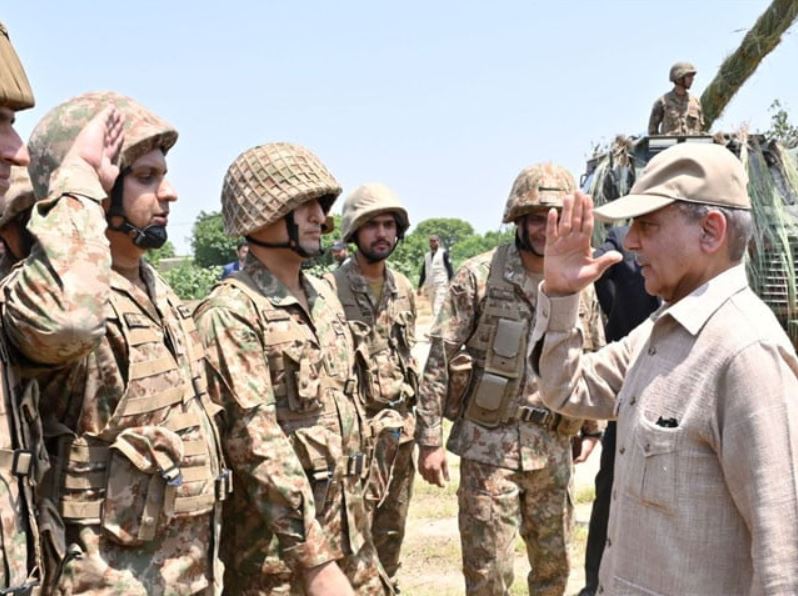
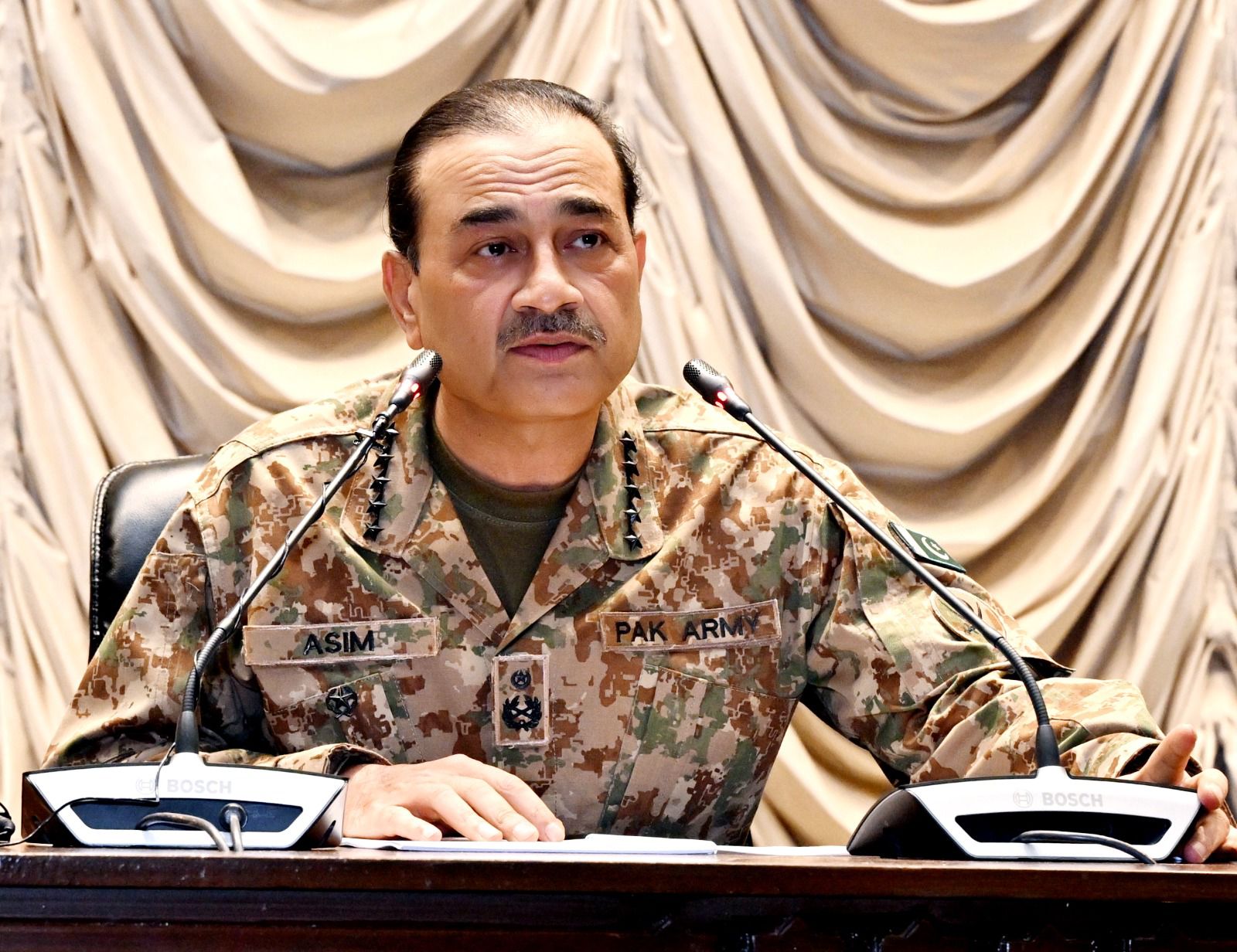
Accompanied by top military commanders — including Army Chief General Asim Munir and Air Chief Marshal Zaheer Ahmed Babar Sidhu — the premier visited Pasrur Cantt in Sialkot to honour the bravery and professionalism of Pakistani troops during the operation.
‘Water and Blood Will Not Flow Together,’ PM Warns India
In a fiery address, PM Shehbaz warned Indian Prime Minister Narendra Modi against violating the Indus Waters Treaty (IWT).
“If you dare stop our water, remember: water and blood will not flow together,” he said.
Sharif accused Modi of sponsoring terrorism in Pakistan, citing alleged links to the Samjhauta Express blast, Balochistan unrest, and support for groups like the TTP and BLA.
“The world knows who trained the Mukti Bahini in 1971. Today, the same nexus supports terrorism in our region — and it leads back to Modi,” he added.
‘Peace Is Our Goal — But Not at the Cost of Dignity’
While reaffirming Pakistan’s commitment to peace, the prime minister said it must never be mistaken for weakness.
“We seek peace — and we are ready for war. The choice is yours,” Sharif declared.
He said no trade or dialogue with India would occur without progress on Kashmir, which remains unresolved under UN Security Council resolutions.
Operation Bunyan-un-Marsoos: A Turning Point
Calling Operation Bunyan-un-Marsoos a tale of “courage and valour,” the PM said he would document the operation in his autobiography.
“Our troops held their ground under immense pressure. Not a single inch of territory was lost,” he said.
He praised the Pakistan Air Force for downing multiple enemy jets and neutralizing drone incursions.
“May 9 and 10 proved our technical supremacy. Even military experts from allied nations are studying our tactics,” he stated.
Shehbaz credited General Asim Munir’s leadership and Air Chief Zaheer Babar’s technological insights for turning the tide during the conflict.
Ceasefire Announced After U.S. Mediation
Tensions eased after Pakistan and India agreed to a full and immediate ceasefire on Saturday, following days of heavy cross-border hostilities.
The ceasefire was announced by U.S. President Donald Trump and confirmed by PM Shehbaz Sharif, Deputy PM Ishaq Dar, India’s External Affairs Minister S. Jaishankar, and U.S. Secretary of State Marco Rubio.
Clashes escalated after the April 22 attack in Pahalgam, IIOJK, that killed 26 civilians. India blamed Pakistan-based elements — a claim rejected by Islamabad.
Pakistan Responded With Precision Strikes
In response to Indian actions — including Wagah border closure, visa suspension, and Indus Waters Treaty withdrawal — Pakistan launched Operation Bunyan-un-Marsoos on May 6–7.
According to Pakistan’s military, the operation resulted in:
Downing of five Indian fighter jets, including Rafales
Interception of 77 Israeli-origin Harop drones
Neutralization of several military targets without civilian casualties
U.S. Played Key Role in De-escalation
American officials, including Secretary Marco Rubio and Vice President JD Vance, facilitated backchannel diplomacy, holding talks with both Sharif and Modi, as well as intelligence and military leaders.
The ceasefire suspended all military activity across land, air, and sea — though both sides later reported alleged ceasefire violations along the Line of Control (LoC).
‘Pakistan Will Endure Until the Day of Judgment’
Closing his address, PM Sharif said:
“Pakistan will remain thriving until the Day of Judgment. Our restraint came from discipline — not fear.”
He urged Modi to abandon hostility and choose sincere dialogue for regional peace.
“Come to the table with honesty — or face the consequences of your arrogance.”