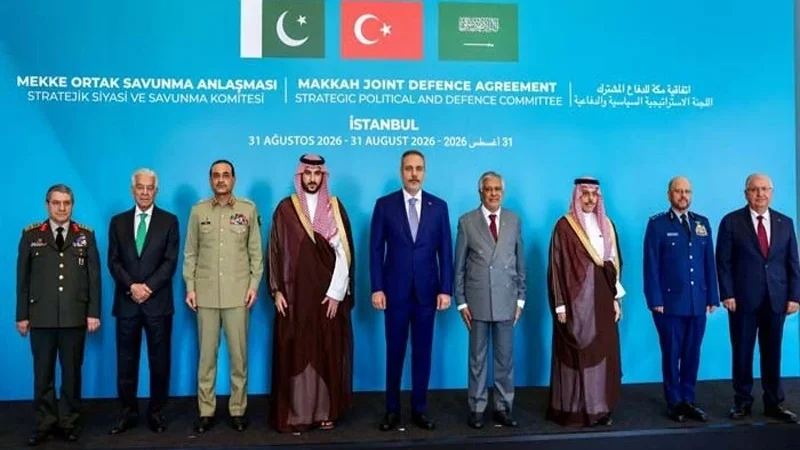
The conflict involving Saudi Arabia and Yemen’s Houthi movement is expected to feature prominently as defence and foreign ministers from Pakistan, Saudi Arabia and Türkiye meet in Islamabad on Friday.
The two-day meeting, scheduled for November 27 and 28, marks the third session of the Strategic Political and Defence Committee (SPDC), the main decision-making forum under the Makkah Joint Defence Agreement.
Discussions will focus on regional security, strengthening cooperation and developing mechanisms to coordinate the three countries’ political, defence and military institutions, according to Pakistani officials.
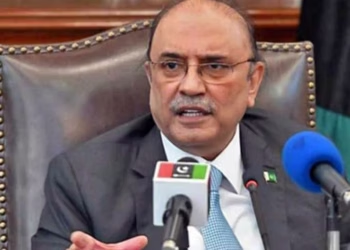
Defence Minister Khawaja Asif said instability in areas south of Saudi Arabia would be an important item on the agenda.
“Continuous turmoil south of Saudi Arabia will obviously be one agenda point in the meeting, and it is very important,” Asif said on Thursday.
He reiterated that under the agreement, any threat to Saudi Arabia would also be considered a threat to Pakistan and Türkiye.
Pakistan, Saudi Arabia and Türkiye signed the Makkah Joint Defence Agreement on August 7, 2026. The agreement states that an armed attack against any one of the three countries will be treated as an attack against all members, committing them to provide assistance through available means.
Sindh Climate Resilience Project Reviews Progress, Targets 1.5 Million People
The SPDC brings together the three countries’ foreign and defence ministers, along with their senior military leadership. Although the agreement establishes a framework for collective defence, the members are still working on procedures and institutional arrangements to implement their commitments.
A permanent secretariat has been established in Riyadh, headed by retired Pakistani Lieutenant General Nauman Mahmood as its first secretary-general for a three-year term. A trilateral working committee is also operating to support coordination.
At an emergency SPDC meeting in Riyadh on October 5, the member countries called for practical steps to implement the agreement, including arrangements for the rapid deployment of agreed forces and capabilities, subject to national laws.
Asif described the alliance as being at a “nascent stage”, saying frequent meetings would be necessary to develop its framework and establish the required arrangements over the coming months.
A local public holiday has been declared in Islamabad and Rawalpindi on Friday in view of the high-level meeting.
However, essential services will remain operational, including the Metropolitan Corporation Islamabad, Capital Development Authority, Islamabad Capital Territory administration, Islamabad Police, Islamabad Electric Supply Company, Sui Northern Gas Pipelines Limited and hospitals.
The meeting comes amid heightened regional tensions following the conflict involving Iran, the United States and Israel, which has raised concerns about wider security and stability in the Middle East.
Asif said Pakistan had played a constructive role in efforts to ease tensions between Washington and Tehran. However, he warned that the situation remained fragile and that a lasting peace had yet to be secured.