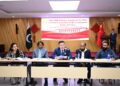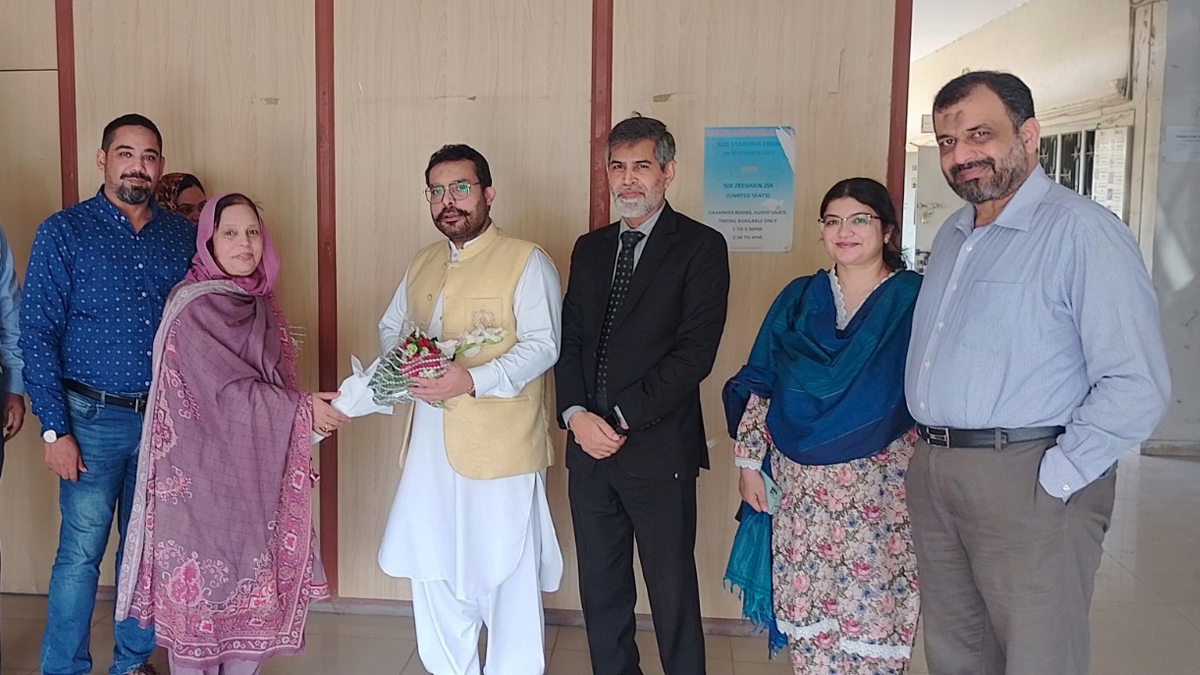
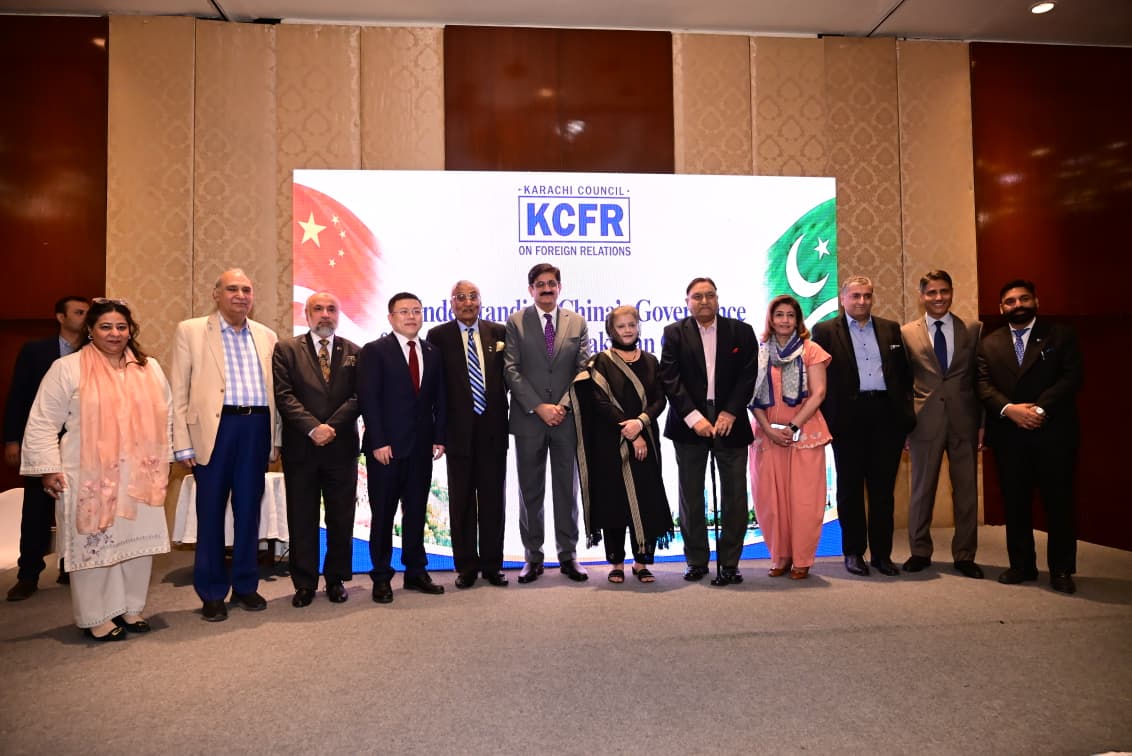
The Karachi Council on Foreign Relations (KCFR), in collaboration with the Consulate General of the People’s Republic of China in Karachi, organised a seminar titled “Understanding China’s Governance and Deepening China-Pakistan Cooperation” at a local hotel.
The event brought together diplomats, government officials, academics, civil society leaders and members of the public to discuss China’s governance framework, development experience and growing global role, alongside opportunities to strengthen Pakistan-China relations.
In her opening address, KCFR Chairperson Nadira Panjwani outlined key features of China’s governance model, highlighting its institutional structure and role in the country’s development and transformation.
She said KCFR had submitted a concept paper to the Sindh Higher Education Commission proposing the establishment of a China Study Centre. The proposed centre would focus on China’s governance model and provide opportunities to study its policies, practices and development experience.
Dr. Iqbal Choudhary, Coordinator General of OIC-COMSTECH, highlighted opportunities for scientific cooperation, technological advancement and knowledge exchange between Pakistan and China.
He discussed the expanding scope of academic collaboration through university partnerships, scholarships, faculty and student exchange programmes, joint research centres and professional training. Such initiatives, he said, could help Pakistani students and researchers benefit from China’s scientific and technological expertise.
China stresses broader cooperation and CPEC
Dr. Feng Deheng, Acting Consul General of China, emphasised the importance of expanding cooperation between the two countries in trade, investment, education, science, technology and innovation.
He highlighted the central role of the China-Pakistan Economic Corridor (CPEC) in strengthening bilateral cooperation and creating opportunities for shared development.
China Pledges to Deepen Cooperation with Pakistan, Share Governance Experience
Feng also called for stronger academic and institutional partnerships, greater engagement between universities and research organisations, and expanded people-to-people exchanges. He reaffirmed that the longstanding friendship between Pakistan and China provided a strong foundation for mutually beneficial initiatives and cooperation on regional and global challenges.
He also discussed President Xi Jinping’s guiding principles on good governance.
Professor Dr. Zhang Jiamei of Peking University described CPEC as an important driver of economic connectivity, trade, investment and people-to-people relations between the two countries.
She also highlighted the importance of learning the Chinese language, saying it could improve communication and open further academic and professional opportunities for Pakistani students and professionals.
Murad Ali Shah highlights longstanding partnership
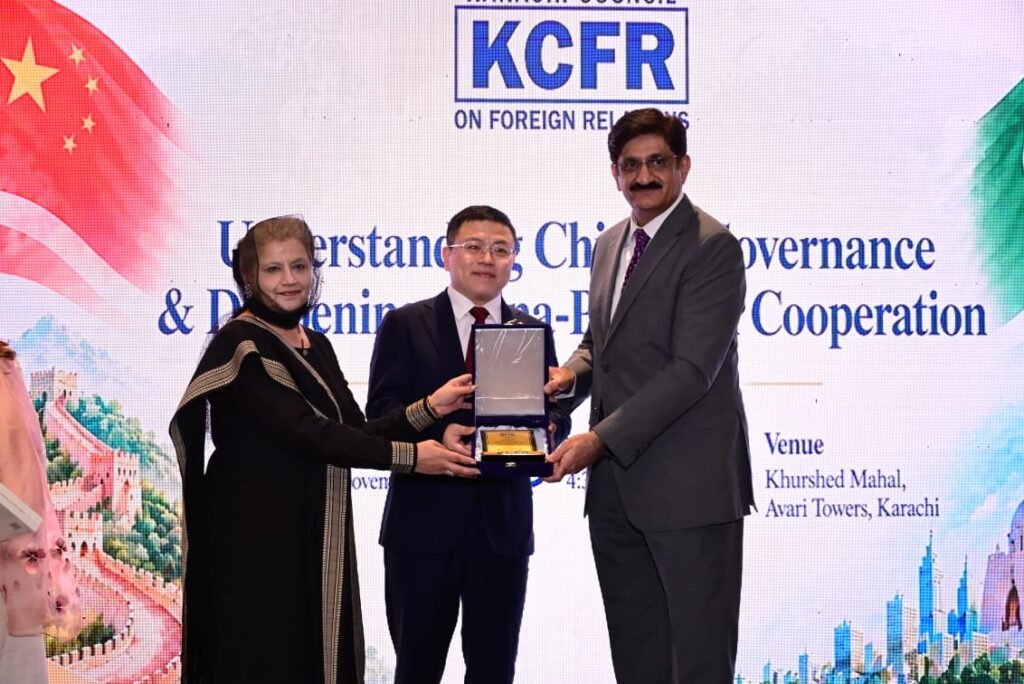
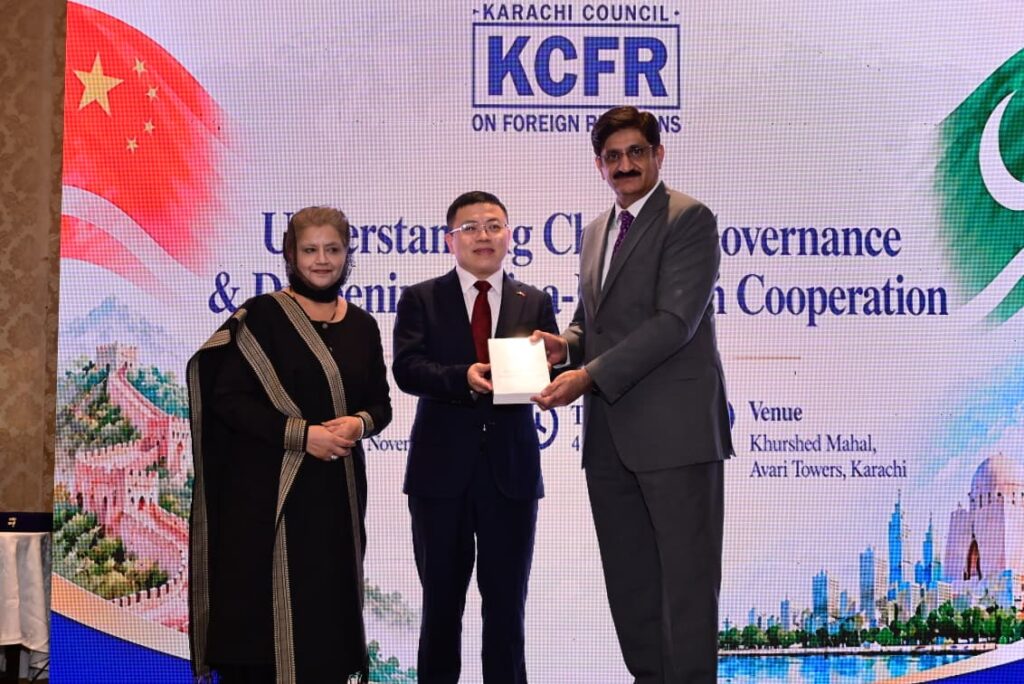
Sindh Chief Minister Syed Murad Ali Shah attended the seminar as chief guest and shared insights from his recent visit to China.
He said Pakistan and China enjoyed a longstanding relationship built on mutual trust, strategic cooperation and shared interests. He added that a better understanding of each other’s governance systems and development priorities had become increasingly important as bilateral engagement expanded across trade, investment, infrastructure, education, science and technology.
The chief minister appreciated KCFR’s initiative in organising the seminar and its efforts to promote constructive dialogue and meaningful cooperation between Pakistan, China and the international community.
The programme also featured a photographic exhibition showcasing images of Chinese public life and society.
Established in 2003, the Karachi Council on Foreign Relations is an independent, non-partisan think tank that promotes dialogue on international relations, foreign policy, trade, culture and public policy. Through seminars, diplomatic engagements and policy discussions, it provides a platform for interaction among diplomats, policymakers, academics and other stakeholders.