By Dr. Marriyam Siddique
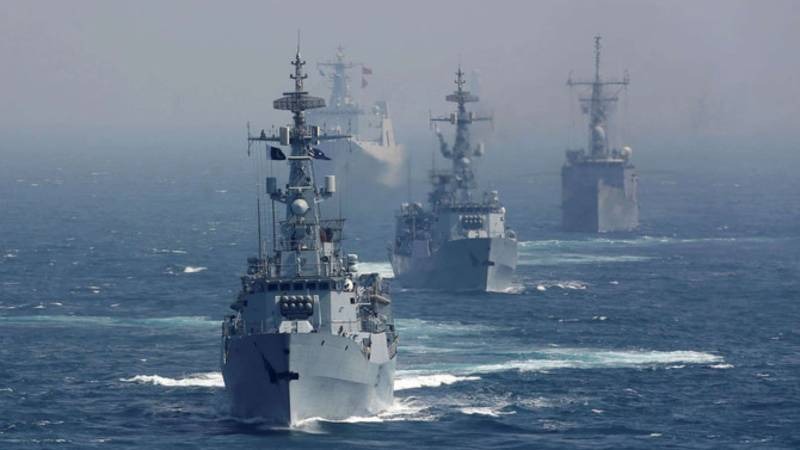
Pakistan’s maritime future depends on connecting security, trade, energy, fisheries and coastal development. The 9th Maritime Security Workshop offers a platform to strengthen national understanding and encourage coordinated policy decisions.
How can a country benefit economically from its maritime geography if its key stakeholders do not fully understand the importance of the sea? This question is particularly relevant to Pakistan, where maritime security, trade, energy, fisheries and coastal development are often discussed separately, despite their close connections.
The 9th Maritime Security Workshop (MARSEW-9), scheduled for December 1–11, 2026, at the Pakistan Navy War College in Lahore, offers an opportunity to examine these connections and encourage informed national debate.
Maritime Security Is Also an Economic Priority
International trade depends heavily on maritime routes. The United Nations Conference on Trade and Development (UNCTAD) estimates that more than 80% of global trade by volume moves by sea.
However, maritime security extends beyond protecting ships. Disruptions at distant shipping chokepoints can increase insurance premiums, freight charges, energy prices and delivery times.
DCFA Pakistan Seeks Fair Representation of Dairy Farmers in Reconstituted LDDB
For an import-dependent economy such as Pakistan, these disruptions can affect households and industries long before a direct security threat reaches its coastline.
The regional conflicts and shipping disruptions of 2026, particularly around the Red Sea and Strait of Hormuz, reinforce an important reality: maritime vulnerability is also an economic risk.
Pakistan’s Maritime Geography and Blue Economy Potential
Pakistan’s strategic location along the northern Arabian Sea provides access to important international shipping routes. However, geography alone cannot guarantee maritime security or economic benefits.
Building maritime resilience requires coordinated efforts across several sectors. Fisheries need sustainable management and better processing facilities. Ports require stronger connections with inland markets, while maritime trade depends on effective regulations and skilled professionals.
The policy challenge is therefore not simply to identify the potential of the blue economy. Pakistan must connect maritime security with commercial planning, environmental protection and institutional responsibility to achieve sustainable economic outcomes.
MARSEW: Bringing Maritime Stakeholders Together
This is where MARSEW has developed a distinctive role.
Established in 2017, the annual workshop is organised under the auspices of the Pakistan Navy through the Pakistan Navy War College in Lahore.
Its distinctive feature is the participation of parliamentarians, business representatives, civil servants, academics, media professionals and armed forces representatives. This approach recognises that maritime security is not exclusively a naval responsibility.
Decisions affecting ports, coastal communities, shipping and maritime investment involve numerous public and private institutions. Bringing these stakeholders together helps develop a broader understanding of maritime challenges and their economic implications.
Previous Editions Strengthen Maritime Understanding
Previous editions of MARSEW have gone beyond conventional lectures. They have combined expert discussions with visits to naval and maritime institutions, coastal and creek areas, and opportunities to interact with naval practitioners and policymakers.
These activities help participants understand maritime concepts alongside the practical requirements of maritime governance.
For example, policymakers considering port development can benefit from understanding maritime security constraints. Similarly, business leaders assessing investment opportunities can gain insight into the relationship between maritime infrastructure, security and regulation.
MARSEW has also accompanied important institutional developments. The Pakistan Navy War College identifies the launch of the first edition of the Maritime Doctrine of Pakistan and the establishment of the Maritime Centre of Excellence at PNWC among the milestones associated with the workshop’s evolution.
These developments do not mean that every maritime policy challenge has been resolved. Rather, they reflect the growing institutional space for maritime research, discussion and professional engagement.
MARSEW-8 Highlighted Key Maritime Challenges
The 8th Maritime Security Workshop, held in December 2025, demonstrated the breadth of this approach.
Its programme addressed maritime awareness, coastal development, marine resource security, critical undersea infrastructure, international maritime law and national resilience.
Participants engaged with senior naval leadership and visited relevant institutions. A Maritime Policy Framework Exercise during the closing ceremony also highlighted the need to expand Pakistan’s national shipping and fishing sectors.
These discussions demonstrated why maritime security and the blue economy should not be treated as competing priorities. Pakistan’s commercial growth depends on secure and predictable maritime conditions.
Regional Disruptions Increase the Importance of MARSEW-9
The regional dynamics of 2026 give MARSEW-9 additional relevance.
Shipping disruptions along major maritime routes have demonstrated that the costs of maritime insecurity extend beyond naval operations.
The US Energy Information Administration reported a sharp decline in oil flows through the Strait of Hormuz between late 2025 and the second quarter of 2026.
These developments matter not because Pakistan can control events at every international chokepoint, but because they highlight the importance of national planning for external shocks, shipping continuity and energy security.
Three Priorities for Pakistan’s Maritime Future
An analytical approach to MARSEW-9 should focus on three interconnected questions:
- Institutional coordination: How can Pakistan improve coordination between maritime security institutions and economic decision-makers?
- Operational resilience: What practical measures can help shipping, ports and coastal industries remain functional during regional disruptions?
- Research and policy development: How can professional training, research and stakeholder dialogue translate maritime potential into realistic policy priorities?
Addressing these questions can turn maritime awareness into a foundation for informed decisions rather than treating it as an end in itself.
Building a Coordinated National Maritime Vision
The Pakistan Navy’s contribution through MARSEW lies in providing a platform where maritime issues can be examined across institutional boundaries.
The Navy’s responsibility for safeguarding maritime interests offers an important perspective, while participation from civilian institutions broadens discussions to include trade, development, law and public policy.
This combination is particularly valuable for a country whose maritime future cannot be secured or developed by any single institution.
MARSEW-9 should therefore be viewed not merely as an annual event but as part of a continuing effort to strengthen national maritime understanding.
Its long-term value will depend on participants taking informed perspectives back to their respective institutions and translating discussions into practical, coordinated decisions.
At a time when maritime disruptions can quickly create economic pressures, Pakistan needs both secure seas and institutions capable of making sound decisions about them. MARSEW offers a meaningful platform for advancing that objective.