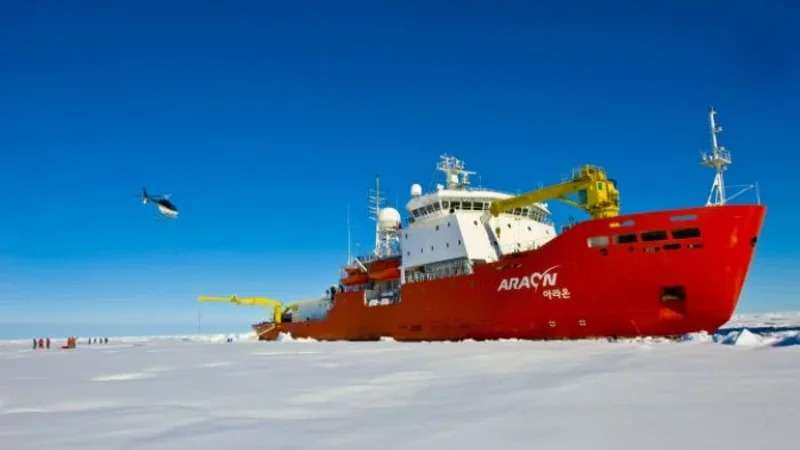
BUSAN: South Korea has completed its first commercial round-trip voyage to Europe via the Arctic, marking a milestone in the country’s efforts to develop an alternative shipping route between Asia and Europe.
The container ship PanStar Acro returned to the southeastern port of Busan on Saturday, 50 days after departing on August 22, according to officials.
The vessel travelled through Arctic waters along Russia’s northern coastline, calling at European ports including Felixstowe in the United Kingdom, Rotterdam in the Netherlands and Gdansk in Poland before returning to South Korea along the same route.
Arctic Route Could Cut Shipping Times
Supporters of the Northern Sea Route say it can reduce transit times between Asia and Europe by roughly one-third compared with traditional routes through the Suez Canal.
During the voyage, the PanStar Acro maintained competitive speeds without an icebreaker escort. However, the ship experienced minor delays caused by weather and ice conditions, including in the Chukchi Sea.
South Korean authorities see Arctic shipping as a potential way to strengthen the country’s maritime industry and expand the role of Busan as an international logistics centre.
Under plans backed by President Lee Jae Myung’s administration, officials are considering regular commercial services along the route by 2030.
Shehbaz Sharif Approves Move for Emergency, Governor’s Rule in KP: Report
Russia Route Presents Diplomatic Challenges
The Northern Sea Route follows Russia’s Arctic coastline, making access and operations diplomatically sensitive amid Western sanctions imposed on Moscow over its war in Ukraine.
South Korea consulted Russia regarding the voyage and contingency arrangements, according to the report. Such cooperation could create diplomatic complications as Seoul balances its maritime ambitions with relations with Western allies.
Cargo Capacity and Commercial Viability Remain Concerns
Despite completing the round trip, the trial highlighted challenges that could affect the route’s long-term commercial viability.
The ship carried 737 twenty-foot equivalent units (TEUs), alongside empty containers, below the initial target of 1,300 TEUs.
Industry experts say regular Arctic shipping services will depend on reliable schedules, predictable ice conditions, manageable insurance and fuel costs, and sufficient cargo demand.
The successful voyage demonstrates the route’s potential, but further trials and commercial assessments will be needed before regular services can become viable at scale.