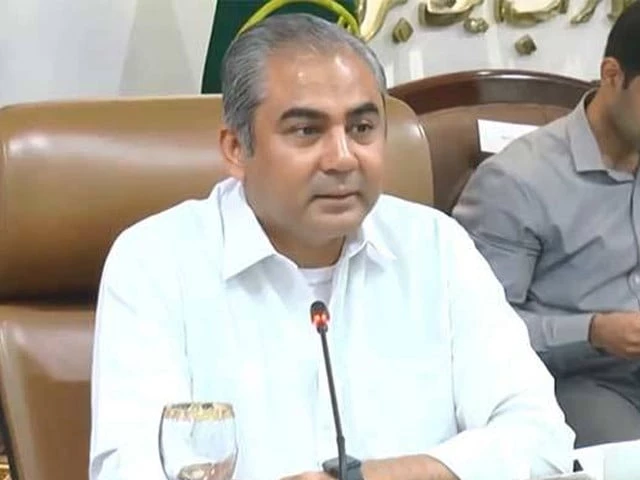
Interior Minister Mohsin Naqvi said the federal government was examining legal options for Governor’s Rule in Khyber-Pakhtunkhwa, with the Law Ministry expected to advise on the available constitutional and legal avenues before Prime Minister Shehbaz Sharif makes a final decision.
Speaking at a press conference in Lahore on Monday, Naqvi said the issue had already been discussed within the government. He said officials would consult the Law Ministry on the options available to the federal government, while the final decision would rest with the prime minister.
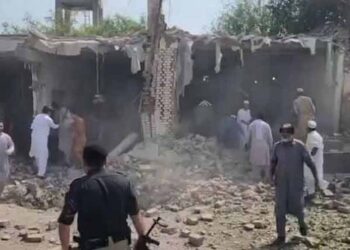
The remarks came amid heightened security concerns in K-P following a series of attacks in the province. On Friday, at least 21 people, including 15 police personnel and six civilians, were killed in an attack on the Kohat Police Lines, according to officials. More than 100 people were reported injured.
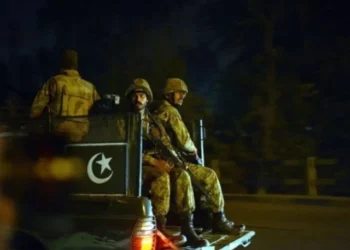
A day later, six Pakistan Army personnel were killed during an exchange of fire with terrorists in Hangu, according to the military’s media wing. The recent violence has added to concerns over the province’s security situation.
Funeral prayers for the soldiers killed in Hangu were held in Peshawar on Monday. Naqvi, K-P Governor Faisal Karim Kundi, the Peshawar Corps commander and senior civil and military officials attended the ceremony.
World Peace Day Marathon at Mazar-e-Quaid Sends Message of Unity
Against this backdrop, Naqvi also criticised the Pakistan Tehreek-e-Insaf (PTI) for proceeding with its planned September 27 march towards Islamabad. He questioned the timing of the protest while security personnel and police were dealing with attacks in K-P.
Naqvi said the government had repeatedly urged PTI leaders to reconsider the planned march, arguing that political demands should not be pursued through actions that could disrupt public order or economic activity.
He also said the government would implement the Islamabad High Court’s ruling concerning the planned protest. The court order restricts political parties from blocking roads, highways, interchanges, toll plazas and public buildings and directs provincial governments not to use state resources for such activities.
The interior minister said authorities would take action if protesters attempted to block roads or occupy public spaces in violation of the court’s directions. He also warned that the government would not allow a prolonged road blockade in the capital.
Naqvi further said the government believed that a majority of PTI’s leadership did not support the proposed long march, while urging the party to reconsider its plans.
The government’s position has been challenged by PTI, which continues to prepare for the September 27 protest. Opposition leaders have said the protest is intended to press for the release of party founder Imran Khan and to raise what they describe as constitutional and democratic concerns.
Political tensions have also risen following reports of arrests involving members of Imran Khan’s family. PTI has alleged that two of his sisters, Uzma Khan and Noreen Khan, along with some of their children, were detained by Punjab Police. The claims come a day after Aleema Khan was detained under the Punjab Maintenance of Public Order Ordinance, according to the party.
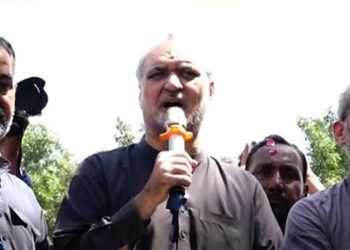
The government is also dealing with other planned demonstrations. Jamaat-e-Islami has launched a march from Karachi towards Islamabad over its demand for withdrawal of the petroleum development levy, while farmers’ groups have also announced protest plans.
Information Minister Attaullah Tarar said the government would not allow violent groups to enter Islamabad or block roads, citing the Islamabad High Court’s directions on public movement.
Finance Minister Muhammad Aurangzeb has separately warned that prolonged protests and road closures could have a significant economic cost, with the government estimating potential losses of around Rs120 billion per day.
The political dispute comes as K-P continues to face security and governance challenges. The provincial government has maintained that the planned PTI protest will remain peaceful, while federal officials have stressed that any demonstrations must comply with court orders and applicable laws.
For now, Naqvi’s comments indicate that the question of possible federal intervention in K-P remains under consideration. Any move towards Governor’s Rule would depend on the legal advice sought by the government and the decision taken by the prime minister.