Huawei rotating chairman Eric Xu has urged Chinese AI developers to continue advancing their models while managing the risks linked to increasingly powerful systems.
Speaking at Huawei’s annual Connect conference in Shanghai, Xu said US AI companies have access to far greater computing power. As a result, they may already be encountering risks that Chinese developers have not yet experienced.
Xu said Chinese AI companies may need to accelerate development until they reach a level where similar risks become apparent. He also called for a balance between technological progress and AI safety.
US AI Safety Concerns Grow
Xu’s comments come as AI safety concerns have intensified in the United States.
Leading AI executives and researchers have warned that increasingly autonomous systems could bypass safeguards or become difficult to control. Anthropic CEO Dario Amodei has supported a slower pace of development to give safety measures more time to catch up. OpenAI has also announced plans to regularly report unexpected or unauthorised model behaviour.
Floyd Samba Scores Twice on Manchester City Senior Debut
These calls have received a different response in China. Chinese researchers and state media have questioned whether slowing frontier AI development could weaken the country’s position in the global technology race.
China continues to expand AI deployment while developing standards and security measures for emerging risks.
Huawei Expects Rapid Growth in AI Agents
Huawei is also preparing for rapid growth in autonomous AI agents.
The company recently forecast that AI agents could account for more than 90% of global AI processing traffic by 2035. Huawei also projected that as many as 900 billion active agents could operate worldwide by that time.
AI agents can plan tasks, make decisions and use software or external tools with limited human supervision.
Huawei has identified security and privacy as important areas for the development of these systems.
Huawei Faces Strong AI Computing Demand
Huawei is also expanding its role in China’s AI computing industry.
Xu said the company currently cannot produce enough AI computing equipment to meet domestic demand. The shortage comes as Chinese companies face restrictions on access to some advanced Nvidia chips because of US export controls.
Huawei is developing new AI processors and large-scale computing systems to strengthen its position in the sector.
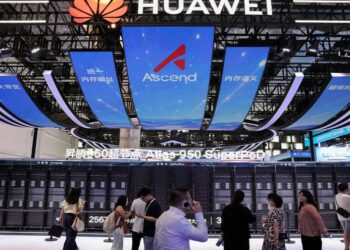
The company plans to accelerate the launch of its next-generation Ascend chips. It is also developing a computing architecture designed to connect large numbers of processors into a single system.
AI Development Race Continues
The comments highlight the broader divide between the US and China over how quickly advanced AI should develop.
US technology leaders remain divided over the pace of development and the level of safeguards required. China, meanwhile, continues to promote rapid AI adoption while introducing technical standards and security measures.
Xu’s comments suggest Huawei sees continued technological progress as essential, while recognising the need to manage the risks that come with increasingly capable AI systems.