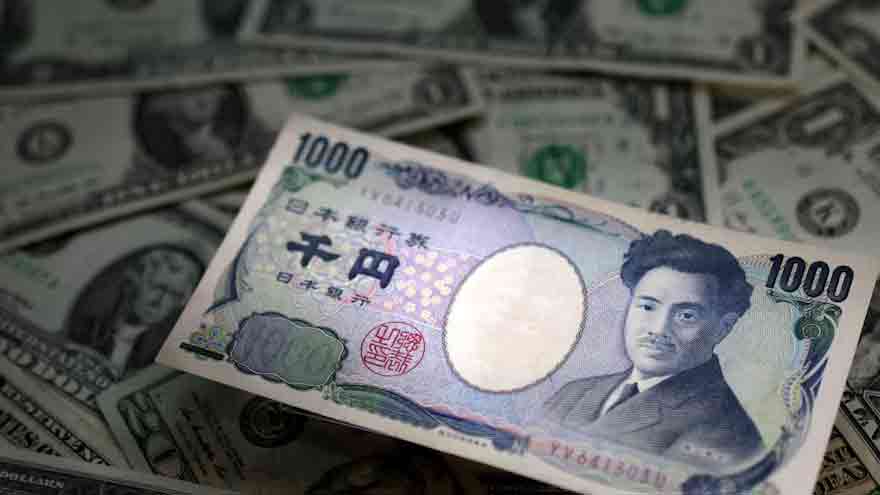
The yen held near the 160-per-dollar level on Tuesday after US Treasury Secretary Scott Bessent increased pressure on the Bank of Japan (BOJ) to raise interest rates later this month.
Currency markets also watched renewed fighting in the Middle East. The latest attacks pushed Brent crude above $91 a barrel and lifted US Treasury yields.
Bessent signals stronger yen
The yen traded at 159.81 per dollar after falling beyond the 160 level in the previous two sessions.
The currency strengthened after Bessent said he expected Japan’s government and central bank to take steps that would support a stronger yen.
“I have information that the market doesn’t have,” Bessent told CNBC during a Group of 20 finance leaders’ meeting.
He said he believed Japanese authorities would take measures that could strengthen the currency.
Markets expect BOJ rate hike
Traders currently see a 73% probability of a BOJ rate increase later this month.
Analysts, however, say one rate hike may not provide enough support for the yen.
Sohail Sameer Apologises After Old Video Resurfaces and Goes Viral
“A September BOJ hike is already heavily anticipated,” said Charu Chanana, chief investment strategist at Saxo.
She said the yen may need a more hawkish BOJ policy beyond September to move sustainably away from the 160-per-dollar level.
High US yields and rising oil prices have added pressure on Japan’s trade position, making further BOJ action more important for the currency.
Joint intervention offers limited relief
The United States and Japan carried out a rare joint currency intervention at the end of July.
The move briefly supported the yen. The currency has since given up most of those gains.
The renewed weakness has increased attention on whether Japanese authorities will take further steps to support the currency.
Middle East tensions lift oil prices
The yen’s moves came as investors assessed fresh attacks in the Middle East.
US President Donald Trump threatened additional strikes against Iran after the two sides exchanged direct attacks for the first time in a month.
The six-month conflict shows little sign of ending.
The latest escalation pushed Brent crude futures above $91 a barrel. Higher oil prices can put additional pressure on Japan because the country relies heavily on energy imports.
Dollar slips as Fed expectations shift
The US dollar weakened slightly after gaining on Friday.
Investors are reassessing the outlook for US interest rates following hawkish comments from Federal Reserve Chairman Kevin Warsh.
In his first speech at the Jackson Hole central banking symposium, Warsh said the Fed would “have work to do” if inflation failed to cool.
Markets now see a 65% chance of a Fed rate hike later this month. That compares with 41% a week earlier, according to the CME FedWatch tool.
The dollar index, which tracks the US currency against six major currencies, slipped to 99.37.
Euro and sterling remain steady
The euro traded at $1.1623 after gaining nearly 1% in August.
Sterling stood at $1.35575 after rising 0.5% last month.
The Australian dollar edged up to $0.7172, while the New Zealand dollar traded at $0.5921.
Investors will focus on several economic reports due later this week. The data could influence expectations for the Federal Reserve’s next interest-rate decision.