The AI race between the United States and China is entering a new phase. Washington may soon ask dozens of countries to choose between the two sides.
According to a US official and an internal draft reviewed by Reuters, Washington plans to issue a warning. Countries could lose access to a US-led AI coalition if they also join China’s rival framework.
Washington tightens AI alliances
The United States launched the Pax Silica initiative last year. The programme aims to strengthen supply chains for AI models, semiconductors and critical minerals.
World Liberty US Regulator Conditionally Approves Trump-Linked Crypto Bank Charter
About two dozen countries have joined the initiative. They include Japan, Australia and South Korea.
Kazakhstan has also joined Pax Silica. However, it has also joined a China-led AI initiative. This makes Kazakhstan the only country currently known to belong to both groups.
The draft letter targets 35 countries. These nations signed a US “AI Opportunity Statement” in June.
The group includes Pax Silica members and other countries seeking closer AI cooperation with Washington.
US warns against competing alliances
The draft urges countries to make a clear choice. It says Pax Silica membership represents a commitment rather than a simple subscription.
The letter warns against joining rival initiatives with conflicting expectations. However, it does not directly mention China.
A US official told Reuters that Washington wants to make one point clear. Countries cannot “have it both ways”, the official said.
The official argued that countries cannot act as trusted partners of one technology ecosystem while supporting a competing Chinese initiative.
China builds its own AI bloc
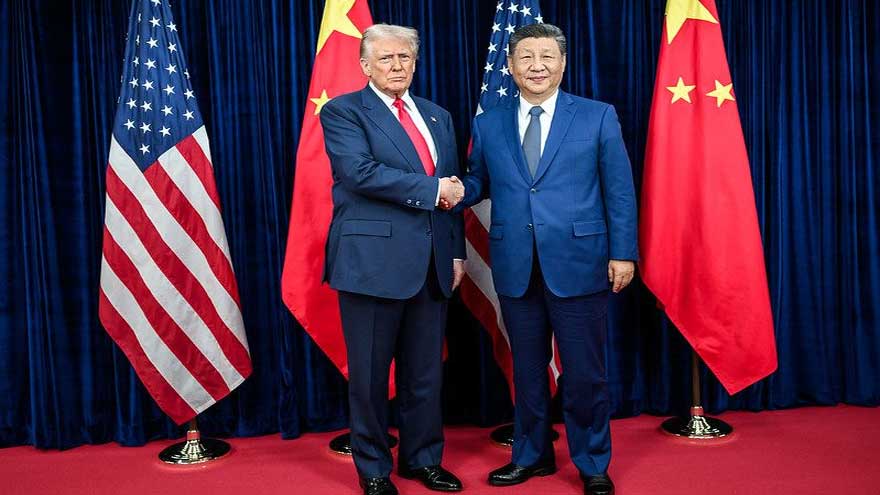
China launched the World Artificial Intelligence Cooperation Organization in July. President Xi Jinping presented the group as an alternative to US influence in AI.
The move has added pressure to the growing technology rivalry. Chinese open-weight AI models have also made rapid gains against US systems.
American companies such as OpenAI and Anthropic develop leading proprietary AI models. Chinese developers have increasingly challenged their position.
The competition now extends beyond AI software. Both countries are also seeking greater control over chips and critical minerals.
Critical minerals add to tensions
Pax Silica aims to promote joint projects and export controls among US allies. It also seeks to reduce reliance on strategic competitors.
Critical minerals remain a major part of that strategy. These materials are essential for advanced technologies and semiconductor production.
Kazakhstan has attracted US attention because of its large mineral reserves. Washington highlighted its Pax Silica membership in June.
China currently dominates the processing of several critical minerals. Beijing has used that position as leverage during trade tensions with Washington.
Washington faces diplomatic challenge
Pax Silica members can access shared investment opportunities in AI-related projects. Signatories to the AI Opportunity Statement have also endorsed a common purpose with the United States.
The draft letter seeks to reinforce those commitments. It could also increase pressure on countries trying to cooperate with both Washington and Beijing.
The US State Department declined to comment on the reported leaked document. Reuters could not determine when officials would send the letter.
It also remains unclear whether Washington will change the draft before sending it.
The Chinese and Kazakh embassies in Washington did not immediately respond to requests for comment.