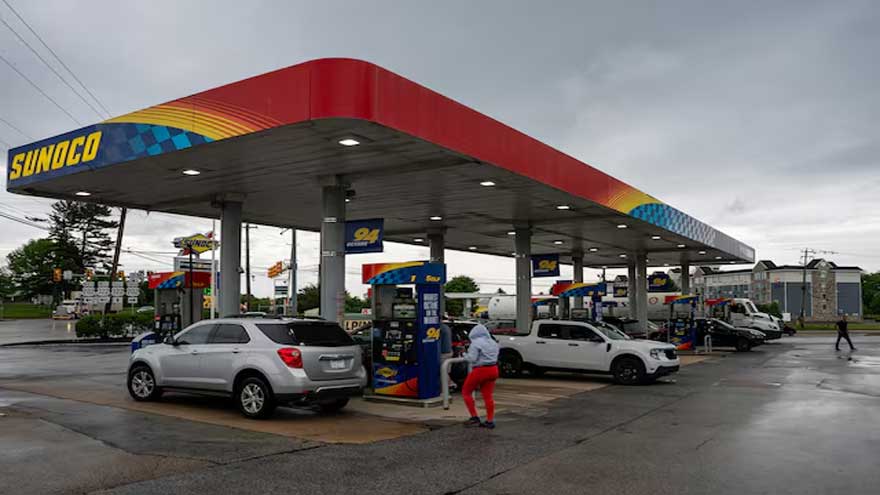
US Inflation likely eased in June as lower gasoline prices reduced pressure on household budgets. However, economists say the improvement may not stop the Federal Reserve from raising interest rates later this year.
PSX Crash KSE-100 Index tumbles over 5,000 points as Middle East tensions shake markets
A Reuters survey forecasts that the Consumer Price Index (CPI) rose 3.8% in the 12 months to June. That would mark a slowdown from 4.2% in May, which was the highest annual increase since April 2023.
The expected decline mainly reflects lower fuel prices during a brief ceasefire between the United States and Iran. However, that truce collapsed after attacks on commercial ships in the Strait of Hormuz triggered fresh military strikes.
As a result, gasoline prices have started rising again. According to AAA, the national average increased to $3.87 per gallon on Monday from $3.80 a week earlier.
President Donald Trump also announced that the United States would reinstate its blockade of Iranian shipping through the Strait of Hormuz. The move has renewed concerns about global oil supplies and energy prices.
Economists warned that households continue to face financial pressure despite the expected easing in inflation.
“The pain level just went down from 10 to nine. Consumers are still in a lot of pain,” said Brian Bethune, an economics professor at Boston College.
The Federal Reserve targets 2% inflation using the Personal Consumption Expenditures (PCE) Price Index. Inflation has remained above that target since early 2021.
The Fed kept its benchmark interest rate unchanged at 3.50% to 3.75% during its June meeting. However, policymakers signalled growing support for another rate increase in 2026.
Financial markets now see a 50.8% chance of a rate hike at the Fed’s September policy meeting, according to CME’s FedWatch tool.
Economists expect consumer prices to fall 0.1% on a monthly basis in June. If confirmed, it would mark the first monthly decline since May 2020.
Meanwhile, analysts expect food prices to continue rising. They say higher fertiliser costs, supply disruptions and dry weather could keep food inflation elevated through 2027.
Core inflation, which excludes food and energy prices, likely slowed to 2.8% in June from 2.9% in May. Even so, economists believe persistent price pressures could keep further monetary tightening on the table.