Lahore — Bilal Bin Saqib has said Pakistan is moving forward with developing a comprehensive regulatory framework for digital assets as blockchain adoption and virtual asset usage continue to expand across the country.
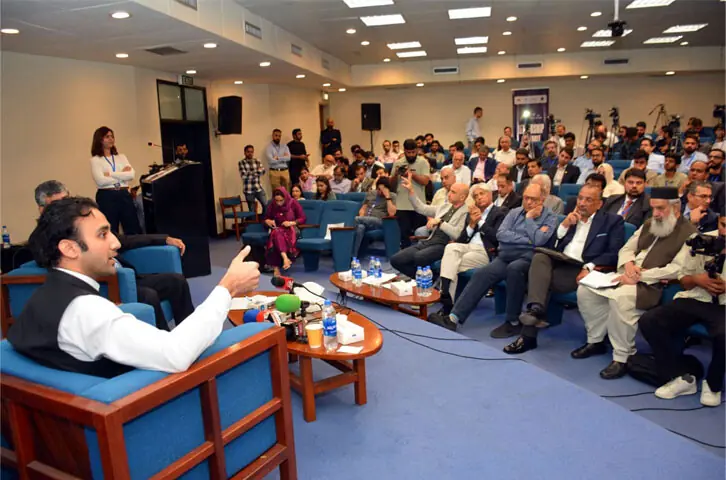
Speaking at the Leadership Summit on Blockchain and Digital Assets hosted by the LUMS Centre for Digital Assets Research on Saturday, the chairman of the Pakistan Virtual Assets Regulatory Authority (PVARA) stressed the importance of bringing millions of digital asset users into the formal financial system.
He said the government’s approach would focus on enabling innovation while ensuring consumer protection and reducing risks associated with unregulated digital finance platforms.
According to Bilal Bin Saqib, nearly 40 million Pakistanis are already engaged with digital assets, mostly through informal channels operating outside regulatory oversight.
“The universe rewards action, not intelligence,” he remarked while emphasizing the need for timely policy implementation in response to rapidly evolving technological changes.
Focus on Financial Inclusion and Blockchain Innovation
The minister said one of the government’s major priorities is integrating users from informal digital systems into the formal economy to improve transparency, reduce exploitation, and strengthen financial inclusion.
Highlighting the economic potential of blockchain technology, he pointed to Pakistan’s annual remittance inflows of nearly $38 billion, stating that blockchain-based settlement systems could significantly improve efficiency and reduce transaction costs.
He also noted that Pakistan’s growing freelance economy could benefit from regulatory clarity surrounding digital assets and blockchain infrastructure, helping improve the country’s competitiveness in global digital markets.
Sandbox Model and Tokenisation Plans
Bilal Bin Saqib said Pakistan has developed a regulatory approach for digital assets within a relatively short period due to strong institutional support and policy direction.
The upcoming framework, he explained, will follow a risk-mitigated model that includes regulatory sandbox environments where emerging technologies can be tested safely before wider implementation.
He added that asset-backed tokenisation has been identified as one of the initial focus areas. The model could expand investment access by allowing smaller-scale participation in sectors such as real estate and financial instruments.
Warning Against Regulatory Delays
The PVARA chairman cautioned that delays in establishing regulations could further increase reliance on unregulated systems given the scale of digital asset adoption already taking place in Pakistan.
He said the country now has an opportunity to contribute to global conversations on digital finance instead of merely following international models.
Calling for collaboration among stakeholders, Bilal Bin Saqib urged banks, technology firms, regulators, and academic institutions to work together to develop talent and strengthen institutional capacity.
“The biggest gap at the moment is talent,” he observed, stressing that continuous learning and coordinated efforts would be essential for the long-term development of Pakistan’s digital economy.